Types of Pakistani Embroidery
Chikankari, zari, dabka, tilla, gota and mirror work explained: the thread, metal and embellishment families, their regions and what each means for price.
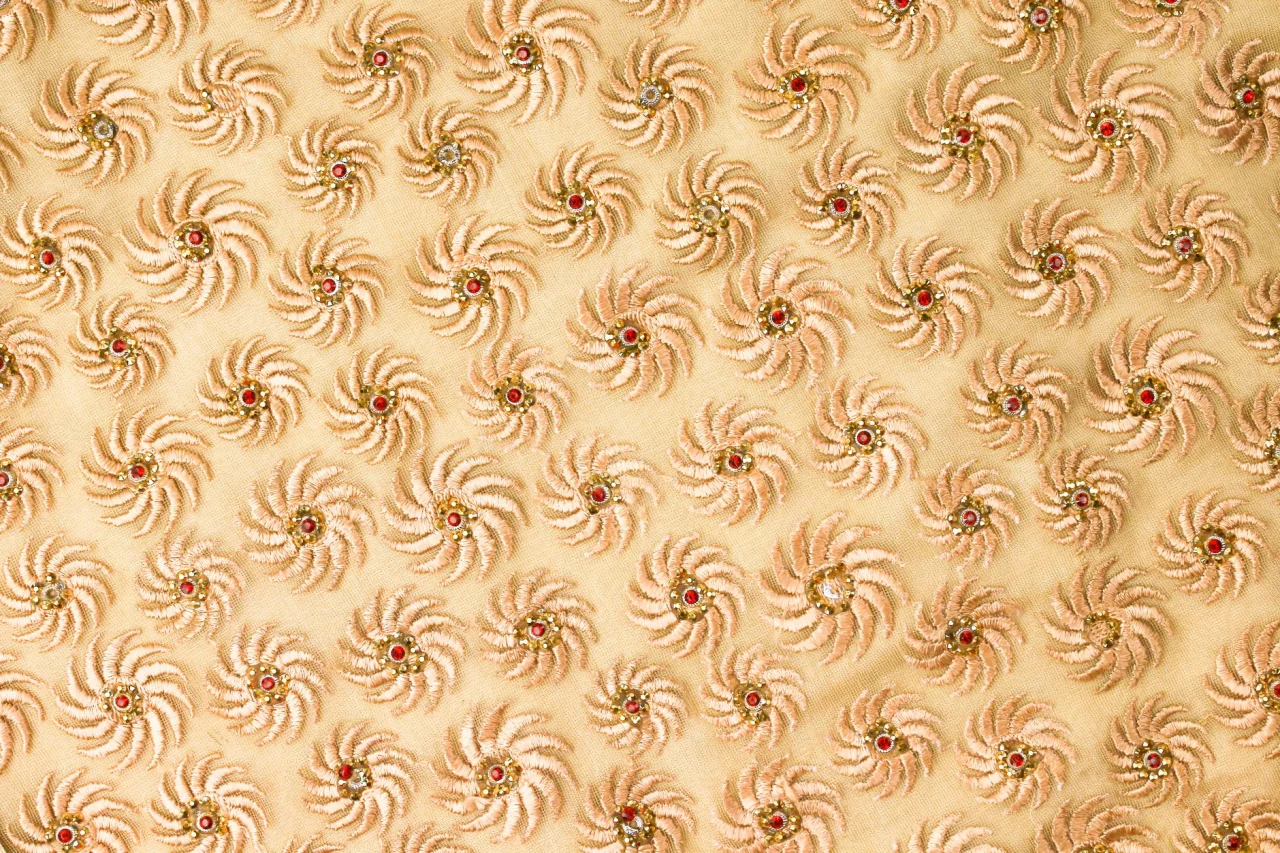
Pakistani fashion is, more than almost anything else, a story told in thread. A single festive outfit can carry glinting metal wire, springy coils, colourful silk flowers, tiny gleaming mirrors and delicate white shadow work, each with its own name, region and history. This hub walks you through the main types of embroidery you will meet on Pakistani clothes, what each one is, where it comes from and what it means for price, so you can read any outfit with confidence.
The short version
- Pakistani embroidery splits broadly into thread work, metallic work and embellishment, often combined on one garment.
- Key named techniques include chikankari, zari, dabka, tilla, gota, mirror work and colourful resham.
- Many styles are shared heritage across the wider Punjab, Sindh and the subcontinent, not the invention of any one modern brand.
- More hand hours and more metal usually mean a higher price, so knowing the technique helps you judge value.
How to think about the categories
Before the individual names, it helps to sort embroidery into three broad families. Almost everything on a Pakistani outfit falls into one, and heavier pieces mix all three:
- Thread work: colour and pattern built from silk, cotton or art-silk thread, such as resham and chikankari.
- Metallic work: shine and structure built from gold or silver wire and coils, such as zari, dabka and tilla.
- Embellishment: applied sparkle from mirrors, gota ribbon, beads, sequins and stones.
Underneath all of them sits a single question that drives quality and price: was it made by hand or by machine? That distinction runs through this whole guide, and we cover it fully in hand embroidery, machine embroidery and the practical comparison of hand versus machine embroidery.
Chikankari: delicate white shadow work
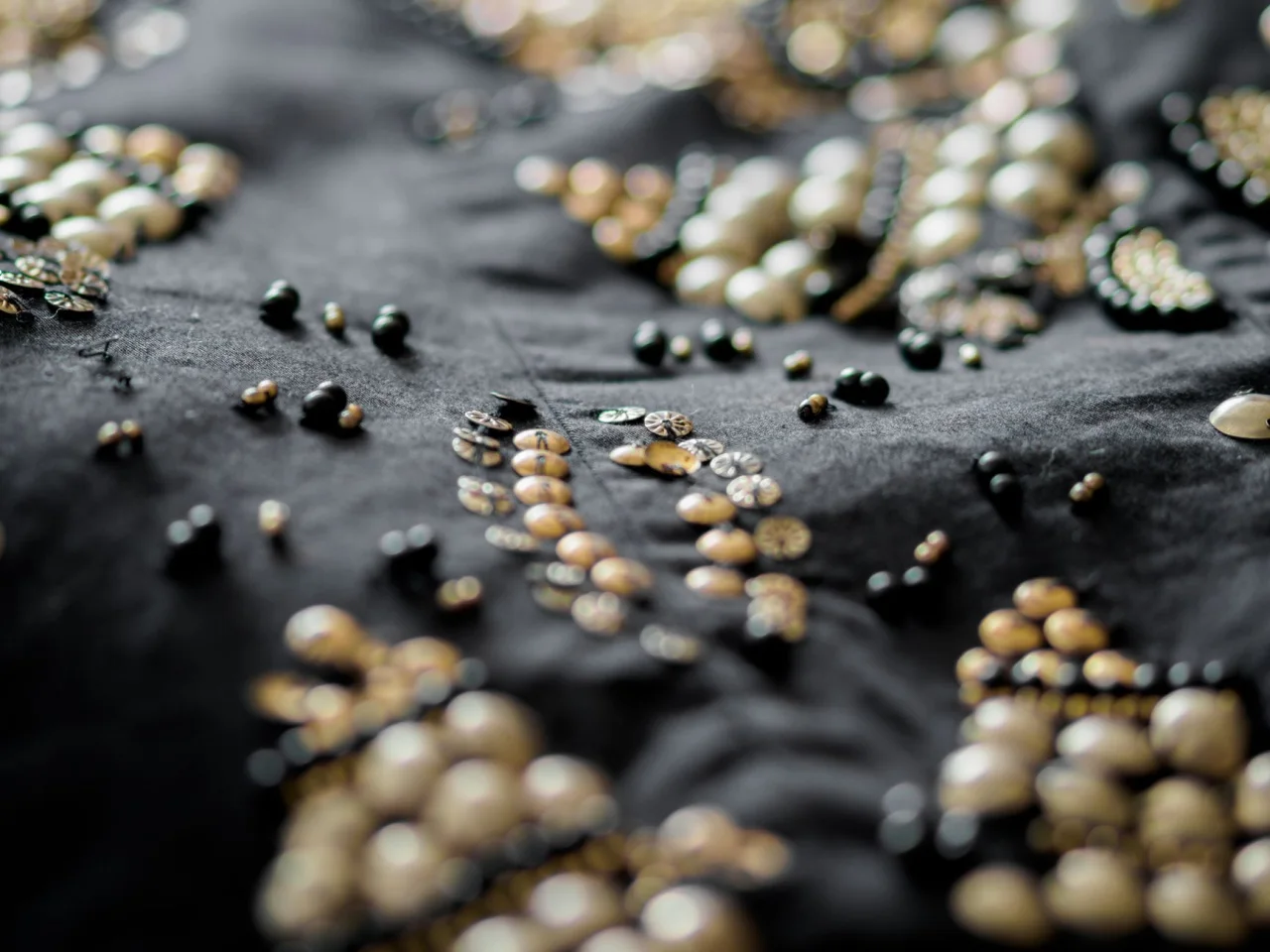
Chikankari is one of the best-loved thread techniques, a delicate hand embroidery traditionally worked in white thread on pale, lightweight cloth like muslin and fine cotton. It comes from Lucknow in India, where it remains centred to this day, and popular tradition links its spread to the Mughal court, with the empress Nur Jahan often credited in its story, as noted in the record of chikan embroidery. It uses a large family of stitches, including tepchi running lines, bakhiya shadow work and fine jali openwork.
On Pakistani summer wear, chikankari brings cool, understated elegance to lawn and cotton kurtis and suits. Learn the details in our guide to chikankari.
Resham and thread work: everyday colour
Resham simply means silk, so resham embroidery is thread work in silk or art-silk, prized for its sheen and its colour. It is probably the most widely used embroidery in Pakistani fashion because it suits any fabric weight, from a light sprig on a cotton kurti to a densely shaded floral dupatta. It is the colourful counterpoint to cold metal work on formal outfits.
Explore it in resham embroidery and the broader family of thread embroidery.
Zari: the metallic thread
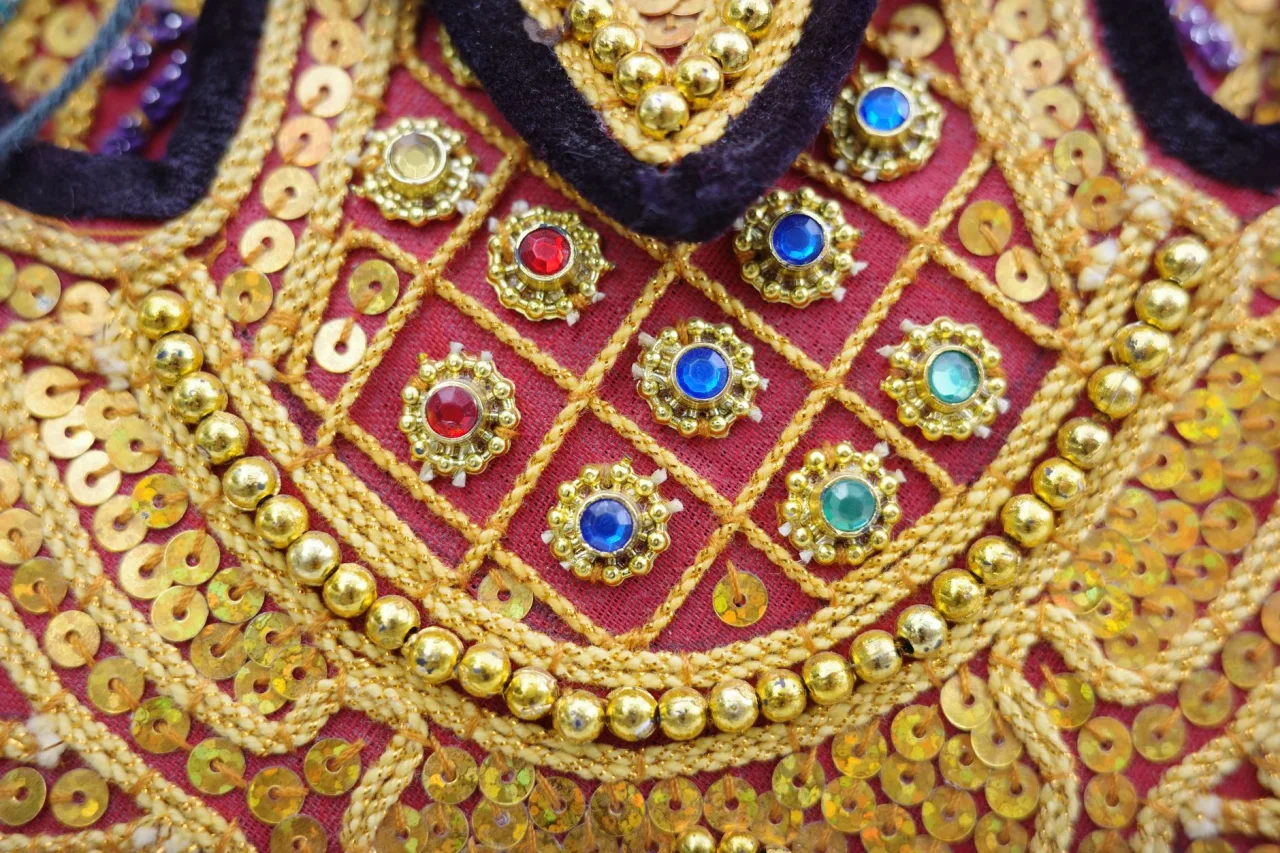
Zari is metallic thread, historically real gold or silver and today usually a metal-coated or synthetic substitute, used to draw shining outlines, motifs and borders. It is the backbone of formal and bridal shine and the reason a heavy outfit catches light across a room. Because true metal thread is costly and heavy to work, dense zari is a strong signal of a more expensive piece.
Read the full story in zari.
Reading a bridal outfit
Most heavy Pakistani bridal wear is not one technique but a layered mix: zari or dabka outlines, resham flowers, dabka fills and gota or mirror accents. When you shop bridal dresses, try to name each element, because the balance of hand metal work is what separates a true couture piece from a machine-embellished lookalike.
Dabka and tilla: coils and twisted metal
Dabka is a fine, springy metal coil that is cut into tiny lengths and stitched down like a bead, building the rich, raised, three-dimensional texture seen on luxury pret and bridal wear. Tilla is a twisted metallic thread, closely associated with the wider Punjab and with Kashmiri and North Indian traditions, used to lay bold, gleaming lines and fills. Both are labour-intensive and belong firmly to the metallic, high-value end of the spectrum.
Go deeper in our guides to dabka and tilla.
Gota: the shimmering ribbon
Gota work uses a flat metallic ribbon or lace that is folded, pleated and appliqued onto fabric, most famously in festive and folk styles across Rajasthan and the wider Punjab. It creates bold borders, leafy shapes and floral outlines with a lovely light-catching shimmer, and it can look striking for a fraction of the labour of solid metal fills. That efficiency makes it a favourite for festive dupattas and occasion wear.
See how it is applied in gota.
Mirror work: sheesha sparkle
Mirror work, also called sheesha, secures small mirrors or reflective discs to the cloth with a net of embroidery stitches around each one. It is a signature of Sindh, Balochistan and the wider western subcontinent, rooted in vibrant folk traditions, and it gives an outfit lively, playful sparkle without the weight of metal thread. It pairs beautifully with bright resham on casual and festive wear.
Discover the technique in mirror work.
Regional roots, honestly told
It is worth being clear about heritage. Many of these techniques are shared across borders and predate any modern label. Zardozi, the dense gold-wire tradition behind much bridal metal work, takes its name from the Persian words for gold and sewing, emerged as an embroidery form centuries ago and flourished under the Mughals, as the record of zardozi explains. Phulkari, the flower-work darning embroidery in silk floss on coarse khaddar cloth, is the folk tradition of the Punjab region across both Pakistan and India, according to the history of phulkari. Treating these as living, shared crafts, rather than fixed national brands, is both more accurate and more respectful.
What each technique means for price
You can predict a garment's likely price band from its embroidery once you know the categories:
- Most affordable: machine thread work and light resham on lawn or cotton.
- Mid-range: hand resham, chikankari, gota and mirror work, where hours rise but materials stay modest.
- Premium and bridal: dense hand zari, dabka and tilla, where both skilled labour and metal push the price up sharply.
Prices vary widely by fabric, density of work, whether it is hand or machine done, and the retailer, so always confirm current pricing before you buy. When you are choosing an embroidered suit, matching the technique to the occasion is the smartest way to spend well.
Frequently asked questions
What are the main types of embroidery in Pakistani fashion?
The main named techniques are chikankari, resham and other thread work, zari, dabka and tilla metallic work, gota ribbon work, and mirror or sheesha work. They fall into three broad families: thread work for colour, metallic work for shine, and embellishment for applied sparkle, and heavy outfits usually combine all three.
Which Pakistani embroidery is the most expensive?
Dense hand metallic work, especially zari, dabka and tilla, is typically the most expensive because it combines many skilled hours with costly metal thread and coils. Machine thread work and light resham on lawn sit at the affordable end. Prices vary by fabric, density and retailer, so confirm current pricing.
What is the difference between zari, dabka and tilla?
Zari is metallic thread used for shining outlines and motifs, dabka is a fine springy metal coil cut and stitched down to build raised three-dimensional texture, and tilla is a twisted metallic thread used for bold gleaming lines and fills. All three are metallic techniques common on formal and bridal wear.
Is Pakistani embroidery done by hand or machine?
Both. Everyday and mid-range clothes lean heavily on machine embroidery for speed and affordability, while luxury pret and bridal wear still rely on hand techniques for their depth and character. Checking the reverse of the fabric and looking for natural irregularity are the best ways to tell which you have.
Where do these embroidery styles come from?
They are shared regional crafts with deep roots. Chikankari centres on Lucknow, zardozi takes its name from Persian and flourished under the Mughals, phulkari is the folk embroidery of the Punjab region across Pakistan and India, and mirror work is a signature of Sindh and Balochistan. Most predate modern national labels.
More on Embroidery
Have a question or a topic to suggest?
We read every message. Tell us what you would like to see next in the journal.
Get in touch