What Is Gota Patti Work?
Rajasthan's ribbon appliqué: how gota patti is cut and folded, and how to spot quality over plastic gota.
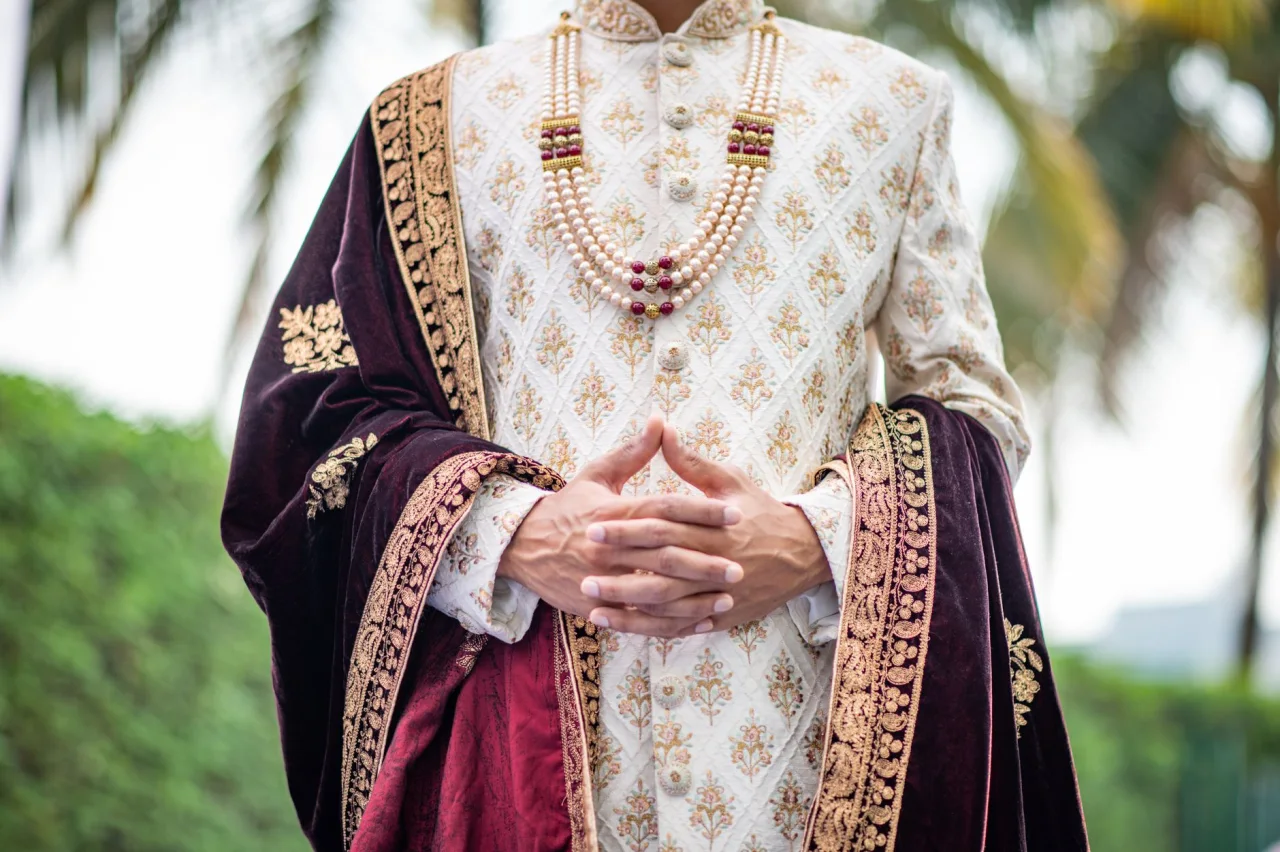
Gota is the embroidery that looks heavy and feels weightless. Instead of stitching gold thread line by line, artisans cut and fold flat metallic ribbon into leaves, petals, and borders, then appliqué it to the cloth. The result is the bright, festive shimmer of a Rajasthani bandhani or a mehndi outfit, achieved with surprisingly light material. This guide covers what gota is, its roots in Rajasthan, how gota patti is made, and how to tell fine ribbon work from a cheap plastic shortcut.
The short version
- Gota is a woven metallic ribbon or lace, and gota patti is the craft of cutting and folding it into shapes appliqued onto fabric.
- It originates in Rajasthan, India, and is used extensively on South Asian wedding and festive clothing.
- The technique is appliqué, not thread stitching: pieces are cut, folded, and hemmed or back-stitched to the cloth, giving a rich look that stays light to wear.
- Quality varies with the ribbon: real metal or copper-based gota outlasts and outshines cheap metallised polyester, sometimes called plastic gota.
What gota actually is
Gota is a narrow woven ribbon with a metallic gold or silver surface. On its own it is a trim; the embroidery craft built around it is called gota patti, where patti refers to the strips of ribbon. Artisans cut the ribbon, fold it into petals, leaves, vines, and geometric borders, and appliqué those shapes onto the base fabric. Because the ribbon covers area quickly, gota produces a bold, glittering effect far faster than line-by-line metal thread work.
The material itself has a specific history. According to the reference record, the gold and silver ribbon traditionally came from Lucknow, while the appliqué craft is rooted in Rajasthan. You can read the documented account on Wikipedia's gota embroidery page. For the wider metallic-thread family gota sits within, see our guide to zari embroidery.
Where gota comes from
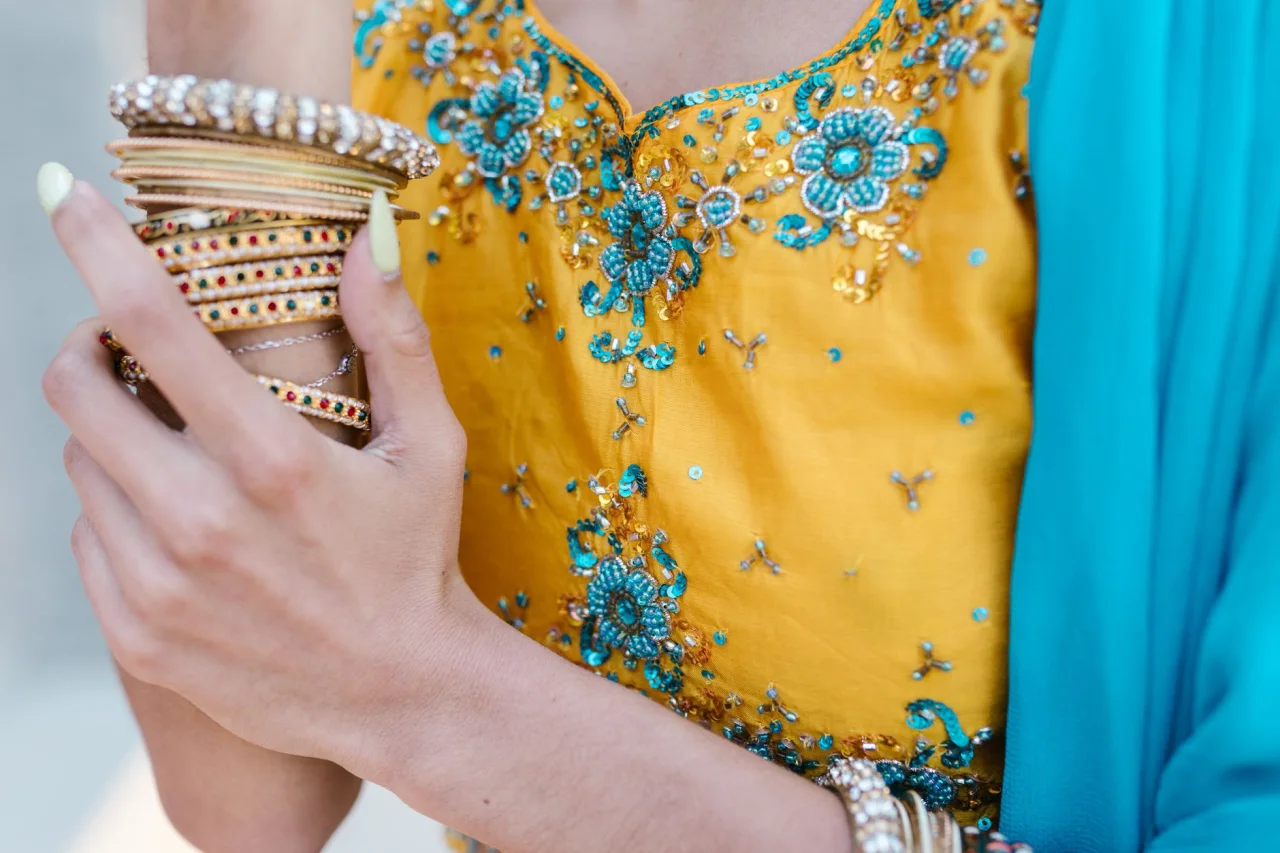
Gota patti is a Rajasthani craft, closely tied to the celebratory dress of the region: bright ghagras, odhnis, and turbans worn at auspicious functions. Historically the ribbon was made with genuine gold and silver, which made it extremely expensive. As cost pressure grew, makers shifted first to copper coated with silver, and later to metallised polyester film, commonly sold as plastic gota. That progression, from precious metal to affordable film, is exactly what the reference record describes, and it is central to understanding quality today.
What has not changed is the craft's role. Gota gives the look of heavy gold work at a fraction of the weight, which is why it remains a staple of festive and bridal wardrobes across Rajasthan, wider India, and Pakistan. It is especially loved for daytime and pre-wedding events, where a light, glittering outfit is more comfortable than dense metal embroidery.
How gota patti is made
Gota patti is appliqué, a completely different process from the couching or coil stitching used in other metal crafts. The steps run roughly like this.
- The design is transferred. Artisans trace the pattern onto the fabric, traditionally using chalk powder pushed through a pricked tracing paper stencil.
- The ribbon is cut and folded. Lengths of gota ribbon are cut and folded into shapes, petals, leaves, and scallops, following the traced outline.
- The shapes are appliqued. Each folded piece is stitched down by hemming or back-stitching it onto the fabric, so the metallic surface lies flat and secure.
- Details are added. Finer motifs, edging, and fillings build up the design, sometimes combined with beads, sequins, or thread for contrast.
Because the ribbon does the visual heavy lifting, gota patti can cover a border or a full ghagra hem relatively quickly, yet the finished piece stays light. The reference record notes that gota work creates a rich and heavy look but is light to wear, which is precisely its appeal.
Styling note: Gota reads as cheerful, daytime shine, so it pairs beautifully with bright and pastel bases. A gota-edged dupatta or hem over a plain kurta or a bandhani odhni gives instant festivity without the weight of stones and coils.
Where you will see gota
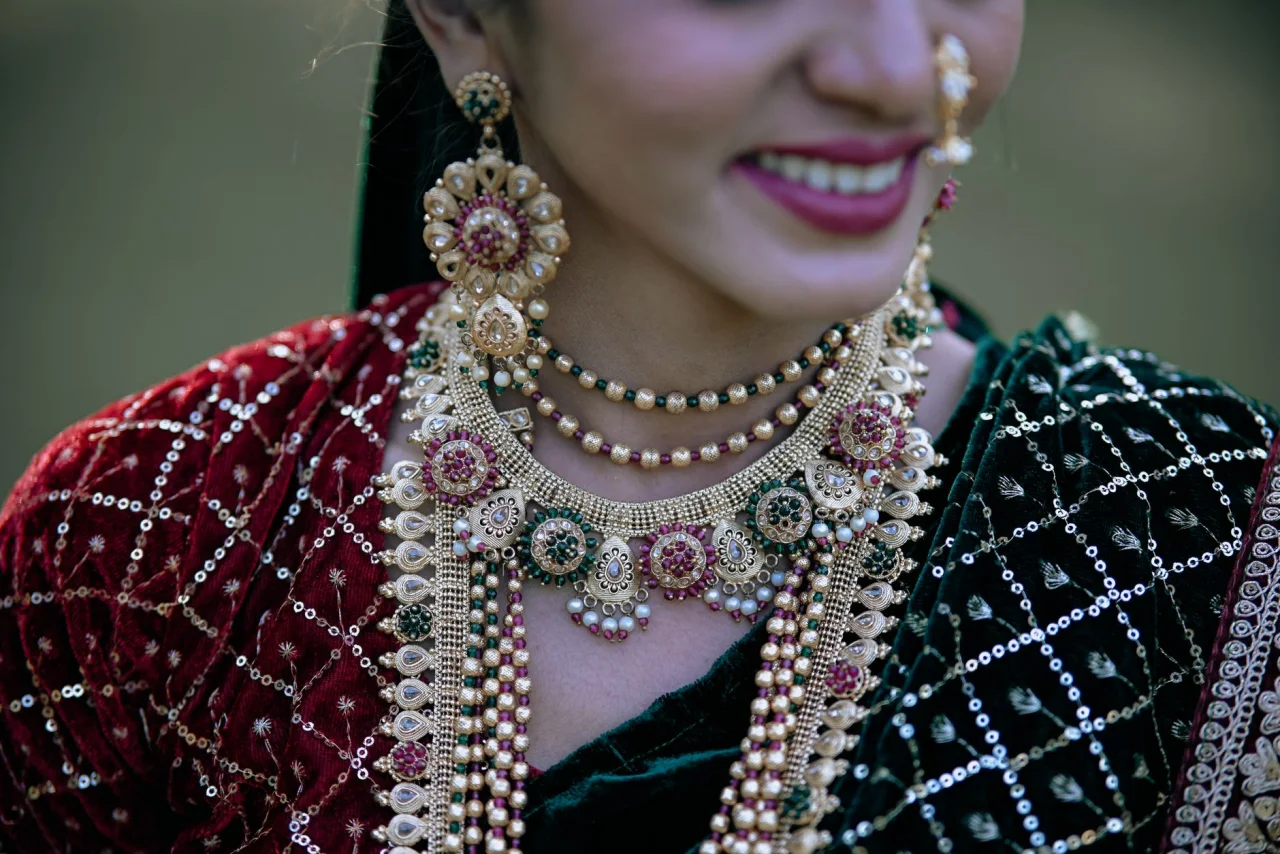
Gota belongs to celebration, and it appears most at joyful daytime and pre-wedding events.
- Mehndi and haldi outfits: Light, glittering gota is ideal for daytime mehndi outfits, where comfort and colour matter.
- Festive and Eid wear: Gota borders lift the hems, cuffs, and dupattas of wedding and festive wear without adding weight.
- Ghagras and lehengas: Traditional Rajasthani ghagras and lighter lehengas use gota on flares and borders.
- Dupattas and odhnis: Scalloped gota edging is a classic finish for veils and stoles.
Gota is one of many regional techniques, and it helps to see where it fits among the others in our overview of the different types of embroidery in Pakistani fashion.
Gota versus other metal work
Gota is easy to tell apart once you know what to look for.
- Gota versus dabka: Gota is a flat ribbon appliqued to the cloth; dabka is a coiled wire that stands up as raised texture.
- Gota versus tilla: Tilla is a single fine metal thread couched into thin lines; gota covers broader shapes with ribbon.
- Gota versus mirror work: Mirror work attaches reflective discs with stitching; gota uses no mirrors, only metallic ribbon.
- Gota versus resham: Thread embroidery uses coloured silk floss, while gota is defined by its metallic ribbon and appliqué method.
How to spot quality gota
With gota, quality lives mostly in the ribbon itself and the neatness of the appliqué.
- Check the ribbon type. Better gota uses real metal or copper-based ribbon that holds a warm, even shine. Plastic gota, made of metallised polyester film, looks brighter but flatter and can crack or peel.
- Inspect the edges. Quality work shows clean, secure hemming or back-stitching along every folded piece. Fraying ribbon or loose edges signal rushed work.
- Turn it over. Genuine gota patti is stitched, so the reverse shows tidy securing threads. Heavy glue or fusible backing suggests a stuck-on imitation.
- Bend a corner gently. Metal-based ribbon flexes and springs back; very cheap film creases sharply and keeps a white crack line where the coating splits.
- Look at the folds. Skilled gota patti has crisp, consistent petal and leaf shapes. Sloppy, uneven folds are a sign of low craftsmanship.
Care tip: Keep gota dry and dry clean it rather than washing. Metal ribbon tarnishes with moisture and plastic gota can lift with heat, so avoid direct ironing on the work and store the garment flat or loosely folded with the ribbon protected.
Is gota worth the price?
Gota is one of the more accessible ways to get a festive golden look, which is a large part of its appeal. Real metal or copper-based gota patti with dense handwork costs more and lasts far better; plastic gota on a simple hem is inexpensive but shorter lived. Price depends on the ribbon quality, the density of the work, the base fabric, and the retailer, so avoid trusting any single figure and confirm current pricing before you buy. For daytime and pre-wedding events, a moderate amount of good gota often gives the best value: bright, light, and comfortable to wear all day.
Frequently asked questions
What is gota work?
Gota is a woven metallic ribbon, and gota patti is the craft of cutting and folding that ribbon into petals, leaves, and borders that are appliqued onto fabric. It originates in Rajasthan and gives a rich golden look that stays light to wear, which makes it popular for festive and wedding clothing.
Where does gota come from?
Gota patti is a Rajasthani craft. According to the documented record, the metallic ribbon itself traditionally came from Lucknow, while the appliqué technique is rooted in Rajasthan and is used widely across South Asian wedding and festive wear.
What is plastic gota?
Plastic gota is ribbon made from metallised polyester film rather than real metal or copper. It is cheaper and very bright but flatter looking, and it can crack or peel over time. Traditional gota used genuine gold and silver, later replaced by copper coated with silver for affordability.
How can I tell good gota from cheap gota?
Check the ribbon and the stitching. Metal or copper-based gota holds a warm, even shine and flexes without cracking, while plastic gota creases sharply and shows white split lines. Good gota patti also has clean hemming, crisp folds, and tidy securing threads on the reverse rather than glue.
How should I care for gota outfits?
Keep gota dry and dry clean it instead of washing, since metal ribbon tarnishes when damp and plastic gota can lift with heat. Avoid ironing directly on the work, and store the garment flat or loosely folded with the ribbon protected by a soft cloth.
More on Embroidery
Have a question or a topic to suggest?
We read every message. Tell us what you would like to see next in the journal.
Get in touch