What Is Dabka Embroidery?
The coiled wire behind heavy work: its zardozi roots, how it is stitched by hand, and how to judge quality.
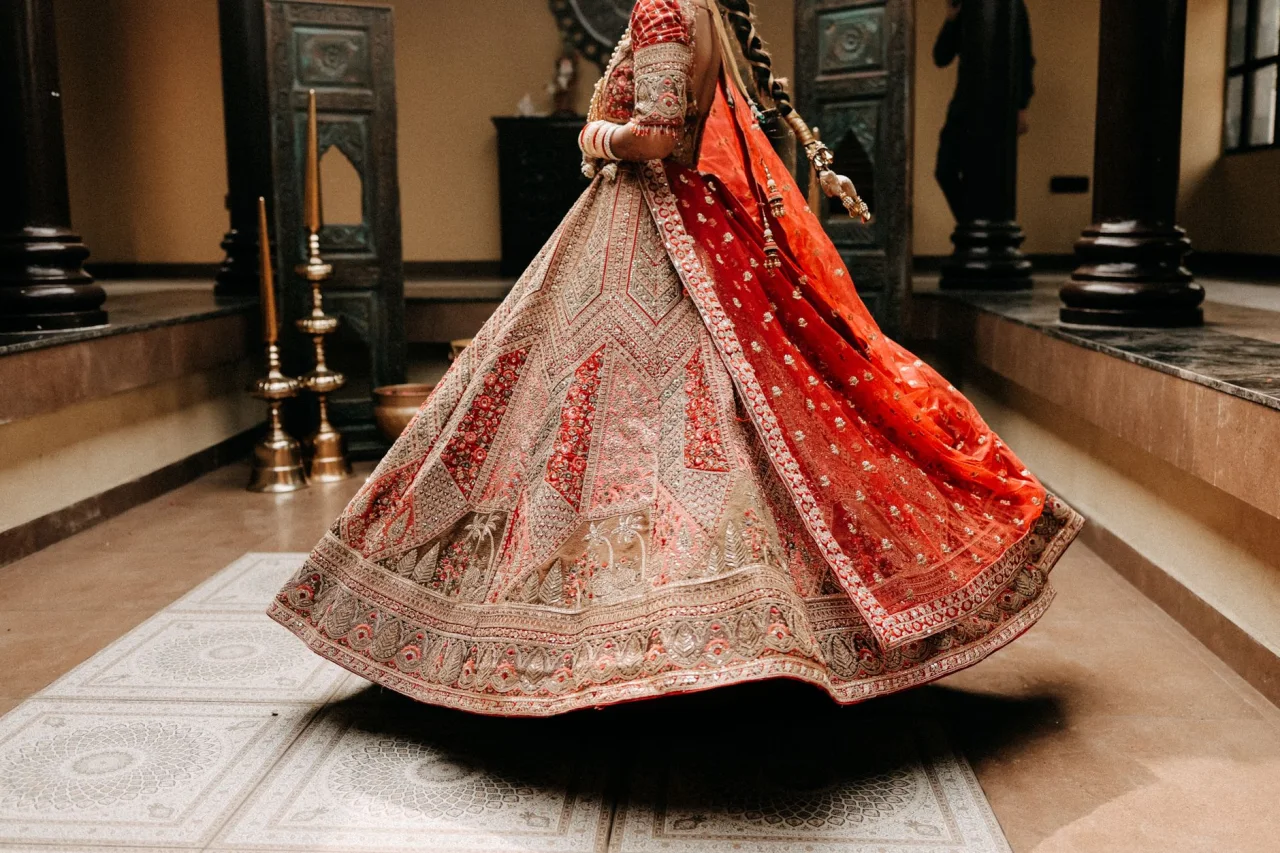
If you have ever run a finger over a bridal dupatta and felt raised, spring-like ridges that catch the light, you have touched dabka. It is one of the quiet workhorses of South Asian metallic embroidery: rarely named on a label, yet responsible for much of the texture and shine we call "heavy work." This guide explains what dabka actually is, where it comes from, how artisans stitch it, and how to tell genuine handwork from a machine-made shortcut.
The short version
- Dabka is a fine, tightly coiled metallic wire, cut into short lengths and stitched down like a bead to create raised, light-catching lines.
- It is a building block of zardozi and aari embroidery rather than a standalone tradition, and it appears most on bridal and festive wear.
- Real dabka is worked by hand on a fabric stretched taut over a wooden frame, using a hooked needle or a fine sewing needle.
- Quality shows in even coils, a secure hold, a clean reverse, and coils that do not flatten or discolour easily.
What dabka actually is
Dabka is not a stitch and not a motif. It is a material: a very fine metal wire wound into a tight, hollow coil, rather like a miniature spring. In the workshop this coil comes wound on a spool or in a hank. The artisan cuts it into tiny segments, threads a needle through the hollow centre of each segment, and tacks it to the cloth. Because each piece sits proud of the surface, dabka reads as a raised, textured line that glints as the wearer moves.
That coiled construction is what separates dabka from flat metallic threads. Where zari lies smooth against the fabric, dabka stands up from it. It belongs to a family of metal embellishments used together in the same piece: salma (a similar thin coil), sitara (small metal sequins), nakshi (a thicker, more angular coil), and kora or gijai. Craftspeople combine these to build outlines, fillings, and dense floral clusters. If you want the wider picture of metal-thread work, our guide to zari embroidery covers the flat-thread cousin that dabka is so often paired with.
Where dabka comes from
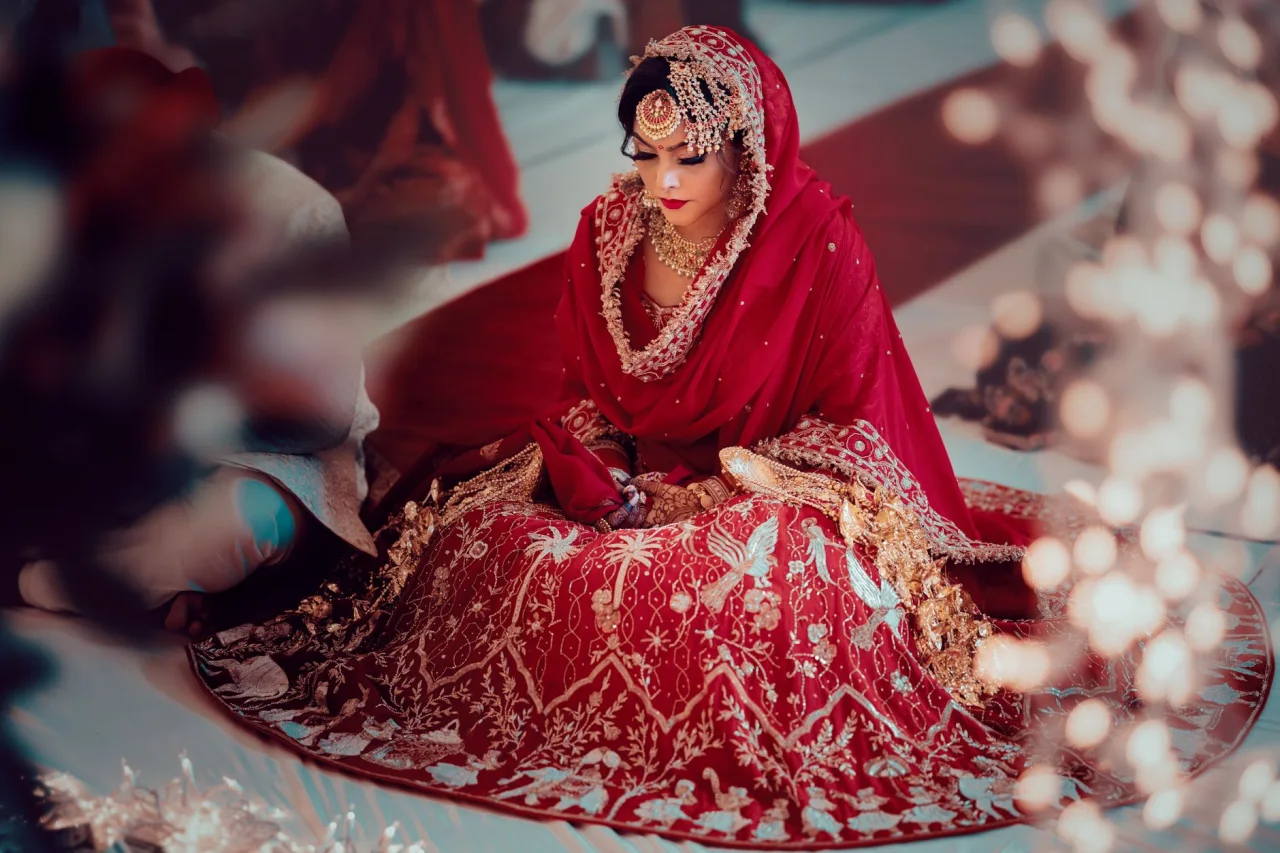
Dabka does not have a neat single origin story, because it developed as a component of zardozi, the opulent gold-and-silver embroidery of the Mughal courts. The word zardozi comes from Persian, from zar meaning gold and dozi meaning sewing, and the craft flourished under the seventeenth-century Mughal empire before declining with the loss of royal patronage and later reviving after 1947. You can read the documented history on Wikipedia's zardozi page.
Within that tradition, coiled wires like dabka and nakshi were the raised, sculptural elements that gave court garments their dimensional richness. Historically these coils were drawn from real silver, sometimes gilded with gold; today they are usually made from copper or another base wire finished with a gold or silver polish. The craft is practised across northern India and Pakistan, with well-known centres in cities such as Lucknow, Bhopal, Hyderabad, and Farrukhabad, and it remains central to the bridal industry on both sides of the border.
How dabka is worked
Genuine dabka work is slow, seated handwork. The process looks roughly like this.
- The design is traced. A pattern is pricked onto paper and transferred to the fabric with chalk or a fine powder, so the artisan has clear lines to follow.
- The cloth is stretched on a frame. The fabric is laced drum-tight over a wooden frame, called an adda or karchob. Tension is everything: a slack ground makes even coils sit unevenly.
- The coil is cut and threaded. Short segments of dabka are snipped and threaded onto the needle through their hollow centre, then couched down along the traced line so each piece locks against the last.
- Elements are combined. Dabka outlines are filled with sitara, beads, or resham (silk thread), building the motif in layers until it reads as a complete flower, paisley, or border.
Much of this is done with a hooked needle known as an aari, plied from the top while thread is fed from below, which lets a skilled hand move quickly across the frame. Because it is all worked by hand, a densely embellished bridal panel can take many days or weeks. That labour is the honest reason heavy dabka pieces cost what they do.
Styling note: Dabka reads as texture, not just shine, so it earns its place on plain grounds. A dabka-worked neckline or border on raw silk, velvet, or organza lets the coils cast tiny shadows and glow. Fussy printed fabrics fight the effect.
Where you will see dabka
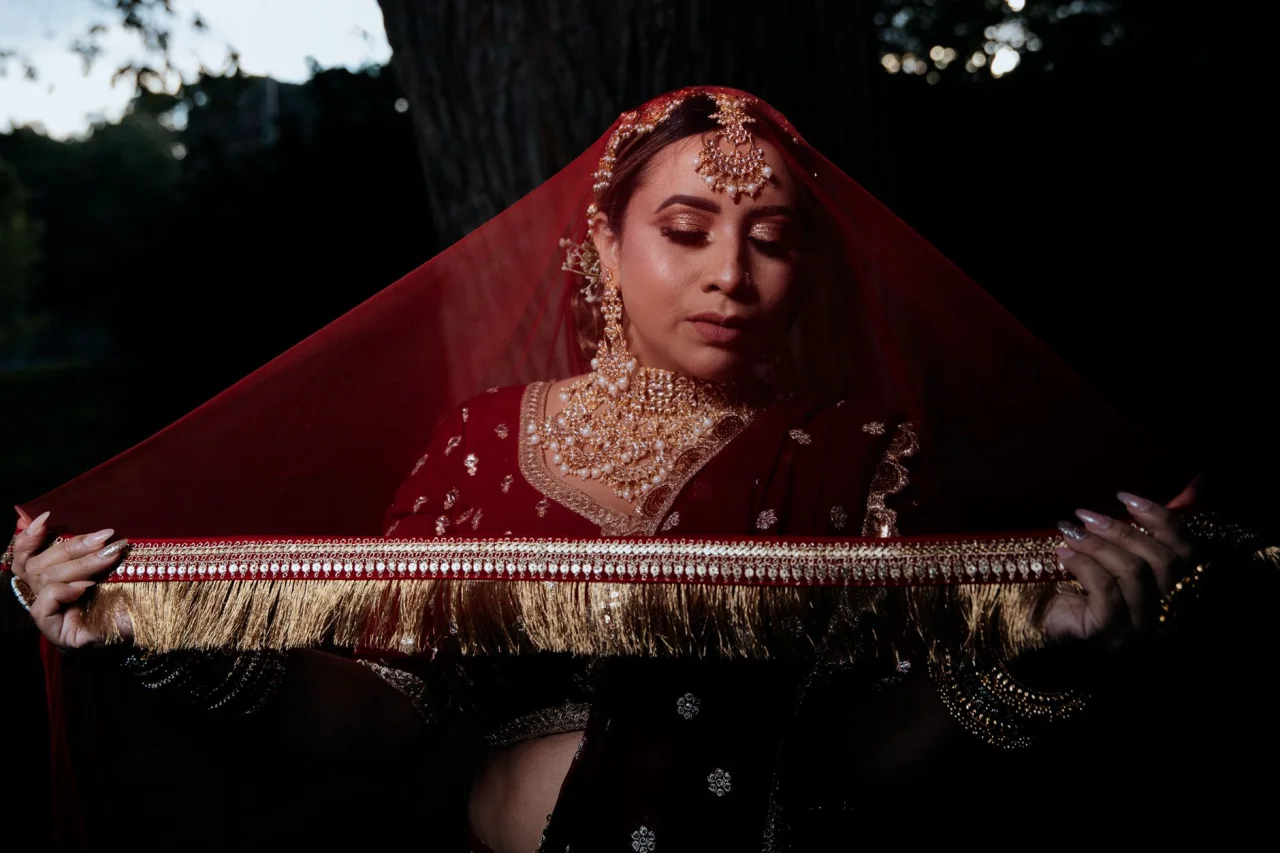
Dabka is a celebration material, reserved for pieces meant to impress under lights.
- Bridal wear: Dabka, paired with nakshi and stones, builds the dense borders and blouses seen on bridal dresses and the heavier lehenga silhouettes.
- Festive formals: Necklines, cuffs, and hems on Eid and party outfits, where a little dabka lifts an otherwise simple shirt.
- Occasion separates: The flared trousers of a gharara or sharara often carry a dabka border at the flare.
- Accessories: Clutches, potli bags, and khussa shoes finished with small dabka clusters to tie a look together.
Because dabka is one thread in a much larger toolkit, it helps to see it alongside its siblings. Our overview of the different types of embroidery in Pakistani fashion shows how coil work sits next to thread and mirror techniques on a single garment.
Dabka versus similar coil work
Shoppers often blur dabka with its relatives, so a quick map helps.
- Dabka versus nakshi: Both are coils. Dabka is finer and rounder, giving smooth raised lines; nakshi is thicker and cut with a more angular, faceted twist, so it sparkles more sharply.
- Dabka versus salma: Salma is a very similar fine coil, and the terms are sometimes used loosely for the same material by different workshops.
- Dabka versus zari and tilla: Zari and tilla are flat or smooth metallic threads that lie against the cloth, while dabka stands up from it as a coil. They are frequently combined in one motif.
- Dabka versus gota: Gota is a woven metallic ribbon applied flat as appliqué, a completely different construction that covers larger areas quickly.
How to spot quality dabka
You do not need a jeweller's eye to judge dabka. A few checks separate careful handwork from a rushed, imitation finish.
- Look at the coils up close. Genuine dabka shows tiny, even spirals catching light along the line. If the "coils" look printed, moulded, or perfectly uniform with no visible winding, you may be seeing a machine-made imitation trim.
- Check the raised feel. Real dabka sits proud of the fabric with a springy, three-dimensional texture. Flat, painted-on shine is not dabka.
- Turn the piece over. Hand embroidery leaves a reasonably tidy reverse with visible securing stitches. A blank back with heavy glue or a fusible film often signals machine or stuck-on work.
- Test security gently. Well-anchored coils do not lift or unravel when you run a nail lightly along them. Loose, snagging coils will shed quickly.
- Watch the finish. Better wire holds its gold or silver colour; very cheap coils tarnish, blacken, or flake after light wear.
Care tip: Dabka is delicate. Store the garment inside out or with a soft cloth over the work, avoid perfume and moisture directly on the coils, and always dry clean rather than machine wash. Coils crushed flat rarely spring back.
Is dabka worth the price?
Hand dabka work is genuinely labour intensive, so a real hand-embellished bridal or festive piece sits at the premium end, while lightly worked ready-to-wear can be very affordable. Prices vary enormously by the density of work, the base fabric, the wire quality, and the retailer, so treat any single figure with caution and confirm current pricing before you buy. What you are paying for, when the work is real, is hours of skilled hand labour and a texture no flat print can copy. If your budget is tight, a smaller area of true handwork on a plain ground often looks richer than a garment covered in cheap imitation trim.
Frequently asked questions
What is dabka embroidery made of?
Dabka is a fine metallic wire wound into a tight, hollow coil, like a tiny spring. Historically the wire was silver, sometimes gilded with gold. Today it is usually a base metal such as copper finished with a gold or silver polish, cut into short segments and stitched onto fabric.
Is dabka the same as zardozi?
Not exactly. Zardozi is the broad tradition of gold and silver metal-thread embroidery, and dabka is one of the coiled materials used within it. So dabka work is usually a form of zardozi or aari embroidery, but zardozi also includes flat threads, sequins, beads, and stones.
How can I tell hand dabka from machine work?
Look closely at the coils for tiny, even spirals and a raised, springy texture, then turn the piece over. Genuine handwork sits proud of the cloth and leaves visible securing stitches on the reverse, while imitation trim often looks flat or moulded and hides a glued or fused back.
Can dabka work be washed at home?
No. The coils are delicate and can crush, snag, or tarnish. Dabka garments should be dry cleaned, stored with the work protected by a soft cloth, and kept away from moisture and perfume sprayed directly onto the embroidery.
Why is dabka work expensive?
Genuine dabka is slow handwork, cut and stitched coil by coil on a frame, so a densely worked piece represents many hours of skilled labour. Cost also depends on the wire quality and base fabric. Prices vary widely by density, materials, and retailer, so confirm current pricing before buying.
More on Embroidery
Have a question or a topic to suggest?
We read every message. Tell us what you would like to see next in the journal.
Get in touch