What Is Tilla Work?
Kashmir's golden thread: its Persian roots, the couching technique, and how to judge real tilla dozi.
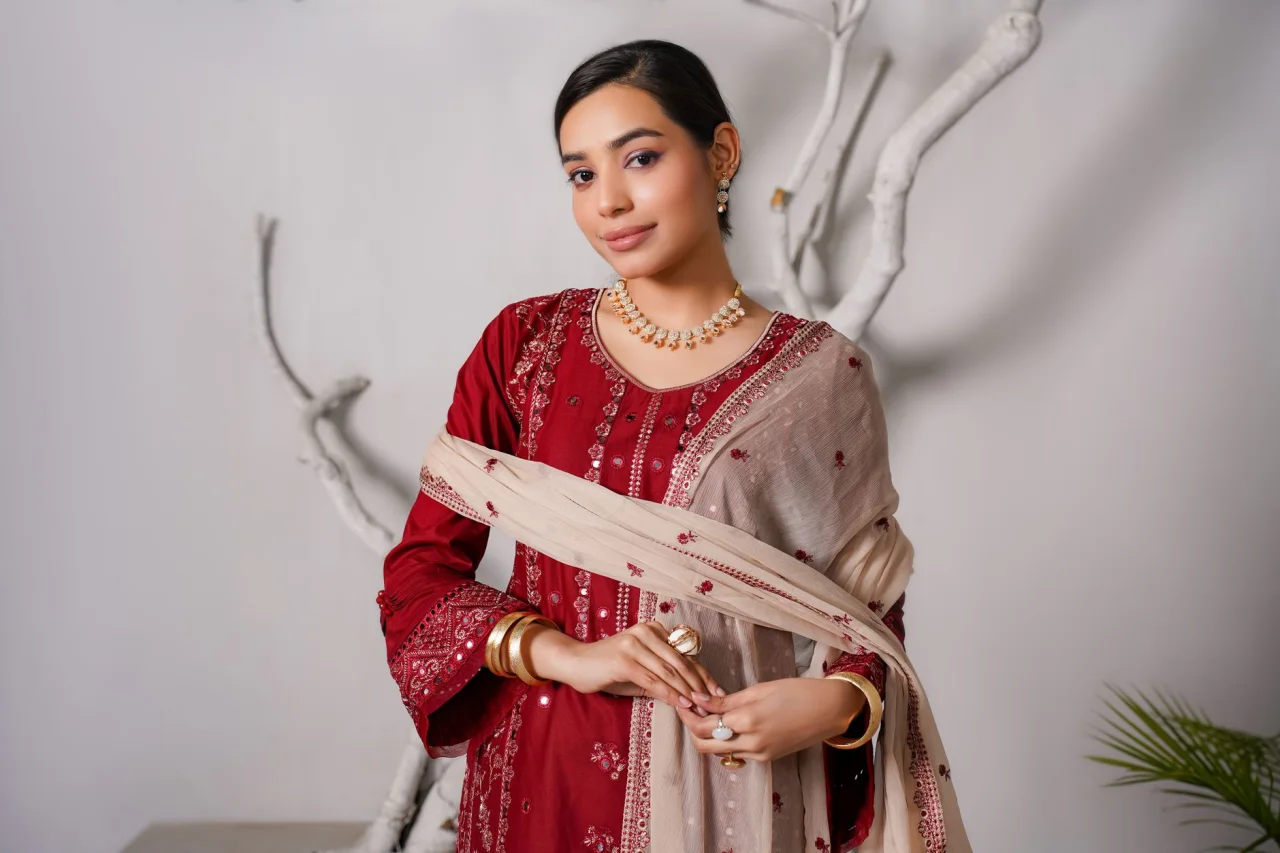
Tilla is the golden thread that has draped Kashmiri brides for centuries. Where dabka gives raised coils and gota gives ribbon, tilla lays smooth, gleaming metallic lines of vines and paisleys across a pheran or shawl. This guide explains what tilla work is, its Persian and Kashmiri roots, how it is stitched, and how to separate real tilla dozi from a printed or machine-made lookalike.
The short version
- Tilla is embroidery worked in fine metallic gold or silver thread, most closely associated with Kashmir, where it is called tilla dozi.
- The name comes from the Persian word for gold, and the craft is traditionally linked to Iran and reached Kashmir through centuries of court patronage.
- Real tilla is couched by hand: the metal thread is laid on the surface and tacked down with a finer thread, following traced floral and paisley motifs.
- Quality shows in fine, even lines, a secure couching thread, a rich unfaded shimmer, and clean work on both faces.
What tilla work actually is
Tilla, sometimes spelled tila, is metallic-thread embroidery. The defining material is a thin gold or silver thread, historically drawn from real precious metal and today usually made from gold or silver plated copper. That thread is worked into flowing designs, chinar leaves, paisleys, and climbing vines, that shimmer against the base cloth. In Kashmir the craft is known as tilla dozi, and the shining thread itself sits in the same family as zari.
Unlike coil work such as dabka, tilla thread is smooth and lies close to the fabric, so the effect is linear and elegant rather than heavily raised. It is prized for turning a plain woollen pheran or a fine shawl into a ceremonial garment. For the broader story of the flat metallic thread tilla belongs to, see our guide to zari embroidery.
Where tilla comes from
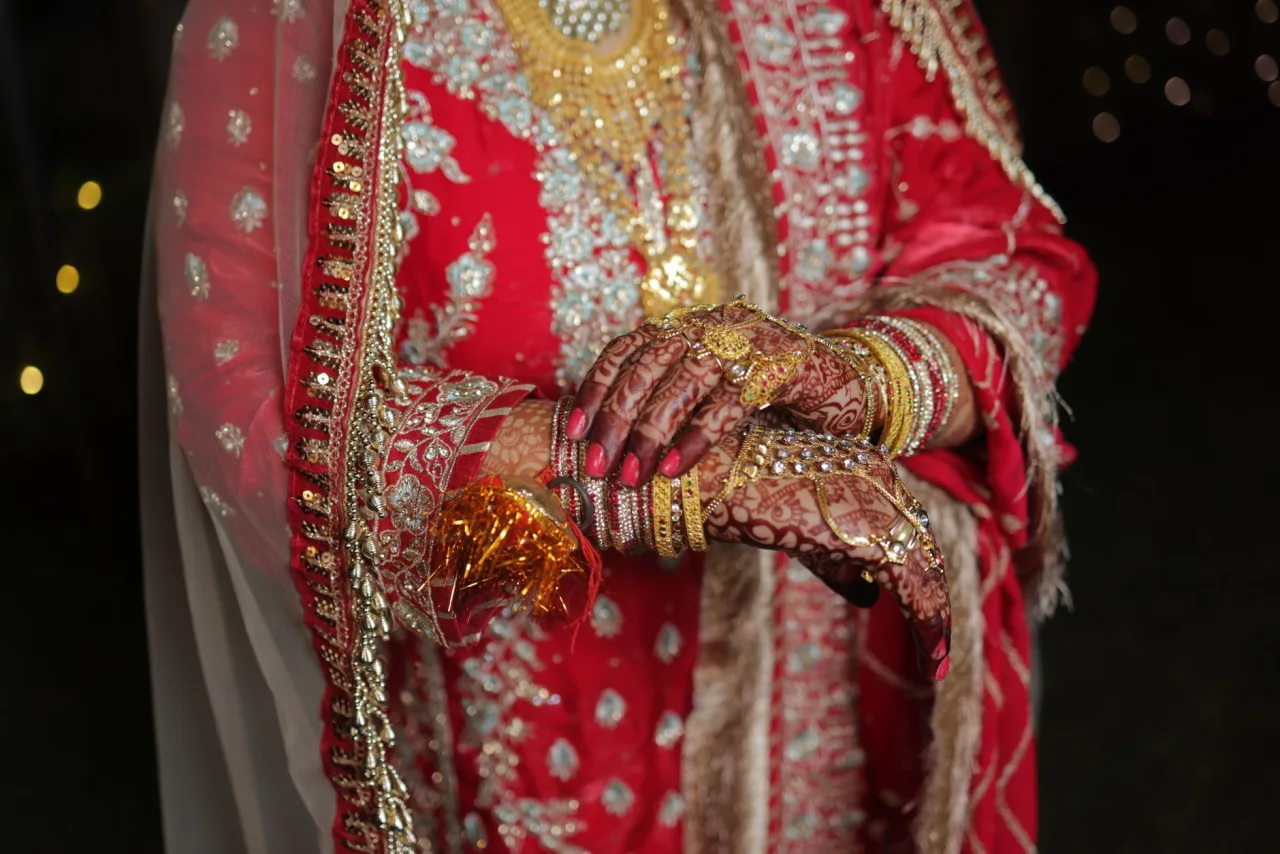
Tilla is deeply tied to Kashmir, but its thread has older roots. The word derives from the Persian for gold, and according to the craft record held by the Asia InCH encyclopedia of intangible cultural heritage, tilla dozi is said to have originated in the Iranian village of Zari and was brought to Kashmir by Mughal rulers who patronised the craft. You can read that documented account on the Asia InCH page on tilla and dori work of Kashmir.
Under court patronage, garments threaded with gold and silver became markers of status, and the tradition settled into Kashmir as its own signature craft, especially for bridal and ceremonial dress. The same Persian-to-Mughal path shaped the wider world of gold embroidery documented on Wikipedia's zardozi page. As real gold and silver grew costly, artisans shifted to gold and silver plated copper thread to keep the look accessible while preserving the technique.
How tilla is worked
Traditional tilla is couching work, which means the metal thread is laid on top of the fabric and stitched down rather than passed repeatedly through it. The steps look roughly like this.
- The motif is traced. A design is pricked onto paper and transferred to the cloth with chalk or powder so the artisan can follow the vines and paisleys precisely.
- The fabric is tensioned. The ground is held taut, on a frame or in the hand, so the laid thread sits flat and even.
- The metal thread is laid. The gold or silver tilla thread is placed along the traced line on the surface of the cloth.
- It is couched down. A finer thread, sometimes silk, tacks the metal thread to the fabric at small intervals with a needle, holding the design in place without hiding the shine.
Because the shimmer is created by laying and tacking rather than filling, tilla is comparatively economical with thread yet demanding of skill: uneven laying shows immediately. A well-worked bridal pheran can take many days of careful handwork.
Styling note: Tilla loves a calm background. On a solid pheran, shawl, or a plain silk shirt, the gold lines glow and the paisleys read clearly. Keep jewellery restrained so the thread stays the focus.
Where you will see tilla
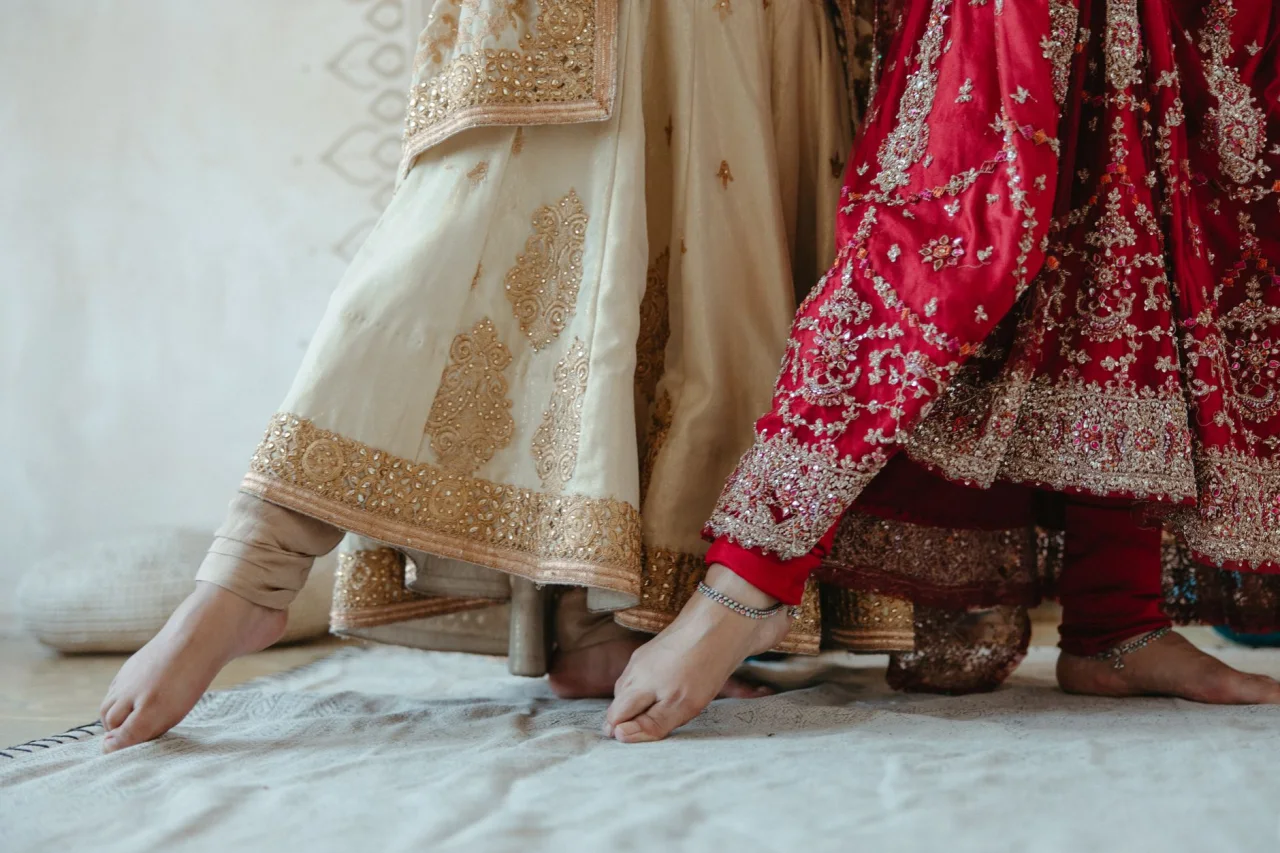
Tilla is a heritage and celebration craft, and it appears most on garments meant to last and impress.
- Kashmiri pherans: The long woollen cloak is the classic canvas for tilla, especially bridal versions edged and paneled in gold.
- Shawls and stoles: Fine shawls carry tilla borders and butis, a favourite for winter formals and gifting.
- Bridal and ceremonial wear: Traditionally reserved for weddings, tilla features on bridal dresses and the layered looks in our complete bridal dresses guide.
- Festive formals: Necklines, cuffs, and hems on wedding wear and party outfits where a gold outline lifts a simple base.
Tilla is one of several metal techniques used across the region, and it is worth seeing how it sits beside the others in our overview of the different types of embroidery in Pakistani fashion.
Tilla versus other metal work
Because several crafts use gold thread, shoppers mix them up. Here is how tilla differs.
- Tilla versus dabka: Tilla is a smooth thread laid flat and couched down; dabka is a coiled wire that stands up from the cloth as raised texture.
- Tilla versus gota: Gota is a woven metallic ribbon applied as flat appliqué, covering broader shapes; tilla is a single fine line of thread.
- Tilla versus zari: Zari is the general term for metallic thread; tilla is essentially the Kashmiri tradition and technique of working with it, so the two overlap closely.
- Tilla versus resham: Thread embroidery in resham uses coloured silk floss for a matte, painterly effect, while tilla is defined by its metallic gold or silver shine.
How to spot quality tilla
A few close checks tell you whether tilla is genuine handwork worth its price.
- Study the line. Real tilla shows a continuous, even metal thread following the motif, with small couching stitches visible if you look closely. Printed or foil-stamped imitations have no thread at all, just a flat metallic mark.
- Look for the couching thread. Hand tilla is tacked down at intervals by a finer thread. Those tiny anchoring stitches are a good sign of authenticity.
- Check both faces. Genuine handwork leaves neat, logical thread paths on the reverse. A blank back with glue or fusing suggests a stuck-on or machine imitation.
- Test the shimmer. Better plated thread keeps a warm, even glow. Very cheap thread looks brassy, blackens, or flakes after light wear.
- Feel the hand. Real tilla lets the fabric stay supple along the line. Stiff, plasticky patches often mean a fused imitation rather than couched thread.
Care tip: Never machine wash tilla. Dry clean it, fold with acid-free tissue or a soft cloth over the work, and keep it away from damp and direct perfume. Metal thread tarnishes with moisture, so store pherans and shawls in a dry, breathable cover.
Is tilla worth the price?
Genuine hand tilla is a slow, specialised craft, so a real tilla pheran or shawl sits at the premium end, while lightly worked or machine-imitation pieces can be inexpensive. The cost depends on the density of the design, the base fabric, the thread quality, and the reputation of the workshop. Because figures swing so widely, treat any single quoted price with caution and confirm current pricing before buying. When the work is authentic, you are paying for hours of skilled hand couching and a piece with genuine heritage value, often kept and passed down rather than worn once.
Frequently asked questions
What is tilla work?
Tilla work is embroidery done in fine metallic gold or silver thread, most closely associated with Kashmir, where it is called tilla dozi. The metal thread is laid on the fabric and couched down into flowing floral and paisley designs, giving a smooth, shimmering line rather than a raised coil.
Where does tilla embroidery come from?
The name comes from the Persian word for gold. According to the Asia InCH craft record, tilla dozi is said to have originated in the Iranian village of Zari and was brought to Kashmir under Mughal patronage, where it became a signature bridal and ceremonial craft.
What is the difference between tilla and dabka?
Tilla is a smooth metallic thread laid flat on the fabric and tacked down, giving elegant gold lines. Dabka is a coiled metal wire cut into short pieces and stitched on so it stands up from the cloth as raised, springy texture. They are different materials often used in the same garment.
How do I know if tilla is real handwork?
Look for a continuous metal thread with tiny couching stitches holding it down, and check the reverse for neat thread paths rather than glue or fusing. Printed or foil imitations show a flat metallic mark with no thread and a stiff, plasticky feel.
How should I care for a tilla pheran or shawl?
Dry clean only, and never machine wash. Store it folded with a soft cloth or acid-free tissue over the work, keep it in a dry breathable cover, and avoid moisture and perfume directly on the thread, since metal tilla tarnishes when damp.
More on Embroidery
Have a question or a topic to suggest?
We read every message. Tell us what you would like to see next in the journal.
Get in touch