Bridal Dresses: What to Wear
Silhouette, colour, fabric, budget and timeline: the decisions behind a bridal look you will love in every photo.
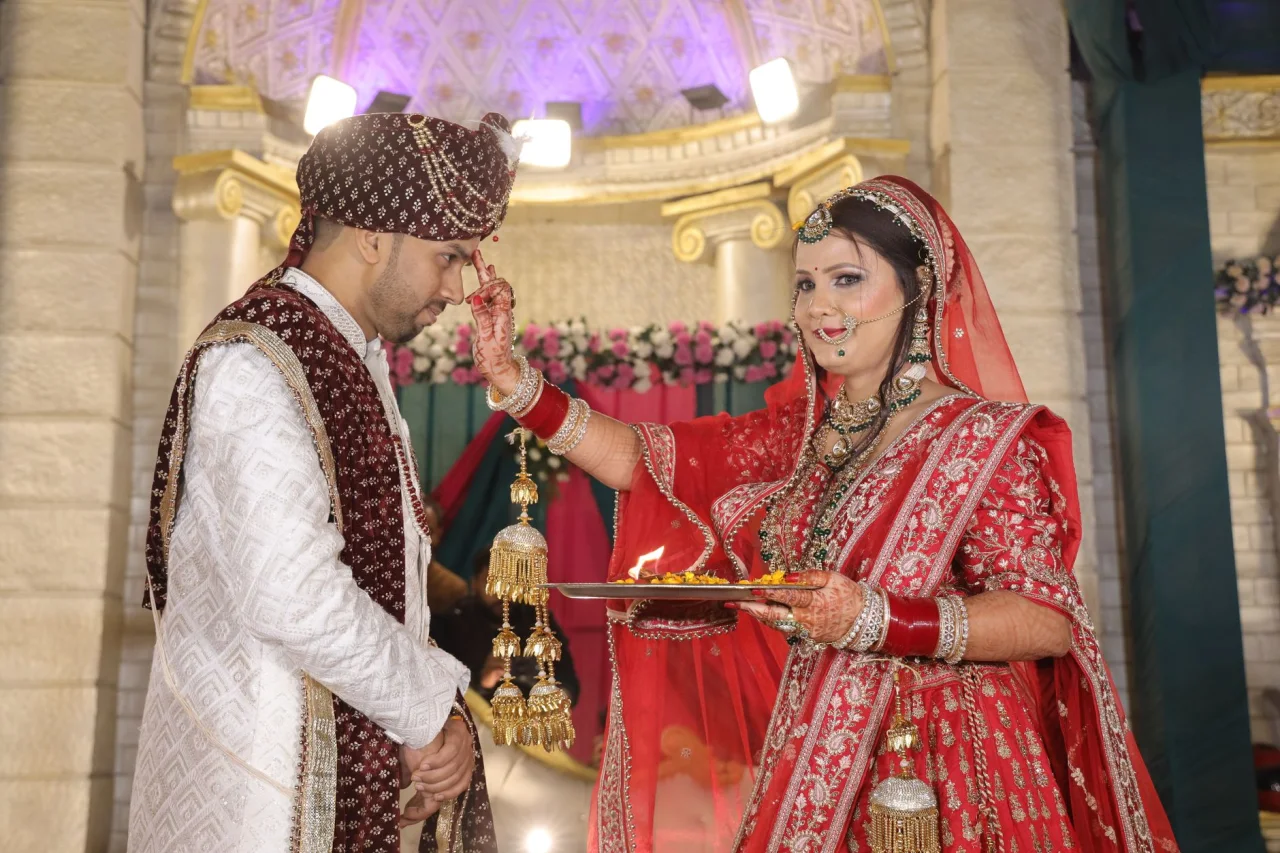
Your bridal outfit is the one you will see in photographs for the rest of your life, so the decision deserves a clear head as well as an open heart. This complete guide is the practical companion to the inspiration boards: how to choose a silhouette, what the colours mean, which fabrics behave, how to budget honestly and how to plan the timeline so nothing goes wrong in the final week.
The short version
- Start from the event and your comfort, then let silhouette and fabric follow.
- Colour carries meaning, but there are no rigid rules; red is classic, and pastels and jewel tones are fully bridal now.
- Fabric decides how an outfit drapes, weighs and lasts through a long day, so choose it deliberately.
- Order early and plan fittings; hand work takes time and the final fitting should be close to the wedding.
Begin with the ceremony, not the outfit
South Asian weddings usually unfold across several events, and each has its own formality. Before you shop, list the functions you are dressing for as the bride: perhaps a mehndi, a nikah or engagement, the main barat or ceremony, and a walima or reception. The main ceremony is typically your most elaborate look, while a walima leans formal and glamorous and a mehndi is playful. Deciding how heavy each outfit should be, before you shop, stops you buying three near-identical lehengas or one that fights the mood of its event.
If a roundup of ready looks would help you picture the options, our bridal dress ideas for 2026 pairs silhouettes with budgets and body types. This guide focuses on the decisions behind those looks.
Choosing a silhouette that fits your body and your day
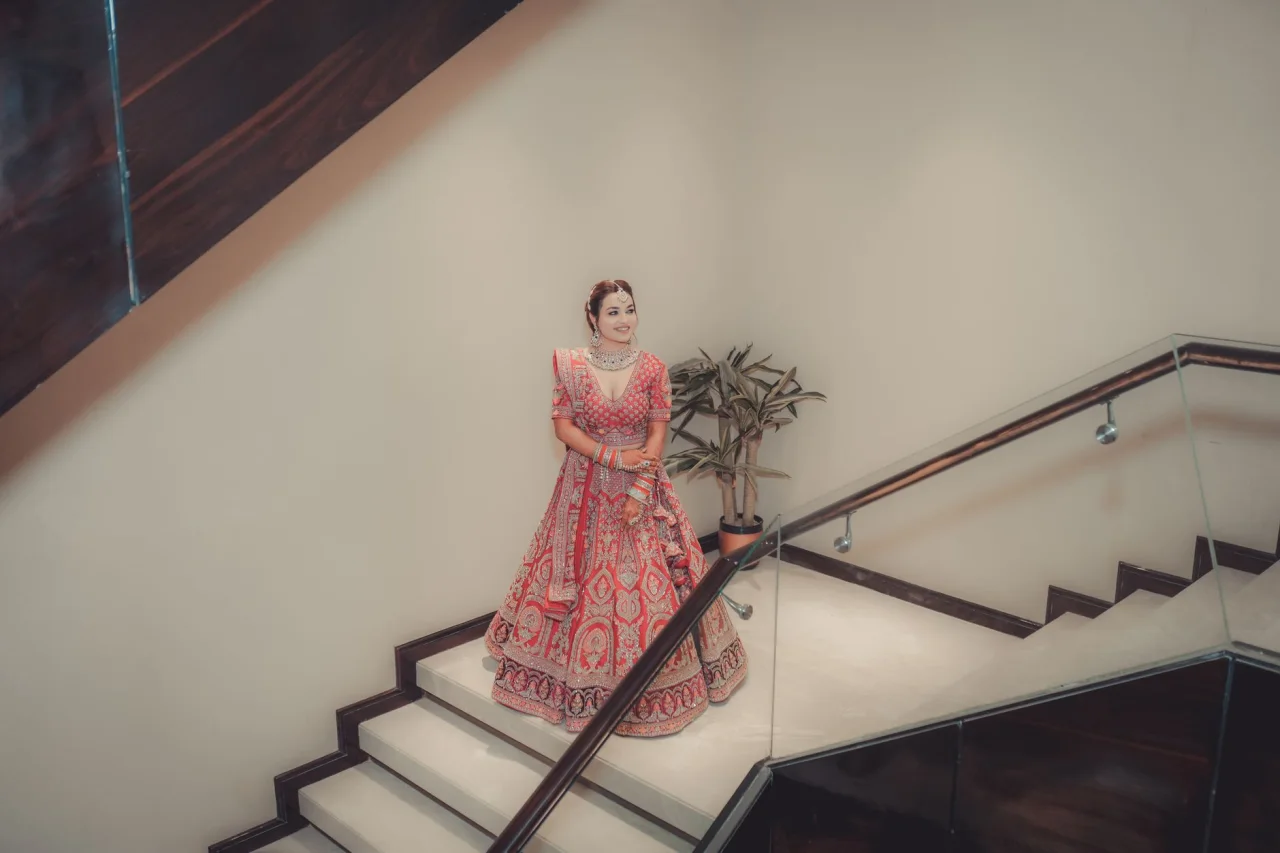
The lehenga choli is the default bridal shape and has been popular across the subcontinent since roughly the 16th century, but the right silhouette is the one that flatters your frame and lets you get through the day.
- Lehenga choli: the most versatile and photogenic; volume and border weight can be tuned to your height. Understand the pieces in our complete lehenga guide.
- Anarkali gown: fitted-to-flared and floor-length, forgiving and comfortable, with no draping required. A strong choice if you want ease.
- Gharara or sharara: Mughal-inspired, elegant and full of movement, especially fitting for a nikah. See what a gharara is.
- Saree: timeless and stately, though it rewards practice with the drape and a well-fitted blouse.
As a rule of thumb, petite brides suit lighter flares and single tones that elongate, taller brides carry heavy borders and trains well, and curvier brides are flattered by a defined waist and structured blouse.
Styling note: comfort is not the enemy of glamour
You will wear this outfit for many hours through rituals, meals and photos. Make sure you can sit, breathe and walk in it. A slightly lighter lehenga you can move in will always photograph happier than a magnificent one you are enduring.
Colours: meaning, not rules
Colour choice is personal, but a little context helps. Across many South Asian traditions red and maroon signal celebration and new beginnings, which is why they remain the classic bridal choice at an Indian wedding, particularly for the main ceremony. That is a meaningful tradition, not an obligation.
- Red and maroon: classic, regal and camera-friendly under warm lighting.
- Pastels: blush, ivory, powder blue and sage feel modern and romantic, ideal for daytime and destination weddings; anchor them with contrast so they do not wash out.
- Jewel tones: emerald, royal blue and plum are the confident middle path between red and pastel.
The one genuine caution is coordination, not colour: if a particular relative or the groom's outfit is in a specific shade, a quick check avoids an accidental clash in photos.
Fabric decides how the outfit lives
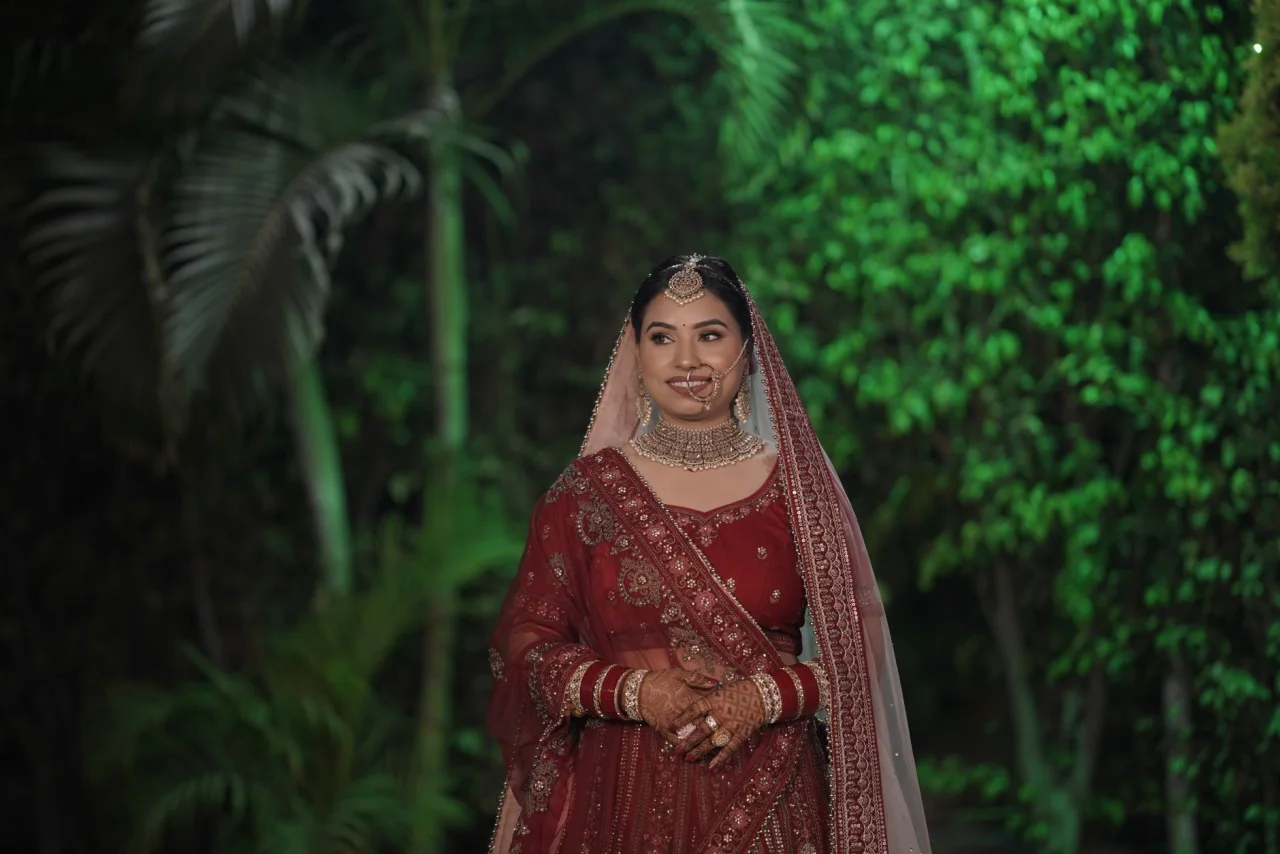
Two lehengas in the same colour can feel completely different depending on fabric. Fabric controls drape, weight, warmth and how the embroidery sits.
- Silk and raw silk: structured, rich and regal, holding heavy work beautifully; ideal for cooler weather and formal ceremonies. Read how silk behaves and how to care for it.
- Velvet: plush and warm, made for winter weddings.
- Georgette and chiffon: lightweight and flowing, forgiving to wear and good for warm climates or a bride who wants to move.
- Net and organza: sheer and voluminous for a dramatic, layered skirt.
Match fabric to your season and your stamina. A heavy silk lehenga is glorious in December and gruelling in a June afternoon.
Embroidery and the work that sets the price
Much of a bridal outfit's cost and character comes from its surface work. Knowing the techniques helps you judge quality and value.
- Zardozi and dabka: raised metallic hand embroidery, the height of bridal opulence.
- Gota and gota patti: applied metallic ribbon work, common on festive and bridal lehengas.
- Zari: metallic thread woven or embroidered into the fabric, central to Banarasi and Kanjeevaram weaves.
These heritage techniques are central to couture bridal wear; designer Sabyasachi Mukherjee, for instance, is known for reviving traditional textiles such as Banarasi silk in his bridal collections. Genuine hand work takes time and skilled labour, which is reflected in the price and, usually, in the finish. To learn how to spot quality embroidery before you pay for it, our overview of gota work is a useful primer.
Budgeting honestly
Bridal pricing is famously wide-ranging. The cost of a single outfit shifts dramatically with the fabric, the density and type of hand embroidery, and whether the piece is designer, boutique or ready-to-wear. Because of that, treat any figure you see as a broad range and confirm current pricing with the retailer or designer directly before you plan a budget.
You have more options than full-price designer couture. Renting a heavily worked piece for one night, choosing a semi-stitched base finished by a trusted tailor, or elevating a high-street lehenga with strong jewellery can all produce a stunning result. For a structured way to weigh fit, fabric and price together, see our lehenga buying guide.
Tip: the timeline is part of the outfit
Hand embroidery and made-to-order pieces can take many weeks to months. Start looking early, place the order with time to spare, and book at least two fittings, keeping the final one close to the wedding so any last changes in fit are captured.
Jewellery, dupatta and finishing the look
The outfit is only complete once the jewellery, dupatta or veil and footwear are chosen together. Keep one element as the hero. If the lehenga is densely embroidered, let the jewellery stay refined; if the outfit is simpler, this is the moment for a bold maang tikka, statement necklace or heavy jhumkas. Decide how the dupatta will be set, whether draped over the head, pinned at the shoulder or double-draped, since it changes both the silhouette and how much of the blouse shows. Finally, choose footwear you can stand and dance in, and break it in before the day.
Your bridal decision checklist
- Which events am I dressing for, and how formal is each?
- Does my silhouette flatter my frame and let me move comfortably?
- Is my colour one I love, and does it avoid clashing with key family or the groom?
- Is the fabric right for the season and the length of the day?
- Do I understand the embroidery and feel it is worth the price?
- Have I confirmed current, realistic pricing rather than assuming?
- Have I ordered early and booked fittings, with the last one close to the wedding?
- Are jewellery, dupatta drape and footwear planned as one look?
Work through those, coordinate your other function looks such as the mehndi outfit, and you will walk into every event feeling like yourself, only more so.
Frequently asked questions
What colour should a bride wear?
There is no single correct colour. Red and maroon are the classic choice and carry meanings of celebration and new beginnings in many traditions, but pastels, ivory and jewel tones are fully bridal today. Choose a shade you love that suits the event and your complexion, and simply check it does not clash with the groom's outfit or key family colours in photos.
How do I choose a bridal silhouette for my body type?
Start from comfort and your frame. Petite brides suit lighter flares and single tones that elongate, taller brides carry heavy borders and trains well, and curvier brides are flattered by a defined waist and a structured blouse, such as an anarkali gown or a well-cut lehenga. These are gentle guides, so try several shapes and trust what feels confident.
Which fabric is best for a bridal outfit?
It depends on your season and stamina. Silk, raw silk and velvet are structured, rich and ideal for cooler weather and heavy work, while georgette, chiffon and net are lighter and more forgiving for warm climates or a bride who wants to move easily. Match the fabric to the weather and how long you will be wearing it.
How much does a bridal dress cost?
Bridal pricing varies widely with fabric, the density and type of hand embroidery, and whether the piece is designer, boutique or ready-to-wear, so any figure should be treated as a broad range and confirmed with the retailer. Rental, semi-stitched and high-street options make beautiful bridal looks achievable across many budgets.
How early should I start planning my bridal outfit?
Begin early, because hand embroidery and made-to-order pieces can take many weeks to several months. Place your order with time to spare and book at least two fittings, keeping the final fitting close to the wedding so any changes in fit are captured before the day.
How should I choose jewellery to go with my bridal dress?
Let one element lead. If the outfit is heavily embroidered, keep the jewellery refined so the two do not compete; if the outfit is simpler, use a bold maang tikka, statement necklace or heavy jhumkas as the focal point. Planning the jewellery, dupatta drape and footwear together gives the most cohesive final look.
More on Wedding & Occasion Fashion
Have a question or a topic to suggest?
We read every message. Tell us what you would like to see next in the journal.
Get in touch