What Is Thread Embroidery?
Floss work explained: the regional traditions, the core stitches, and how to tell hand from machine embroidery.
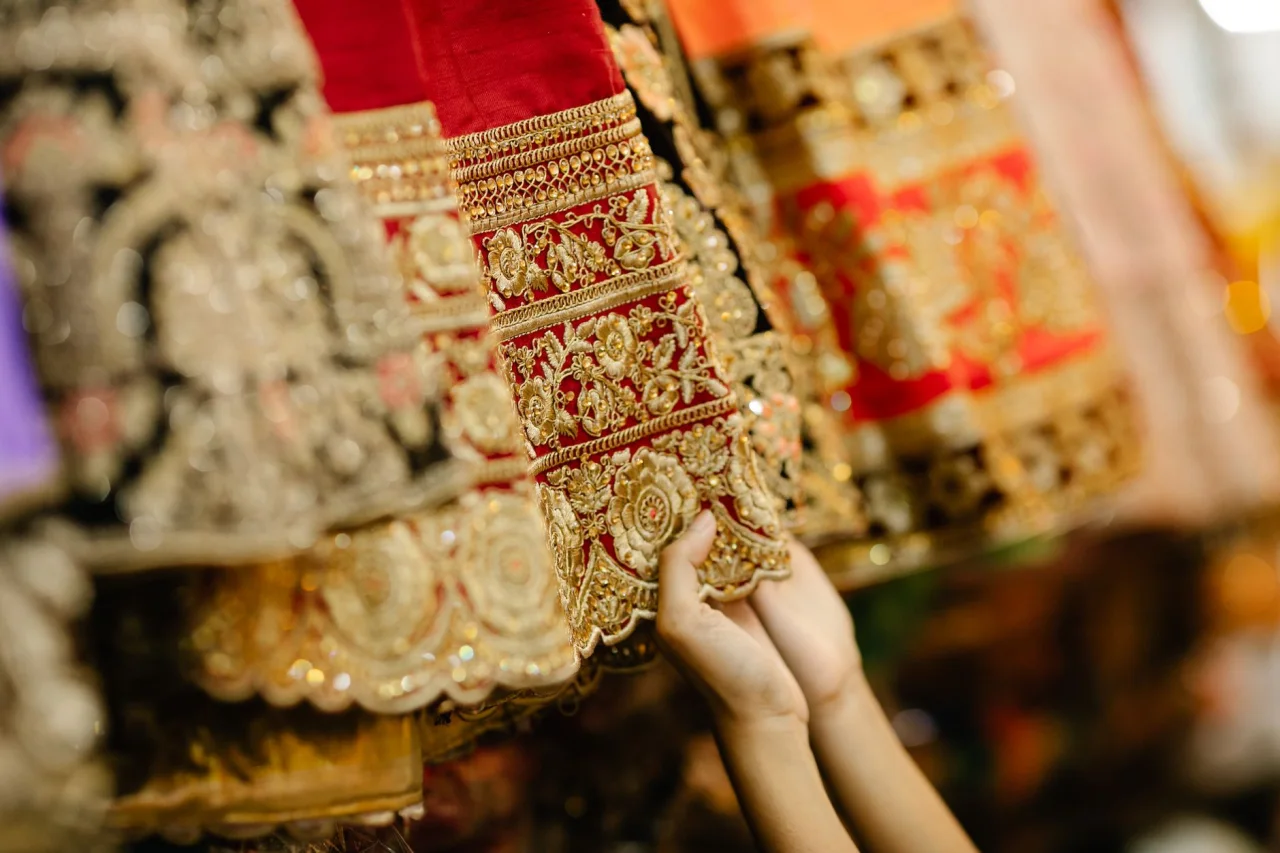
Before gold coils and mirrors, there was thread. Thread embroidery, worked in coloured silk or cotton floss, is the oldest and most versatile branch of South Asian needlework, the family that includes chikankari, phulkari, kantha, and kashida. It gives a soft, painterly richness that metal work cannot, and it forms the backbone of everyday festive dress. This guide explains what thread embroidery is, its deep regional roots, the core stitches, and how to tell fine handwork from a rushed machine run.
The short version
- Thread embroidery decorates fabric with coloured silk or cotton thread, often called resham work when silk floss is used.
- It is the umbrella tradition behind many named regional crafts, from chikankari and phulkari to kantha, kasuti, and kashida.
- Core stitches include chain, satin, stem, running, and knotted stitches, worked by hand or, faster, by machine.
- Quality shows in even tension, smooth stitch surfaces, a tidy reverse, and colours that stay fast and do not pucker the cloth.
What thread embroidery actually is
Thread embroidery is the craft of decorating cloth with needle and thread, using coloured floss rather than metal. When the thread is silk it is often called resham work, resham being the word for silk, giving a soft sheen; cotton and rayon threads produce a more matte finish. The look ranges from delicate white-on-white to dense, multicoloured florals, depending on the stitches and thread chosen.
Unlike coil, ribbon, or mirror techniques, thread embroidery builds its effect purely from stitches, so the same handful of stitch types produces an enormous variety of regional styles. For the wider documented picture, see Wikipedia's page on the embroidery of India. To see how thread work sits beside metal and mirror crafts on a single garment, our overview of the different types of embroidery in Pakistani fashion is a useful map.
Where thread embroidery comes from
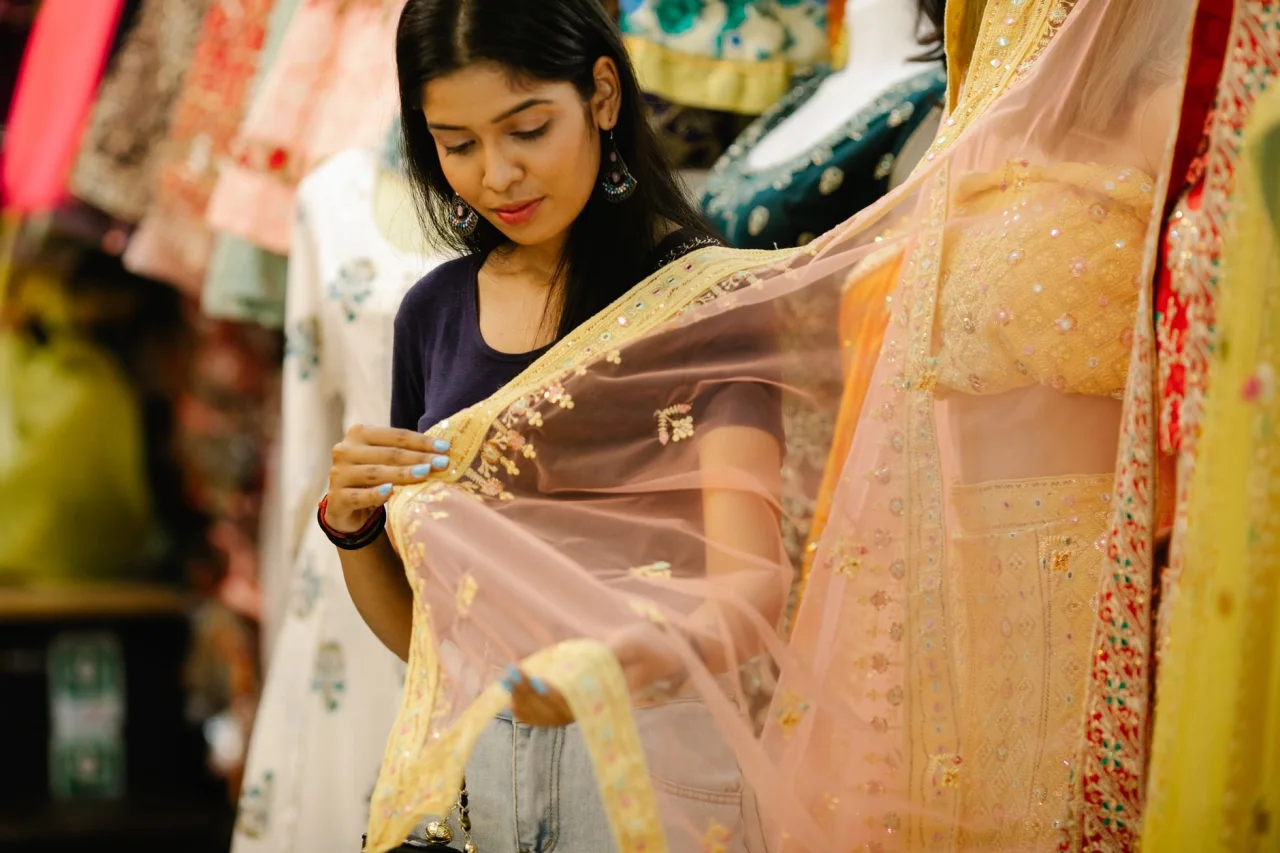
Thread embroidery has no single birthplace because it developed independently across the subcontinent, with each region evolving its own signature. The documented record describes several distinct traditions: phulkari of Punjab and Haryana, worked in bright thread with a darn stitch from the reverse; kantha of Bengal, quilting layers of cloth with running stitch; kasuti of Karnataka, counted work stitched so both sides look alike; kashida of Kashmir, worked mainly in chain stitch on wool and cotton; and chikankari of Lucknow, the famous white thread on white muslin with more than forty documented stitches.
These traditions share a technique but express completely different cultures and aesthetics, from the geometric folk exuberance of phulkari to the quiet refinement of chikankari. That regional depth is what makes thread embroidery the foundation of desi needlework. Our dedicated guide to chikankari looks closely at one of the most celebrated members of this family.
The core stitches
Almost every thread style is built from a small set of foundational stitches, combined and layered.
- Chain stitch: Interlocking loops that form a continuous line, the basis of aari work and much Kashmiri kashida.
- Satin stitch: Long, parallel stitches that fill a shape with a smooth, sheeny surface, ideal for petals and leaves.
- Stem and outline stitch: Neat lines for stems, vines, and borders.
- Running stitch: Simple in-and-out stitches, the heart of Bengal's kantha.
- Knotted stitches: French knots and the phanda and murri knots of chikankari, which add raised, beaded texture.
One especially efficient method is aari work, named for the hooked aari needle. The hook is plied from the top while thread is fed from below, producing rapid chain stitches. The documented record notes aari is practised in regions such as Kashmir and Kutch in Gujarat. Because thread work needs only floss and a needle, it is also the most accessible embroidery to learn and to scale.
Styling note: Thread embroidery reads as soft, wearable richness, so it flatters both daywear and festive pieces. Resham floral work on a plain kurta, lawn suit, or dupatta gives colour and craft without the weight or formality of metal work.
Where you will see thread embroidery
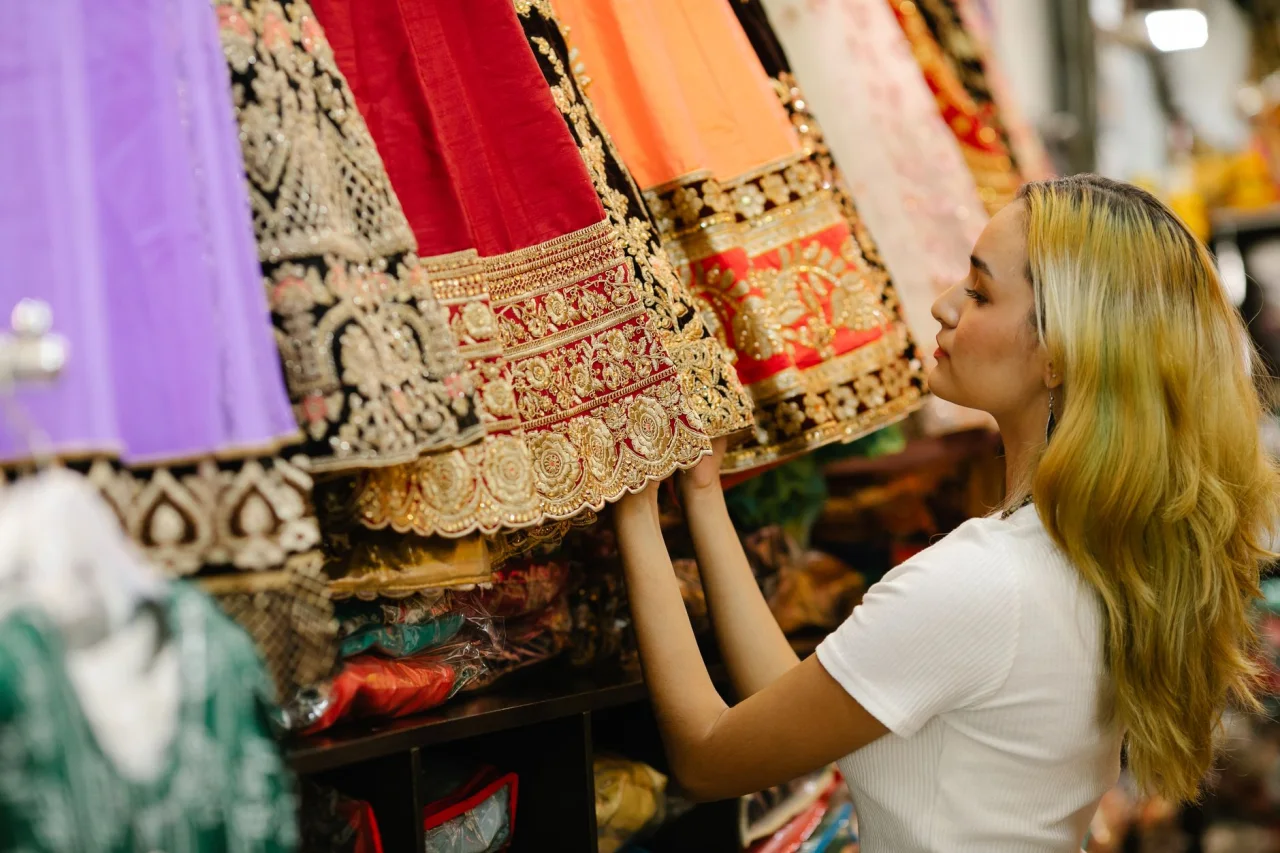
Thread work appears across the whole desi wardrobe, from casual to bridal.
- Everyday and festive suits: Resham florals on lawn, cotton, and khaddar suits are the backbone of seasonal collections.
- Dupattas and kurtas: Chain and satin stitch borders lift a simple kurta or dupatta for daily and occasion wear.
- Wedding and festive formals: Dense thread work, often combined with metal accents, features on wedding wear and pre-wedding mehndi outfits.
- Heritage pieces: Chikankari kurtas, phulkari dupattas, and kantha stoles that carry regional identity.
Thread work is frequently paired with metallic techniques for contrast, so it is worth understanding its companions such as zari and coil work like dabka, which often outline or accent a thread-embroidered motif.
Thread embroidery versus metal and mirror work
Knowing what thread work is not helps clarify what it is.
- Thread versus tilla and zari: Thread work uses coloured silk or cotton floss for a matte or softly sheeny finish, while tilla and zari use metallic thread for shine.
- Thread versus dabka: Thread lies within the weave as stitches; dabka is a coiled metal wire that stands up as raised texture.
- Thread versus gota: Gota is metallic ribbon appliqued to the surface; thread work is stitched floss.
- Thread versus mirror work: Mirror work adds reflective discs, though it uses surrounding thread stitches to hold them.
Hand versus machine thread embroidery
Thread work is the branch where machines have made the biggest difference, so telling the two apart matters most here.
- Look at the reverse. Hand embroidery leaves a slightly irregular but logical back, with thread paths that follow the design. Machine work often shows a dense, uniform underside with long jump threads and a bobbin thread of a different colour.
- Check for perfect repeats. Machine work reproduces identical motifs with mechanical precision. Small, charming variations between repeated flowers usually point to handwork.
- Feel the fabric behind the work. Cheap machine embroidery frequently sits on a stiff backing or fusible film that stiffens the cloth. Fine handwork keeps the fabric supple.
- Watch for puckering. Poorly tensioned work, hand or machine, draws the cloth into puckers. Even, flat stitching signals good tension and quality.
- Inspect stitch texture. Hand satin stitch has a slightly living, hand-laid sheen; the best knots, like chikankari phanda, are hard to imitate cleanly by machine.
Neither is automatically bad: machine embroidery makes attractive, affordable everyday wear, while hand thread work carries craft value and heritage. Our comparison of hand versus machine embroidery goes deeper into the tell-tale signs.
Care tip: Wash thread embroidery gently and turn garments inside out to protect the stitches. Guard against colour bleed by testing dark or bright resham for fastness, wash separately the first time, and dry in shade to keep colours vivid.
Is thread embroidery worth the price?
Thread embroidery spans the widest price range of any technique, precisely because it can be done quickly by machine or slowly by hand. A machine-embroidered lawn suit is an everyday-affordable staple, while a hand chikankari kurta or an authentic phulkari dupatta is a craft piece priced for the hours it took. Cost depends on hand versus machine, stitch density, thread type, and the maker, so avoid trusting any single figure and confirm current pricing before buying. For daily wear, quality machine thread work offers excellent value; for heirloom or gifting pieces, hand thread embroidery rewards the higher price with character and longevity.
Frequently asked questions
What is thread embroidery?
Thread embroidery decorates fabric with coloured silk or cotton thread rather than metal, mirrors, or ribbon. When silk floss is used it is often called resham work. It is the umbrella tradition behind many named regional crafts, including chikankari, phulkari, kantha, kasuti, and kashida.
What is resham embroidery?
Resham embroidery is thread embroidery worked specifically in silk floss, since resham means silk. The silk gives a soft sheen and vivid colour, and it is used for florals, vines, and figurative motifs across everyday and festive desi wear.
What are the main stitches in thread embroidery?
The core stitches are chain, satin, stem or outline, running, and knotted stitches such as French knots and the phanda and murri knots of chikankari. Aari work uses a hooked needle to make rapid chain stitches. These few stitches combine to create dozens of distinct regional styles.
How do I tell hand from machine thread embroidery?
Turn the piece over: handwork leaves an irregular but logical reverse, while machine work often shows a dense, uniform back with jump threads and a different-coloured bobbin thread. Machine motifs repeat with mechanical precision and can sit on a stiff backing, whereas handwork varies slightly and keeps the fabric supple.
How should I care for thread embroidery?
Wash gently with the garment turned inside out, and test bright or dark resham for colourfastness before the first wash to avoid bleeding. Wash it separately the first time, avoid harsh wringing, and dry in shade to keep the thread colours vivid and prevent puckering.
More on Embroidery
Have a question or a topic to suggest?
We read every message. Tell us what you would like to see next in the journal.
Get in touch