Hand vs Machine Embroidery
The practical tests that separate handwork from machine work: the reverse, repetition, texture and price, so you always know what you are paying for.
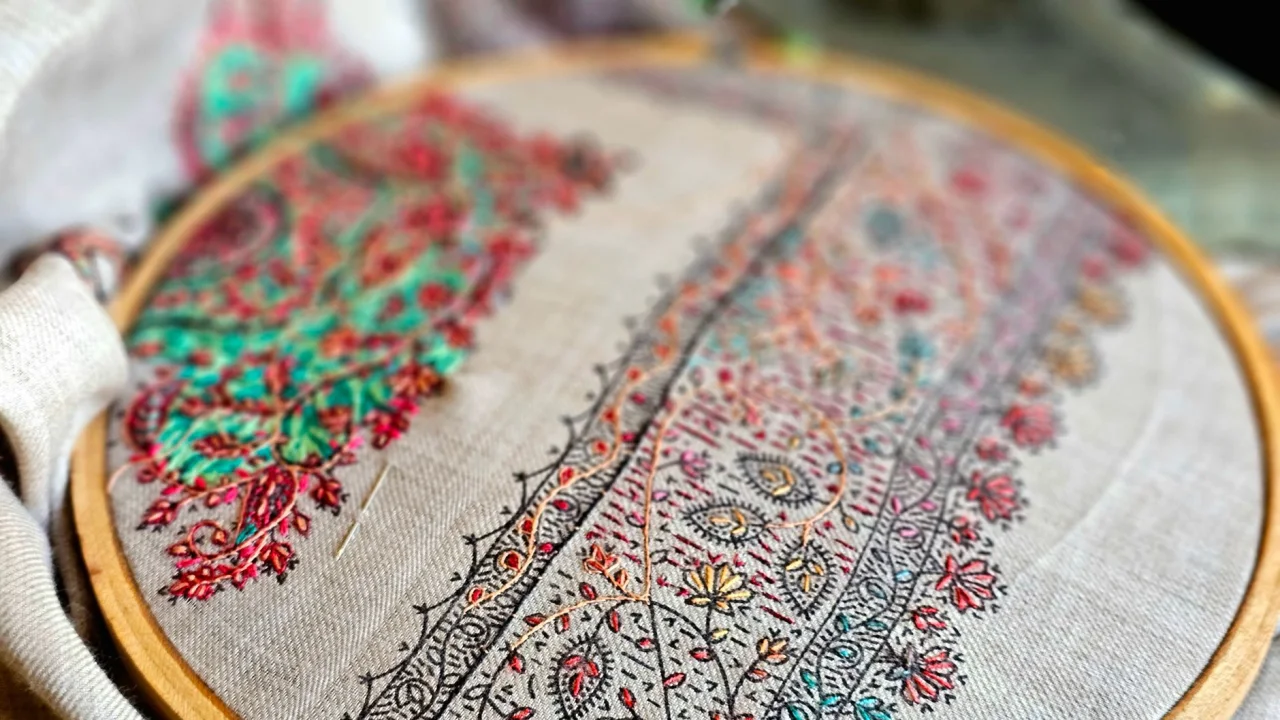
When you are about to spend real money on a bridal outfit or a piece of luxury pret, one question decides whether the price is fair: is the embroidery made by hand or by machine? The two can look similar in a photo, but they differ in cost, character and durability. This guide gives you a clear, practical way to tell them apart in seconds, and to understand what you are actually paying for.
The short version
- The fastest test is the reverse: handwork looks human and slightly messy, machine work looks flat and uniform with a separate bobbin thread.
- Hand embroidery carries natural irregularity and raised texture, machine embroidery repeats a motif with mechanical precision.
- Hand work costs far more because it costs hours, machine work is faster, cheaper and highly consistent.
- Neither is dishonest by itself, the only real problem is machine work sold at handwork prices.
Why the difference matters
Both hand and machine embroidery have a proper place. Machine embroidery makes embellished clothing affordable and available in every size, which is genuinely good for everyday wardrobes. Hand embroidery brings depth, character and craft that still define luxury pret and bridal wear. The difference matters most when the price tag assumes one but the garment delivers the other. Learning to tell them apart protects your budget and helps you buy with your eyes open. For the full background, see our guides to hand embroidery and machine embroidery.
The single fastest test: turn it over
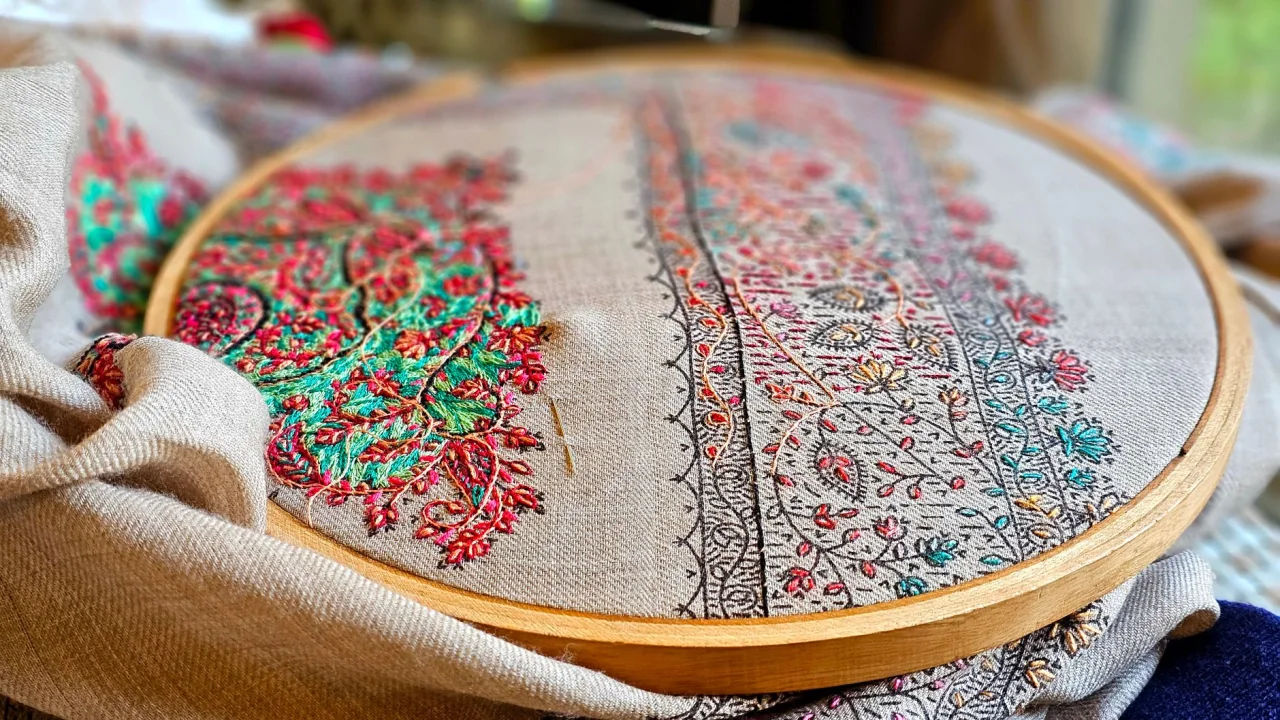
If you do only one thing, turn the garment inside out and study the reverse of the embroidery:
- Hand embroidery reverse: looks human and a little irregular, with threads carried across and knotted by hand, and small variations from stitch to stitch.
- Machine embroidery reverse: looks flat and uniform, usually shows a separate bobbin thread in one colour, and has a neat, repeating lock-stitch structure.
That lock-stitch, formed by a top thread and a bobbin thread beneath, is the mechanical signature of a machine and one of the clearest giveaways once you know to look for it.
Quick pocket checklist
- Reverse: human and knotted, or flat with a bobbin thread?
- Repetition: gently varied, or machine-identical?
- Texture: raised and tactile, or low and even?
- Between motifs: hand-carried threads, or trimmed jump-threads?
- Price: does it match the hours the work would take?
Read the repetition
Machine embroidery reproduces a stored digital pattern, so a repeated motif comes out identical every single time, down to the stitch. Hand embroidery cannot do that, because a human hand naturally varies stitch length, angle and spacing. So if the same flower appears many times across a dupatta with zero variation, it is machine work. If each repeat has tiny, honest differences, a hand was involved. This is the same principle, read forward, that we cover in the different types of embroidery in Pakistani fashion.
Feel the texture
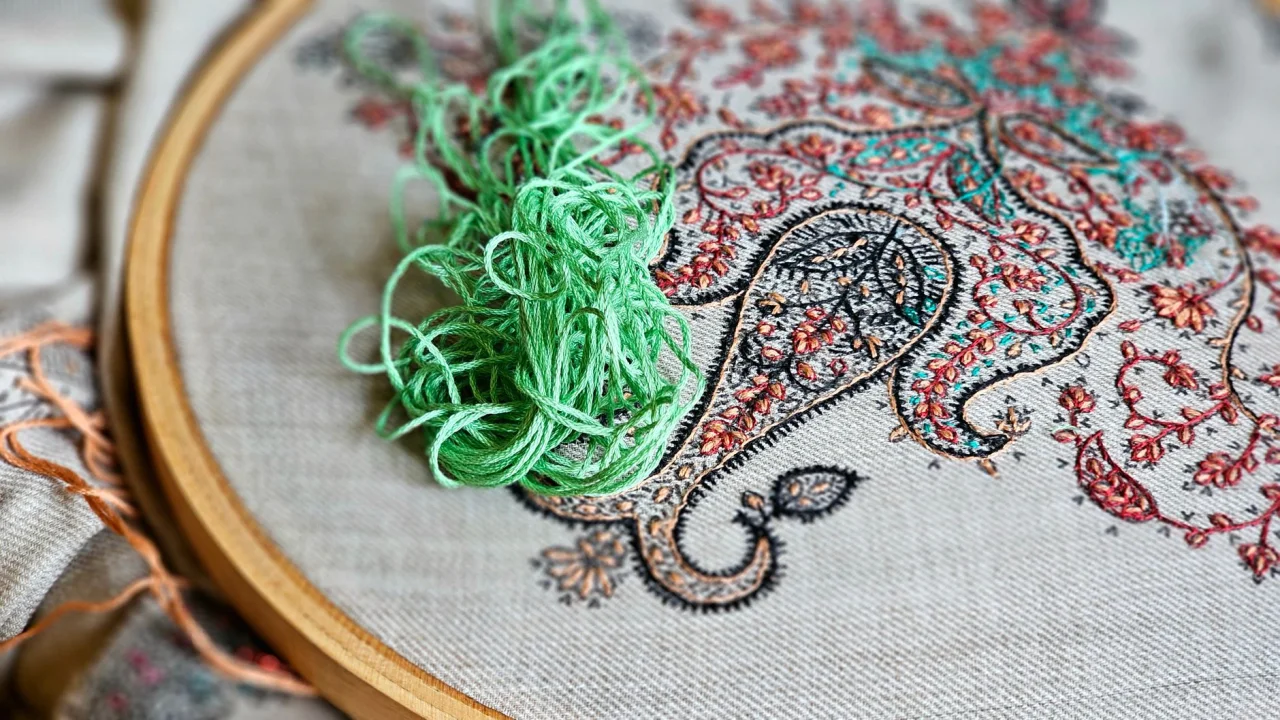
Run your fingertips lightly over the design. Hand embroidery, especially couched metal such as dabka or knotted resham, tends to stand up from the cloth and feel tactile and three-dimensional. Machine embroidery usually sits lower and more uniform, because the machine lays even stitches at a consistent tension. Raised, sculptural work with real depth is a strong sign of skilled handwork, while a flat, glued-feeling surface leans machine or even print.
Check the spaces between motifs
Look at what happens between separate motifs:
- Machine: often leaves tiny trimmed thread ends, or faint travel lines, where the needle jumped from one area to the next. You may also feel a slightly stiff stabiliser backing.
- Hand: threads are carried and secured by a person, with knots on the reverse rather than machine jump-threads, and there is no stabiliser sheet behind the design.
Let price sanity-check the rest
Hand embroidery is expensive for an honest reason: it costs time. A richly worked panel can take many days, and a full hand-worked bridal outfit can occupy several artisans for weeks. So if a densely embellished outfit is priced like fast fashion, the hours simply are not there, and it is almost certainly machine made regardless of how it is described. Use price as a reality check against the physical clues, not as proof on its own. When you compare bridal dresses, a suspiciously low price on heavy work is a flag to inspect the reverse closely.
Durability and care: how they wear
The two also behave differently over a garment's life:
- Machine embroidery: tends to be hard-wearing and consistent, with even tension across the design, which suits clothes worn and washed often. Good stabiliser keeps it flat.
- Hand embroidery: can be exquisitely durable when finished well, but raised metal and knot work is more delicate and prefers gentle handling and dry cleaning for heavy pieces.
Whichever you own, wash inside out in cool water or dry clean formal pieces, dry in shade, and press from the reverse over a soft cloth so the iron never crushes raised stitches or dulls the thread. On lighter lawn fabric, this gentle routine keeps both the cloth and the embroidery looking fresh.
Which should you choose?
Match the technique to the occasion and your budget:
- Everyday and mid-range wear: good machine embroidery is the sensible choice, affordable, consistent and easy to care for.
- Statement, luxury and bridal wear: hand embroidery earns its premium in depth, character and heirloom value, provided the finishing is genuinely good.
- Mixed pieces: many outfits combine both, so judge the specific areas that matter most, usually the front panel and borders.
The goal is not to avoid machine work, it is to pay a machine price for machine work and a hand price for handwork. Reading an embroidered suit correctly is what makes that possible.
Frequently asked questions
What is the fastest way to tell hand from machine embroidery?
Turn the garment inside out and study the reverse. Hand embroidery looks human and slightly irregular, with threads carried and knotted by hand. Machine embroidery looks flat and uniform, usually with a separate bobbin thread in one colour and a neat repeating lock-stitch pattern.
Is hand embroidery always better than machine embroidery?
No, they simply serve different needs. Machine embroidery is faster, cheaper, consistent and hard-wearing, which is ideal for everyday clothes. Hand embroidery offers irregular human depth and raised texture that still lead at the luxury and bridal end. The only real problem is machine work sold at handwork prices.
Why does hand embroidery cost so much more?
Because every stitch is placed by a person and that takes time. A richly worked panel can take many days, and a full hand-worked bridal outfit can occupy several artisans for weeks. You are paying for skilled human labour and hours, which a machine compresses into minutes.
Can machine embroidery imitate hand embroidery?
It can come close in a photo, but the physical clues give it away. Machine work repeats a motif identically, sits flat and even, often leaves trimmed jump-threads and a stabiliser backing, and shows a uniform bobbin thread on the reverse, none of which true handwork does.
Which embroidery is more durable?
Machine embroidery is generally hard-wearing and consistent, which suits frequently washed clothes. Well-finished hand embroidery can be very durable too, but raised metal and knot work is more delicate and prefers gentle washing or dry cleaning and careful pressing from the reverse.
More on Embroidery
Have a question or a topic to suggest?
We read every message. Tell us what you would like to see next in the journal.
Get in touch