What Is Hand Embroidery?
The slow, human craft behind the most beautiful desi outfits: its ancient roots, the core stitches and how to tell real handwork from a machine copy.
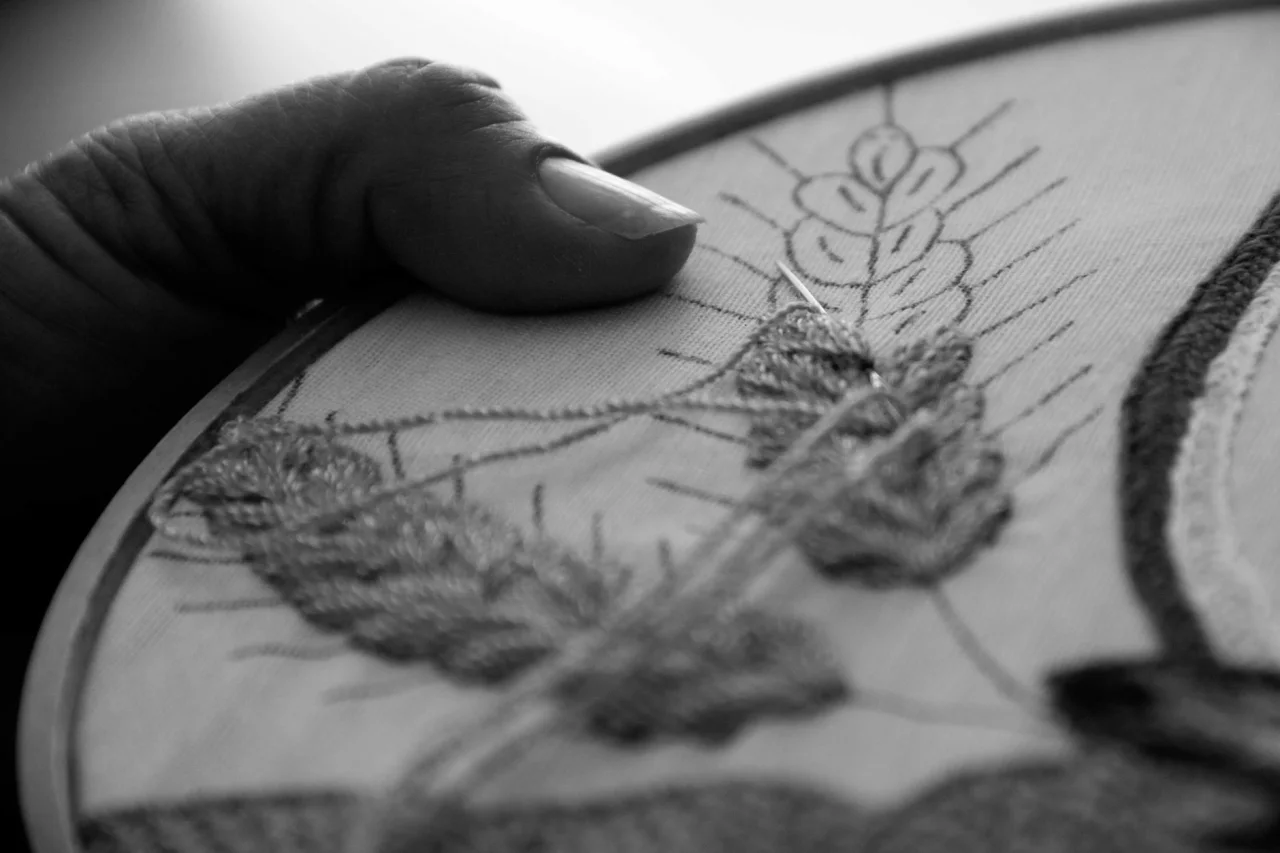
Hand embroidery is the slow, human craft behind the most beautiful desi outfits: every stitch placed by a person, one at a time, on cloth stretched tight across a wooden frame. It is what gives a bridal lehenga its depth and a lawn kurti its quiet charm. This guide covers where hand embroidery comes from, how it is actually made, and how to tell true handwork from a convincing machine copy.
The short version
- Hand embroidery is decoration stitched by hand, needle or hook, rather than by machine, and it is one of the oldest surviving textile crafts.
- A handful of core stitches, such as chain, satin, stem and running stitch, build almost every traditional South Asian style.
- Signs of real handwork include tiny natural irregularities, a hand-finished reverse and raised, tactile texture.
- It costs more than machine work because it costs hours, and that time is exactly what you are paying for.
What hand embroidery means
Hand embroidery is simply the art of decorating cloth with a needle and thread by hand. That sounds obvious, but the definition matters when you shop, because a great deal of what is sold as embroidered today is stitched by machine. In true hand embroidery, a person controls every stitch: its length, its angle, its tension and where it sits. Threads can be silk, cotton, wool or metal, and beads, sequins, mirrors and stones are often couched in alongside the thread.
Because it is human, hand embroidery carries small, honest variations from stitch to stitch. That is not a flaw. It is the fingerprint of the maker, and it is the single biggest clue that separates handwork from a flawless, repeating machine pattern. To see where it sits among all the regional styles, our guide to the different types of embroidery in Pakistani fashion is a good map.
A craft that has barely changed
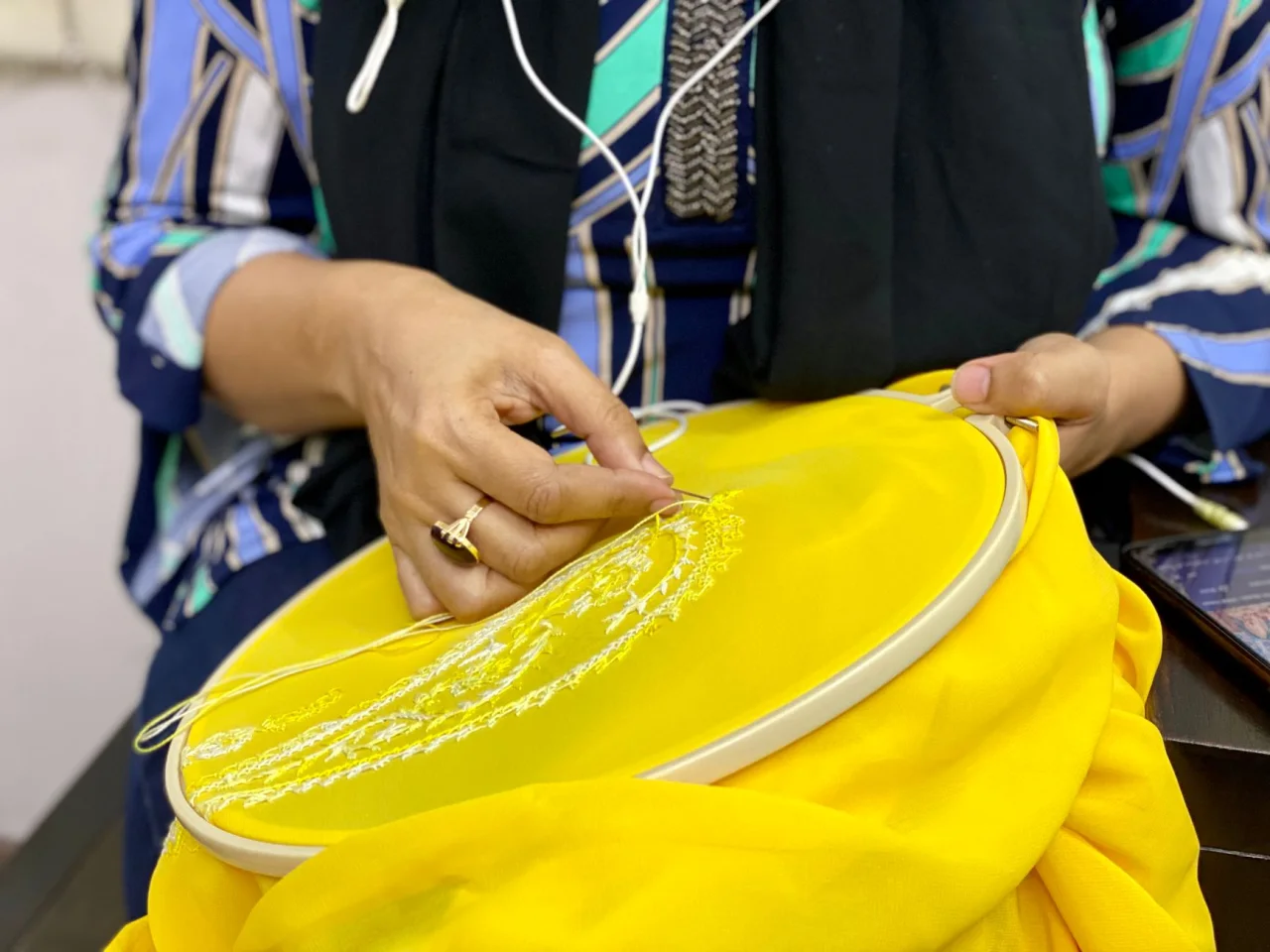
Hand embroidery is genuinely ancient. Some of the earliest developed examples survive from China, where the craft was already well established during the Warring States period, around the fifth to third centuries BC, according to the general history of embroidery. Egyptian artisans were decorating cloth with applique, leather and beads even earlier.
What is remarkable is how little the fundamentals have moved. Historians note that in embroidery there are no clear changes of materials or techniques that read as advances from a primitive to a more refined stage: early work often shows accomplishment rarely surpassed later. In other words, the chain stitch a Mughal-era artisan used is the same chain stitch worked on a lehenga today. That continuity is part of what makes handwork feel timeless rather than dated.
The core hand stitches
You do not need to memorise dozens of stitches, but knowing a few helps you read a garment. The foundational hand stitches, drawn from that same embroidery record, include:
- Chain stitch: looped links forming a continuous line, the backbone of aari and much filled work.
- Satin stitch: smooth parallel threads that fill a shape solidly, used for petals and leaves.
- Stem stitch: a firm, ropey line, ideal for flower stalks and outlines.
- Running stitch: the simple dashed line at the heart of delicate work like chikankari tepchi.
- Buttonhole or blanket stitch: a looped edge used to secure and to build openwork.
- Couching: laying a thick thread or metal wire on the surface and tacking it down, essential to metallic work.
How hand embroidery is worked
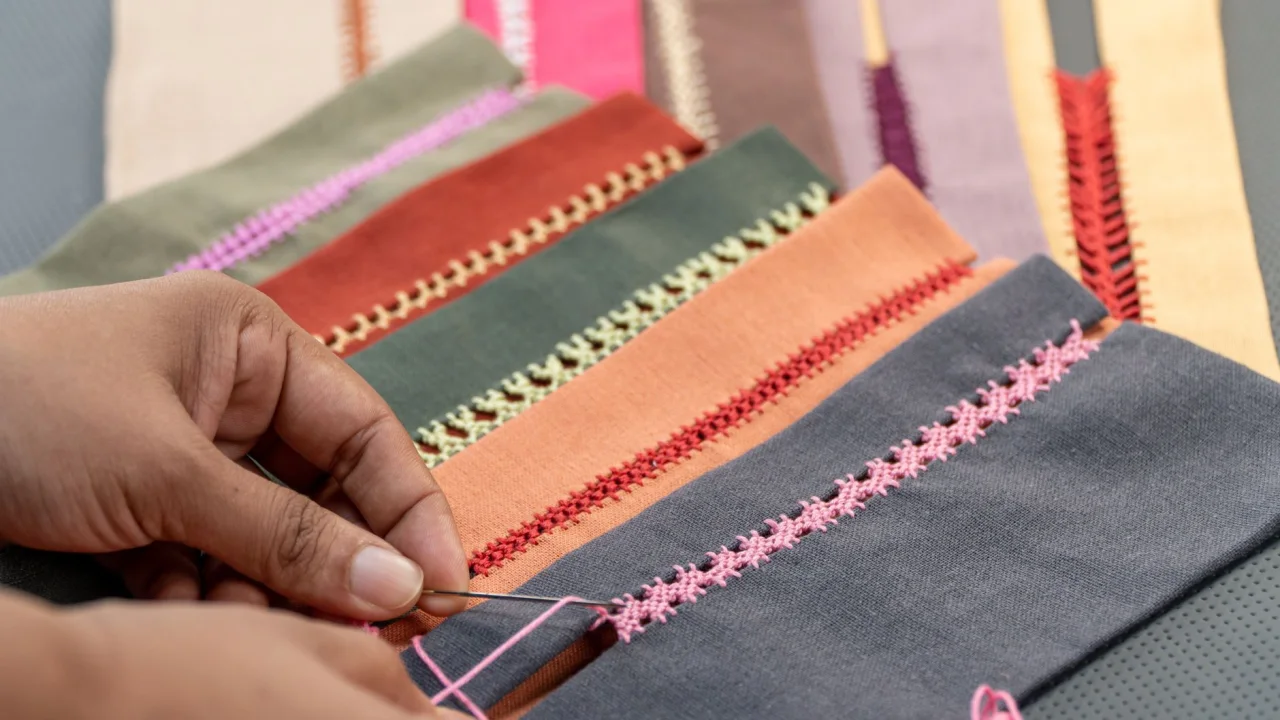
Traditional South Asian hand embroidery follows a clear sequence. First the design is drawn, often traced onto the fabric by pouncing chalk through a perforated stencil so the pattern appears as fine dots. The cloth is then stretched drum-tight on a wooden frame, the adda, so it cannot pucker.
Artisans then work in one of two main ways:
- Needle embroidery: a needle carries the thread up and down through the taut cloth, one stitch at a time, giving fine control for shading and detail.
- Aari embroidery: a fine hooked needle, the aari, is pushed through from above to catch thread held below, pulling up a chain stitch quickly. This is favoured for beadwork, sequins and larger filled areas.
A single richly worked panel can take many days, and a full bridal outfit can occupy several artisans for weeks. That labour is the honest reason hand embroidery commands its price. The same care shows up in named traditions like chikankari and colourful resham embroidery.
Buying tip
Always turn the garment inside out before you decide. The reverse tells the truth: hand embroidery leaves a slightly irregular, human back with threads carried and knotted by hand, while machine work leaves a flat, uniform, often bobbin-thread underside.
Where hand embroidery appears in desi fashion
Hand embroidery ranges from barely-there to breathtaking. You will find it on:
- Everyday pret: a single placed motif or a light neckline on a lawn or cotton kurti.
- Formal wear: shaded thread flowers, gota, mirror and sequin on party suits and dupattas.
- Bridal and occasion wear: dense zardozi, dabka and thread work that gives an outfit weight and depth.
On a well-made embroidered suit, or on bridal dresses, several hand techniques usually sit side by side, thread for colour and metal for shine.
How to spot genuine handwork
Use these checks in order, and you can judge most pieces confidently:
- Look for honest irregularity: tiny variations in stitch length and spacing point to handwork. A pattern that repeats with machine perfection usually is machine work.
- Check the reverse: handwork has a slightly messy, human back with carried and knotted threads. Machine embroidery shows a flat, uniform underside, often with a different bobbin thread.
- Feel the texture: hand stitches, especially couched metal and knots, stand up and are tactile. Flat, glued-feeling surfaces suggest machine or print.
- Follow a single thread: hand embroidery lines start and stop naturally. Machine lines often show the tell-tale even lock-stitch of a bobbin thread pulling from below.
- Mind the price: if a densely worked outfit is suspiciously cheap, the hours simply are not there, and it is almost certainly machine made.
Hand versus machine, in one line
Machine embroidery is faster, cheaper and highly consistent, which is genuinely useful for everyday clothes. Hand embroidery is slower, dearer and gently imperfect, which is exactly why it feels special. Neither is wrong, they serve different needs. If you want to learn the practical tells in depth, read our full comparison of hand versus machine embroidery.
Caring for hand embroidered clothes
Treat handwork kindly and it will outlast fast fashion. Hand wash lighter pieces in cool water with mild detergent, or dry clean heavily embroidered and bridal outfits. Never wring the embroidered area. Dry in shade to protect the dye, and always press from the reverse over a soft cloth so the iron never crushes raised stitches or melts sequins. Store folded with acid-free tissue, or hang sturdy pieces, to keep the surface from snagging.
Frequently asked questions
What is hand embroidery?
Hand embroidery is the craft of decorating cloth with a needle or hook and thread entirely by hand, rather than by machine. A person controls every stitch, so the work carries small natural variations that machines do not, and it can include beads, sequins, mirrors and metal alongside the thread.
How can I tell if embroidery is done by hand?
Check for honest irregularity in the stitches, a slightly messy human reverse with carried and knotted threads, and raised, tactile texture. Machine embroidery looks flawlessly uniform, has a flat underside often with a separate bobbin thread, and repeats without variation.
Why is hand embroidery so expensive?
Because it costs hours. Every stitch is placed by a person, and a richly worked panel can take many days while a full bridal outfit can occupy several artisans for weeks. You are paying for that skilled labour and time, not just the materials.
Which stitches are used in traditional hand embroidery?
The core stitches include chain stitch, satin stitch, stem stitch, running stitch, buttonhole or blanket stitch and couching. Named South Asian traditions such as chikankari and resham work are built from these same foundational stitches.
How do I care for hand embroidered clothes?
Hand wash lighter pieces in cool water with mild detergent or dry clean heavy and bridal outfits, never wring the embroidery, dry in shade, and press from the reverse over a soft cloth so the iron never crushes raised stitches or sequins.
More on Embroidery
Have a question or a topic to suggest?
We read every message. Tell us what you would like to see next in the journal.
Get in touch