What Is an Embroidered Suit?
What the needlework really means: the main techniques, hand versus machine work, placement, regional traditions and how to judge quality.
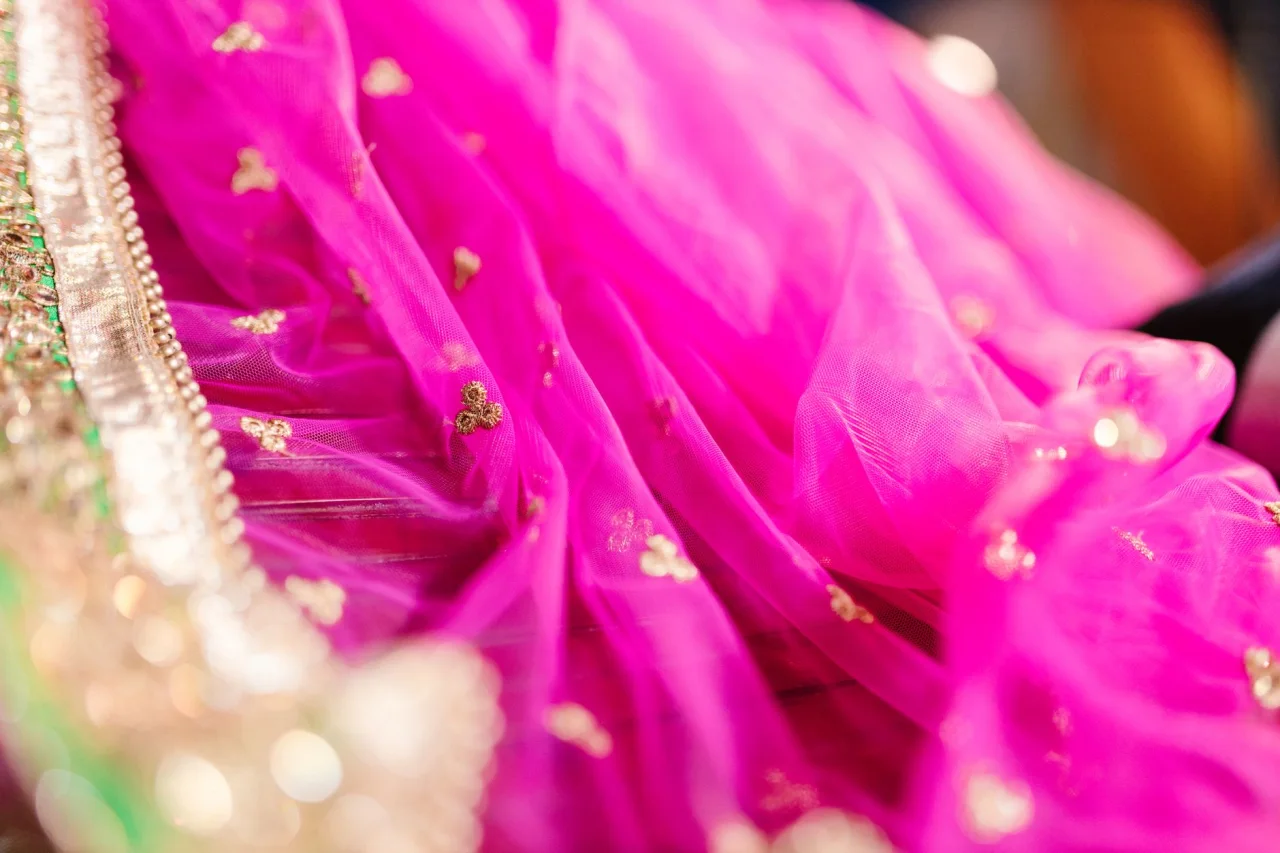
An embroidered suit is a salwar kameez style outfit whose fabric is decorated with needlework: thread, metallic wire, beads, sequins or mirrors stitched into patterns across the kameez, dupatta and sometimes the lower. The embroidery is what turns a plain suit into something festive, and it is the single biggest reason one suit costs more than another that looks similar from a distance. This guide explains what embroidery actually is, the main techniques you will meet, how to tell hand work from machine work and how to buy well.
The short version
- An embroidered suit is a kameez, lower and dupatta set decorated with stitched patterns rather than only print.
- Embroidery can be hand done or machine done, and the two look and cost very differently.
- Common techniques include chikankari, zardozi, zari, gota, mirror work and resham thread work.
- Where the embroidery sits (neckline, borders, all over) sets the level of formality and the price.
What makes a suit an embroidered suit
Any South Asian suit starts as a kameez plus a lower plus usually a dupatta. It becomes an embroidered suit when the surface is decorated with needlework instead of, or on top of, printing and dyeing. Embroidery is the craft of decorating fabric with a needle and thread or yarn, and it may also incorporate beads, sequins, pearls and metal strips. The base fabric can be anything: cotton, lawn, chiffon, georgette, silk, net or velvet. It is the stitched decoration, not the fibre, that defines the category. If you want the underlying garment first, our guide to the salwar kameez covers the base silhouette.
A short history of embroidery in South Asian dress
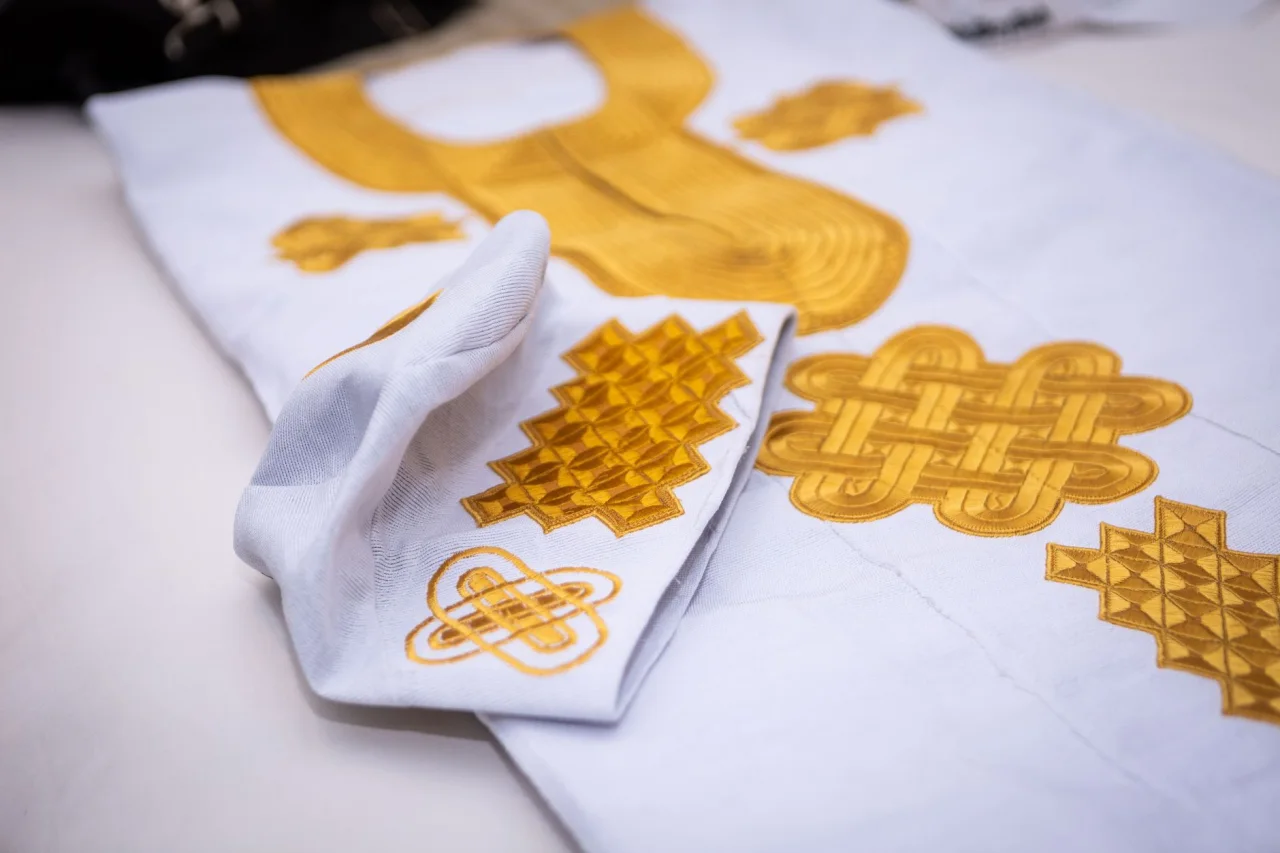
Decorated cloth has a long lineage in the subcontinent. Two of the most celebrated traditions show how deep it runs. Chikankari, the delicate white on white embroidery of Lucknow, is traditionally worked on light muslin and cotton, and the most popular origin story credits the Mughal empress Nur Jahan with introducing the craft, as documented on Wikipedia's chikankari page. Zardozi, the heavy metal embroidery on silk, satin or velvet, takes its name from the Persian words for gold and sewing, was first used in India in the fourteenth century and flourished under the Mughal empire, according to Wikipedia's entry on zardozi. Both traditions still shape the embroidered suits sold today.
The main embroidery techniques to know
You do not need to be an expert, but recognising these helps you judge value:
- Chikankari: fine, shadow like white thread work, traditionally on cotton and muslin. Light and elegant. See our chikankari guide.
- Zardozi and dabka: raised metallic wire work, rich and formal, used on bridal and occasion wear.
- Zari: metallic thread woven or stitched into borders and motifs. Our zari guide explains how to spot quality.
- Gota: applied gold or silver ribbon shaped into patterns, popular for festive and Rajasthani styles.
- Mirror work (shisha): small mirrors secured with thread, common in Gujarat and Sindh.
- Resham: coloured silk thread embroidery, versatile and widely used.
For the full family of stitches and how they are used regionally, browse different types of embroidery in Pakistani fashion.
Hand embroidery versus machine embroidery
This is the most important distinction for a buyer, because it drives both look and price.
- Hand embroidery: stitched by an artisan. It has slight, natural irregularities, a raised and dimensional feel, and often no continuous thread trails on the reverse. It takes longer and costs more.
- Machine embroidery: stitched by a computerised machine. It is very uniform and repeats identically, is faster and more affordable, and usually shows neat bobbin threads on the back.
Neither is wrong; they serve different budgets and occasions. To train your eye, read how to tell hand and machine embroidery apart.
Quality tip
Turn the fabric over. Dense, tidy but perfectly repeating stitches usually mean machine work. Slightly uneven stitches with knots and loose thread ends often signal hand work. Neither guarantees quality on its own, but the reverse tells you a lot about how the suit was made.
Where embroidery sits, and what it signals
Placement sets the formality:
- Neckline and yoke only: a lighter, everyday embroidered look.
- Borders and cuffs: a balanced, semi formal effect.
- All over (jaal): the most formal and the most expensive, used for weddings and big events.
- Dupatta focus: a heavily worked dupatta over a plain suit is an economical way to look dressed up.
Who does an embroidered suit suit?
Embroidered suits scale to the occasion, so almost anyone can wear one, the trick is matching the density to the event. Light neckline embroidery on cotton works for daywear and office. Medium border work suits Eid, dinners and guest appearances. Heavy all over work is for weddings and formal celebrations. For event specific choices, our wedding guest outfit ideas show how much embroidery reads right for different roles.
Regional embroidery traditions
Embroidery in South Asia is deeply regional, and the same suit can carry very different heritage depending on the stitch. Lucknow gives us chikankari, the delicate white shadow work on cotton. Rajasthan is known for gota patti, the applied metallic ribbon work, and for mirror embellished styles. Punjab has phulkari, a bright floss silk thread work traditionally worked on shawls and now seen on suits. Sindh and Balochistan are famous for intricate mirror and geometric thread work. The formal metal embroidery of zardozi and dabka traces to Mughal ateliers and remains the language of bridal and couture wear. Recognising these traditions helps you appreciate what you are buying and avoid treating hand craft as interchangeable with a printed imitation.
How an embroidered suit differs from similar garments
- Embroidered suit vs printed suit: print is dye on the surface and lies flat; embroidery is stitched and has texture and dimension.
- Embroidered suit vs cotton suit: these overlap. A cotton suit can be embroidered, and many are. The cotton suit guide covers the fibre side; this guide covers the decoration.
- Embroidered suit vs designer suit: designer refers to the label and level of finish. Many designer suits are heavily embroidered, but embroidery alone does not make a suit designer. See our designer suit guide.
Caring for an embroidered suit
- Dry clean heavily worked, metallic or bead embroidered suits to protect the threads and embellishments.
- Hand wash light thread work gently in cool water, turned inside out.
- Never wring embroidered fabric; press water out and dry flat in shade.
- Iron on the reverse, or place a cloth over the embroidery, so metallic threads do not scorch or flatten.
- Store folded with tissue between layers so sequins and beads do not snag other clothes.
What does an embroidered suit cost?
Price depends on the technique, whether the work is hand or machine done, how much of the fabric is covered, the base fabric and the brand. As a general guide, light machine embroidery on cotton sits at the affordable end, denser mixed work sits in the mid range, and heavy hand done zardozi or bridal embroidery runs to the top. These bands vary widely by region, artisan and retailer, so always confirm current pricing. When you compare pieces, judge the density, neatness and type of embroidery, not just the price tag.
Styling an embroidered suit
Because the fabric already carries detail, styling an embroidered suit is an exercise in restraint. Let the embroidery lead and keep everything else supportive: simpler jewellery when the neckline is worked, a plain clutch when the suit is busy, and footwear that echoes rather than fights the metallic tones. A heavily embroidered suit rarely needs a patterned dupatta; a plain or lightly bordered one balances it better. When the suit is lightly worked, you have more freedom to add statement earrings or bangles. The goal is one clear focal point, not several competing for attention.
Frequently asked questions
What is an embroidered suit?
An embroidered suit is a South Asian kameez, lower and dupatta set whose fabric is decorated with stitched needlework such as thread, metallic wire, beads, sequins or mirrors, rather than only printed or dyed. The embroidery adds texture and formality.
What is the difference between hand and machine embroidered suits?
Hand embroidered suits are stitched by artisans and show slight natural irregularity and a raised feel, and they cost more. Machine embroidered suits are stitched by computerised machines, are very uniform and repeat identically, and are faster and more affordable. Checking the reverse of the fabric helps tell them apart.
Which embroidery is best for a wedding suit?
Heavier techniques such as zardozi, dabka and dense zari or gota work read as formal and suit weddings, especially when the embroidery covers borders or the whole fabric. Lighter chikankari or neckline work suits daywear and smaller events.
How should I wash an embroidered suit?
Dry clean heavily worked, metallic or beaded suits. Light thread work can be hand washed gently inside out in cool water. Never wring the fabric, dry it flat in shade, and iron on the reverse or under a cloth to protect the threads.
Is an embroidered suit the same as a designer suit?
No. Embroidery describes the decoration, while designer describes the label and level of finish. Many designer suits are embroidered, but plenty of affordable embroidered suits are not designer pieces.
More on Clothing Types
Have a question or a topic to suggest?
We read every message. Tell us what you would like to see next in the journal.
Get in touch