What Is Mirror Work?
Shisha explained: its Persian and Kutch roots, how mirrors are held by thread, and how to judge quality.

Mirror work is the embroidery that catches your eye first: tiny reflective discs stitched across a kurta or ghagra, scattering light with every movement. Known as shisha or abhla bharat, it is the signature craft of Kutch, Rajasthan, and Sindh, and it carries a long, well-documented history. This guide explains what mirror work is, where it comes from, how the mirrors are held in place with thread alone, and how to tell careful handwork from glued-on shortcuts.
The short version
- Mirror work, called shisha or abhla bharat, attaches small pieces of mirror or reflective metal to fabric with embroidery.
- The word shisha comes from Persian for glass, and the craft originated in seventeenth-century India with Persian roots.
- Traditional mirrors are held by a network of interlacing stitches, no glue, forming a thread frame that grips each disc.
- Quality shows in secure, evenly stitched frames, tidy work, and mirrors that do not fall out or crack.
What mirror work actually is
Mirror work is embroidery that fixes small reflective pieces, mirrors, to cloth. In South Asia it is most often called shisha, from the Persian word for glass, or abhla bharat in Gujarat. The mirrors are surrounded and held by decorative stitching, usually with colourful thread, so the effect combines flashing reflections with a frame of embroidery around each disc.
What makes true shisha special is that the mirror is held by thread, not adhesive. A network of stitches is worked over the edges of the disc to trap it, and further embroidery frames it, so it stays put through wear and washing. You can read the documented account on Wikipedia's shisha embroidery page. For the wider context of regional handwork, our overview of the different types of embroidery in Pakistani fashion places mirror work alongside metal and thread techniques.
Where mirror work comes from
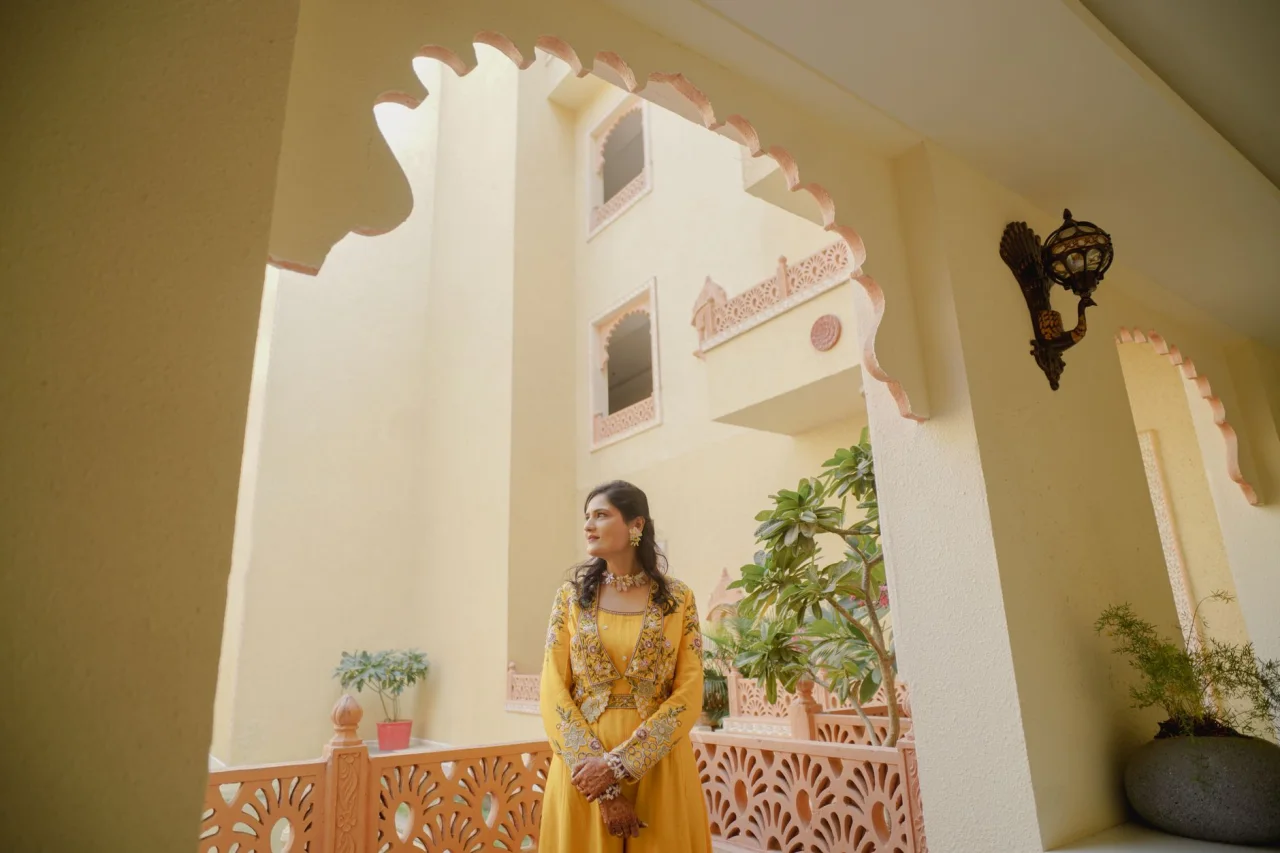
According to the reference record, shisha embroidery originated in seventeenth-century India, and the craft has Persian roots that arrived through Mughal-era trade and exchange. The story of its materials is especially interesting: people who could not afford jewelled garments imitated the look by decorating fabric with shiny substitutes. Early examples used mica chips and even iridescent beetle wings, later replaced by tin, thin silver, and small coins, and eventually by manufactured glass mirrors in the early twentieth century.
Geographically, mirror work took deep root in the dry regions of western India and today's Pakistan. Embroiderers in Kutch and Kathiawar in Gujarat became especially renowned, and the craft is also strongly associated with Rajasthan, Sindh, and Baluchistan. Pastoral communities such as the Rabari of Kutch are known for bold, dense mirror work set in geometric patterns on deep red or black cloth, a look that has become emblematic of the craft.
How mirror work is stitched
Traditional shisha is clever, patient handwork. The core challenge is holding a smooth mirror with nothing but thread. The process runs roughly like this.
- The mirror is positioned. A disc is held or lightly tacked in place on the fabric where the design calls for it.
- A thread frame is laid. The artisan works a grid or crossing of foundation threads across the mirror, creating a web that will grip its edges.
- The frame is locked with interlacing stitches. Rows of interlacing or buttonhole-style stitches are worked around the rim, catching the foundation threads and the fabric so the mirror is trapped securely.
- The surround is embroidered. Petals, chain stitch, or filling stitches frame each mirror, tying it into the larger motif.
In some regions the method varies. The reference record notes that in Sindh, shisha mirrors are attached and surrounded by filling and ladder stitches, as well as counted cross stitch, showing how the same idea takes different local forms. Because each mirror is individually framed by hand, densely mirrored pieces represent hours of careful work.
Styling note: Mirror work is playful and folk-rooted, so it shines on relaxed, colourful pieces: cotton kurtas, ghagras, tunics, and dupattas. Let the mirrors be the statement and keep jewellery simple, since the fabric already sparkles.
Where you will see mirror work
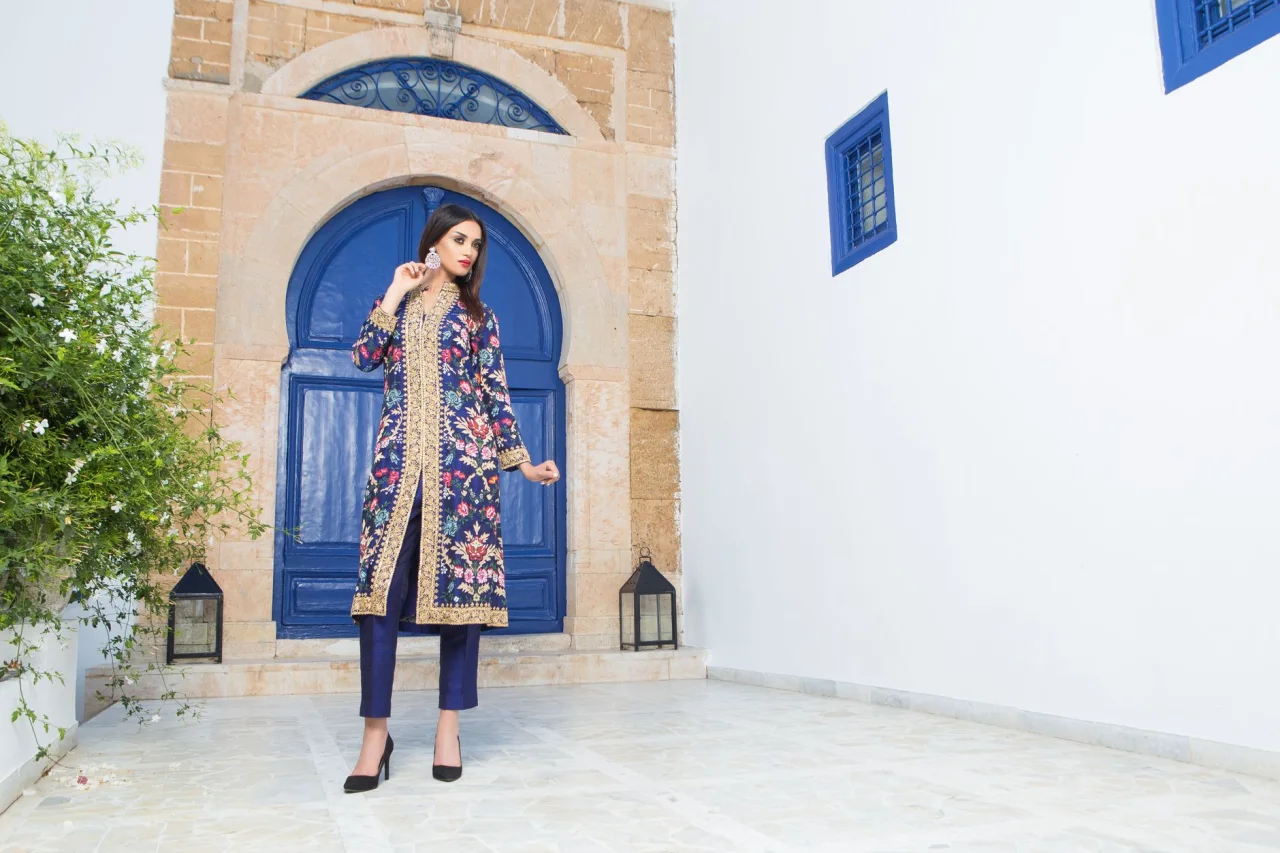
Mirror work spans everyday folk dress and festive celebration.
- Kurtas and tunics: Cotton and khaddar kurtas with mirror yokes and borders are a summer festive staple.
- Ghagras and lehengas: Traditional Gujarati and Rajasthani ghagras, and lighter lehengas, use dense mirror work for a folk-glamour look.
- Mehndi and haldi outfits: Bright, reflective mirror pieces suit lively daytime mehndi outfits.
- Dupattas and accessories: Odhnis, bags, and footwear scattered with mirrors finish a festive look.
Mirror work is often combined with metal and thread techniques on the same garment, so it helps to know its neighbours: our guides to gota and thread embroidery cover the crafts that frequently share a border with shisha.
Mirror work versus other techniques
Mirror work is distinctive, but a quick comparison sharpens the picture.
- Mirror work versus dabka: Mirror work uses reflective discs held by stitching; dabka uses coiled metal wire and has no mirrors.
- Mirror work versus gota: Gota is metallic ribbon appliqued flat; mirror work is glass or metal discs framed by thread.
- Mirror work versus tilla: Tilla is smooth metal thread couched into lines, with reflections coming from the thread, not from discs.
- Mirror work versus sequins: Sequins are punched, pierced spangles sewn through a central hole; shisha mirrors have no hole and are held entirely by a stitched frame around the rim.
How to spot quality mirror work
The difference between heirloom-quality shisha and a throwaway version is easy to feel and see.
- Check how the mirror is held. Genuine shisha is trapped by a network of stitches around the rim. If a mirror is simply glued on with no thread frame, it is an imitation and will pop off.
- Tug a mirror gently. A well-stitched disc stays firmly in place. Loose or lifting mirrors mean weak work or adhesive that is already failing.
- Inspect the stitching. Quality work shows even, tidy interlacing around every mirror and consistent surround embroidery, not messy or gaping frames.
- Look at the mirrors themselves. Better pieces use evenly cut, cleanly reflective discs. Very cheap versions use flimsy plastic sequins that scratch, cloud, or crack.
- Turn the fabric over. Hand shisha leaves logical stitch paths on the reverse. A blank back with glue residue signals stuck-on mirrors rather than embroidery.
Care tip: Wash mirror-work cotton gently by hand or dry clean heavier pieces, turn the garment inside out, and avoid harsh wringing that can crack discs. Store folded so mirrors do not press against zips or hooks that might chip them.
Is mirror work worth the price?
Mirror work spans a huge range. A simple machine-mirrored cotton kurta can be very affordable, while densely hand-stitched Kutch or Sindhi pieces are genuine craft objects and priced accordingly. Cost depends on whether the mirrors are hand-framed or machine-applied, the density of the work, the base fabric, and the maker, so treat any single figure with caution and confirm current pricing before buying. For everyday festive wear, machine mirror work offers good value; for heirloom or artisan pieces, hand shisha rewards the higher price with durability and authenticity.
Frequently asked questions
What is mirror work called in South Asia?
Mirror work is most often called shisha, from the Persian word for glass, and in Gujarat it is known as abhla bharat. All these names describe embroidery that attaches small mirrors or reflective pieces to fabric using decorative stitching.
Where did mirror work originate?
According to the documented record, shisha embroidery originated in seventeenth-century India and has Persian roots that arrived through Mughal-era exchange. It became especially associated with Kutch and Kathiawar in Gujarat, as well as Rajasthan, Sindh, and Baluchistan.
How are the mirrors held onto the fabric?
In traditional shisha the mirrors are held by thread, not glue. The artisan lays a network of foundation threads across the disc, then locks it with interlacing or buttonhole-style stitches around the rim, and frames it with further embroidery so it stays secure through wear.
What were mirror work discs originally made of?
Early mirror work used shiny substitutes such as mica chips and iridescent beetle wings, later replaced by tin, thin silver, and small coins. Manufactured glass mirrors with a silvered backing became common in the early twentieth century and are standard today.
How do I tell hand mirror work from glued mirrors?
Look at how each mirror is attached. Genuine handwork traps the disc in a stitched thread frame and leaves logical stitching on the reverse, while imitation pieces glue mirrors on with no thread frame and show adhesive residue on the back. Glued mirrors also lift and fall off easily.
More on Embroidery
Have a question or a topic to suggest?
We read every message. Tell us what you would like to see next in the journal.
Get in touch