How to Style a Gharara: Step by Step
Get the proportions right, from the gota to the dupatta drape, for any occasion.
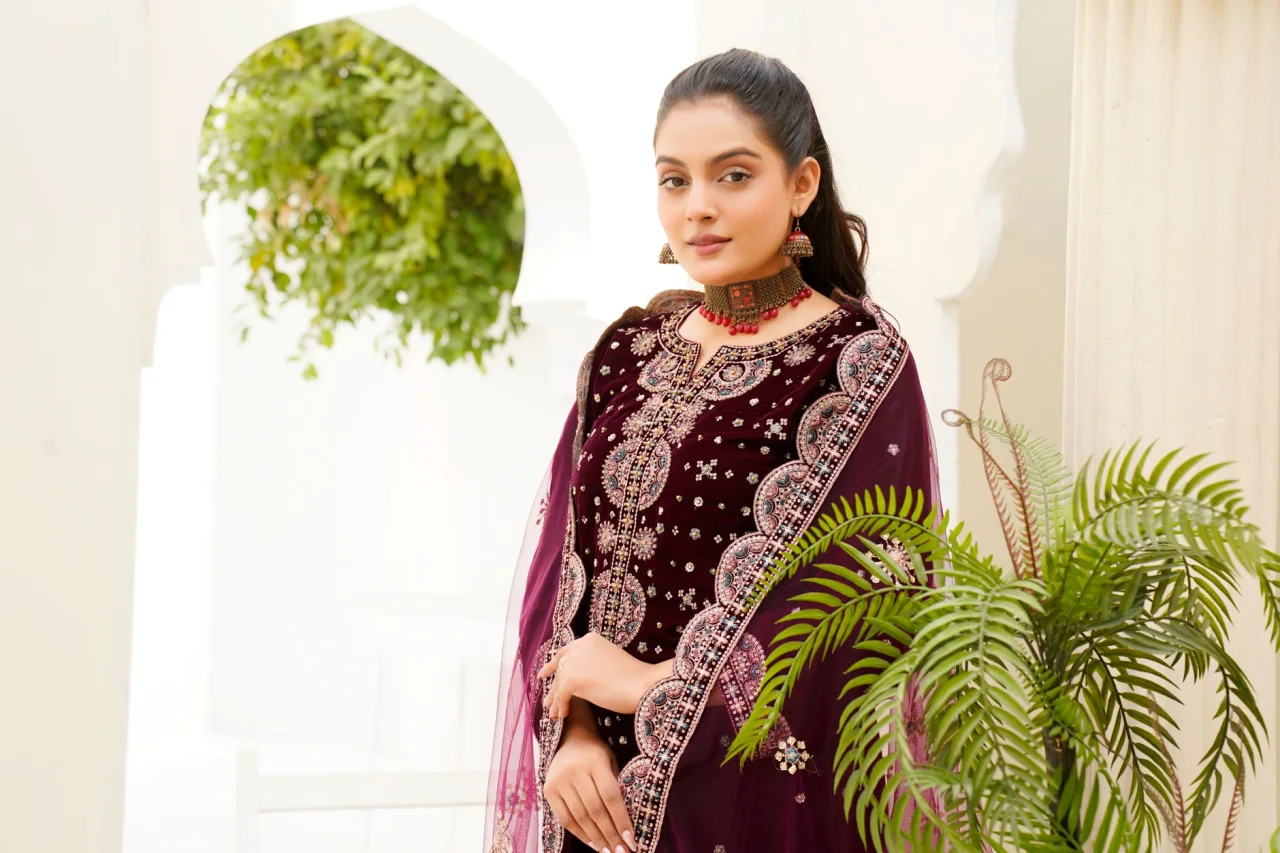
A gharara is one of the most striking silhouettes in desi fashion, but its beauty depends entirely on proportion. Style it well and it looks regal; get the kurti length or hem wrong and the whole effect collapses. This step-by-step tutorial builds a gharara look in the right order, from the all-important knee joint to the final dupatta drape, with variations for every occasion and body type.
The short version
- The gota, the decorated knee joint, is the hero. Keep the kurti short enough to show it.
- Build the look in order: kurti length, hem, dupatta, jewellery, then shoes.
- A gharara reads formal on its own, so let the silhouette lead and keep accessories supporting.
- Match fabric to season and occasion: organza and net for festive, silk brocade and velvet for bridal.
Step 1: know the silhouette you are styling
The gharara is a traditional outfit of a short kurti, a dupatta and distinctive wide-legged trousers that stay fitted to the knee and then flare dramatically below, thanks to ruching at the knee. That ruched knee joint is called the gota, and it is elaborately decorated with zari and zardozi work; each leg can use over twelve metres of fabric, typically silk brocade, as documented on Wikipedia. The garment originated in the Awadh region of Uttar Pradesh during the Nawab era.
Knowing this shapes every styling decision: the gota is the focal point, so your job is to keep it visible and let it lead. Our complete gharara guide covers the anatomy in full.
Step 2: set the kurti length to the knee joint
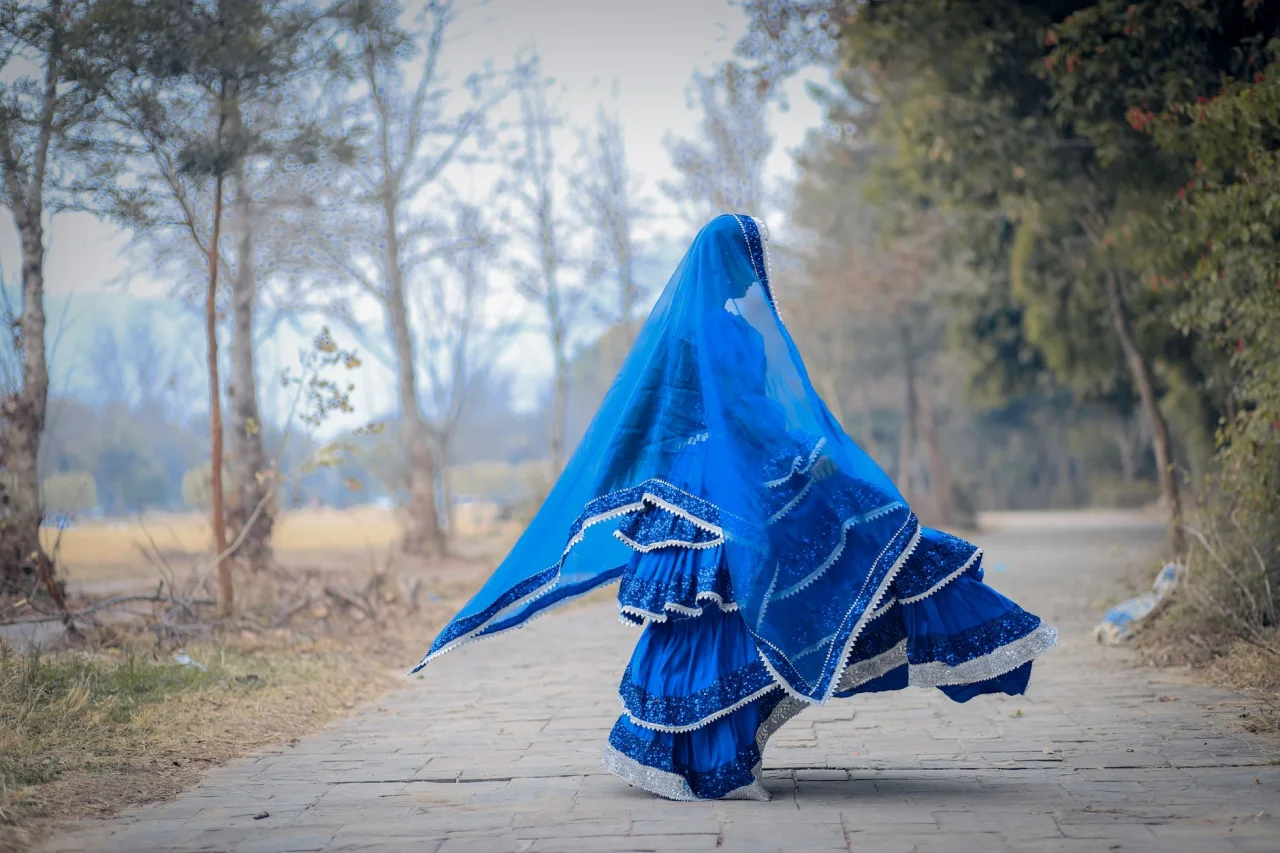
This is the single most important step, and the one people most often get wrong:
- Put on the gharara and locate the gota, the decorated knee joint.
- Choose a kurti that ends at or just above that joint.
- Check in a mirror that the gota is fully visible below the kurti hem.
If the kurti covers the knee joint, you lose the gota and the outfit reads like plain wide trousers. Keeping it short is what makes a gharara look intentional and grand.
Step 3: fix the hem to your heels
The flare needs a clean break at the floor to hold its shape.
- Wear the exact heels you plan to pair with the outfit.
- Set the hem so the flared trouser just kisses the floor.
- Avoid pooling fabric, which trips you up, and avoid a hem that floats above the ankle, which loses the drama.
For help choosing the right pair to begin with, see our gharara fit and fabric guide.
Body-type note
- Petite frame: keep the kurti short and structured and choose a lighter fabric so the volume does not swamp your height.
- Fuller frame: a structured kurti neckline and a single-shoulder dupatta add clean vertical lines.
- Tall frame: you can carry a heavier silk brocade or velvet gharara with a fuller dupatta beautifully.
Step 4: choose the fabric for the occasion
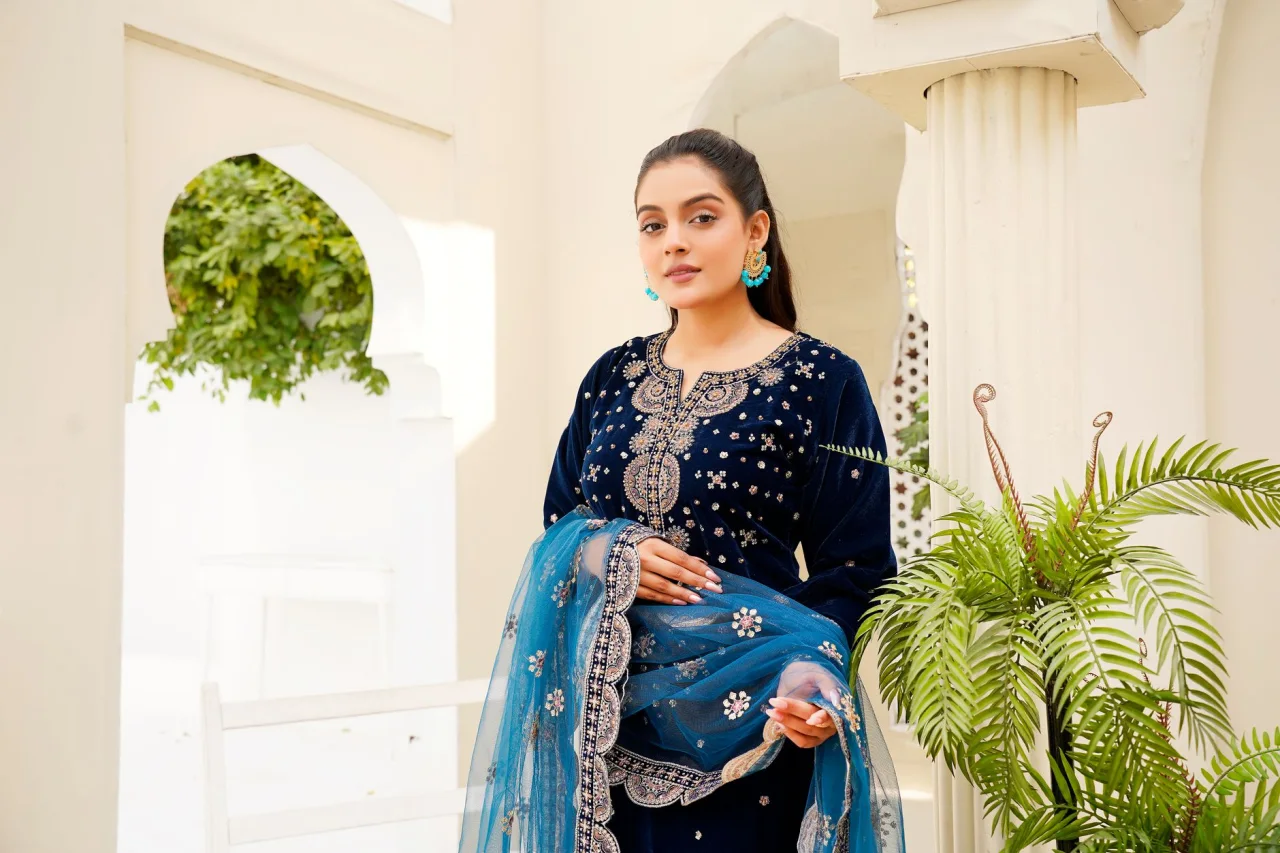
Because the gharara's shape is doing the heavy lifting, fabric is what shifts it between casual and bridal:
- Casual and daytime: cotton, lawn or a light printed fabric with a short simple kurti.
- Festive and Eid: pastel organza or net with light gota work.
- Wedding and bridal: silk brocade, velvet or a zardozi-worked gharara in a rich palette.
For festive outfit inspiration beyond the gharara, browse our Eid outfit ideas.
Step 5: master the dupatta drape
The dupatta changes the entire mood of a gharara, and it costs nothing to experiment. Match the drape to the formality:
- Single-shoulder pleat: neat and modern, best for casual and semi-formal looks. Pin it so it does not slide.
- Two-shoulder drape: falls down both sides for a fuller, traditional festive silhouette.
- Head drape: the most formal, ideal for brides and nikahs, framing the face.
Match the dupatta fabric too: a crisp organza dupatta holds a sculpted drape, while a soft chiffon one falls close to the body. Our dupatta draping tutorial walks through each drape in detail.
Step 6: balance jewellery, hair and finishing touches
The gharara draws the eye downward with its flare, so pull some attention back up to your face. Follow one rule: if the outfit is loud, keep the accessories quiet, and if the outfit is quiet, let one accessory speak.
- Earrings: jhumkas are the classic partner; chandbalis add drama for weddings.
- Jewellery weight: a heavily worked gharara wants minimal jewellery; a simple one can carry a statement piece.
- Hair: a sleek bun or soft side braid keeps the look elegant and shows off earrings.
- Bag and shoes: a small potli or clutch, and a comfortable heel you can dance in, since the flare hides it anyway.
Bridal ghararas often carry zardozi gold and silver metal embroidery, which has signalled status in this region since the Mughal era, as noted on Wikipedia. When the gota and trousers carry that much shine, let them lead and keep jewellery restrained. See our jewellery matching guide for full pairings.
Complete looks by occasion
With the six steps in place, here are three looks to copy:
- Casual day: printed cotton gharara, short simple kurti, light single-shoulder dupatta, small studs, flat kolhapuris.
- Festive evening: pastel organza gharara with light gota, tailored kurti at the knee joint, pinned single-shoulder dupatta, jhumkas plus a maang tikka, embellished juttis.
- Bridal: silk brocade or velvet gharara, structured kurti neckline, head-draped dupatta, layered necklace and jhumkas, dance-friendly heels.
For more occasion-by-occasion breakdowns, our gharara looks for every occasion and 2026 gharara designs go further. The same styling logic works for its wider-flared cousin, the sharara.
Common mistakes to avoid
- A kurti so long it covers the gota, turning the outfit into plain wide trousers.
- Skipping the hem fitting, so the flare either pools or floats.
- Pairing a heavy gharara with heavy jewellery and a worked dupatta all at once.
- Choosing a bulky bag that fights the volume instead of a potli or clutch.
Fabric and seasonal notes
Because the gharara traditionally uses a great deal of fabric, often more than twelve metres per leg in a full silk brocade version, the fabric you choose has a big effect on both weight and warmth. Let the season lead:
- Summer: lighter cotton, lawn, organza and net ghararas keep the volume airy and comfortable for daytime functions.
- Winter: silk brocade, jamawar and velvet carry richer embroidery and heavier jewellery, and their weight helps the flare hang cleanly.
- Festive transitions: pastel organza and net with light gota work bridge the seasons and suit most Eid and celebration looks.
Choose the fabric first for comfort and drape, then layer the accessories to match. A lighter gharara you can move in will always serve you better through a long function than a heavy one you struggle to carry.
Colour and palette note
Because the gharara silhouette is already dramatic, a restrained palette often looks the most refined. Deep jewel tones such as emerald, wine and midnight blue read regal for evening and bridal wear, while pastels and ivories suit daytime festive events. Let the gota and embroidery provide the sparkle rather than a busy colour mix.
Where the gharara sits among flared silhouettes
Knowing when to reach for a gharara over a similar shape is part of styling it well. Its defining feature is the fitted-to-the-knee cut with a flare that bursts from the decorated gota, which reads more structured and formal than the high, gradual flare of a sharara. That formality is why the gharara leans so strongly toward weddings and festive occasions rather than everyday wear.
If you love the flared look but want an easier, higher flare, the sharara is the natural alternative, and the revived farshi shalwar takes the floor-sweeping drama even further. Our comparison of the difference between a sharara and a gharara lays out which suits which occasion.
Frequently asked questions
How long should the kurti be with a gharara?
The kurti should end at or just above the gota, the decorated knee joint, so the gota stays fully visible. If the kurti covers the knee joint, the gharara loses its defining feature and reads like plain wide trousers. Keeping the kurti short is the key to a polished gharara look.
What is the gota on a gharara?
The gota is the ruched knee joint where the gharara trouser stays fitted to the knee and then flares below. It is elaborately decorated with zari and zardozi work and is the focal point of the outfit, which is why the kurti is kept short enough to reveal it.
What shoes should I wear with a gharara?
Choose footwear that adds a little height so the flared hem just clears the floor. Because the trousers hide your shoes, prioritise comfort: embellished juttis, a block heel or a mid heel you can walk and dance in all work well.
Can a gharara be worn casually?
Yes. In cotton, lawn or a light printed fabric with a simple short kurti and minimal jewellery, a gharara works for relaxed family lunches and daytime gatherings. The fabric and embroidery level, not the silhouette itself, decide how formal it looks.
How do I stop a gharara from looking too heavy?
Keep the kurti length near the knee joint so the proportions read clean, choose a lighter fabric like organza or net, and pair it with minimal jewellery and a single-shoulder dupatta drape. Let one element be the focus rather than layering drama everywhere.
More on Styling Guides
Have a question or a topic to suggest?
We read every message. Tell us what you would like to see next in the journal.
Get in touch