Matching Jewellery Style Guide
Let the neckline lead, match the metal, and pick one hero piece: how to accessorise any desi look.
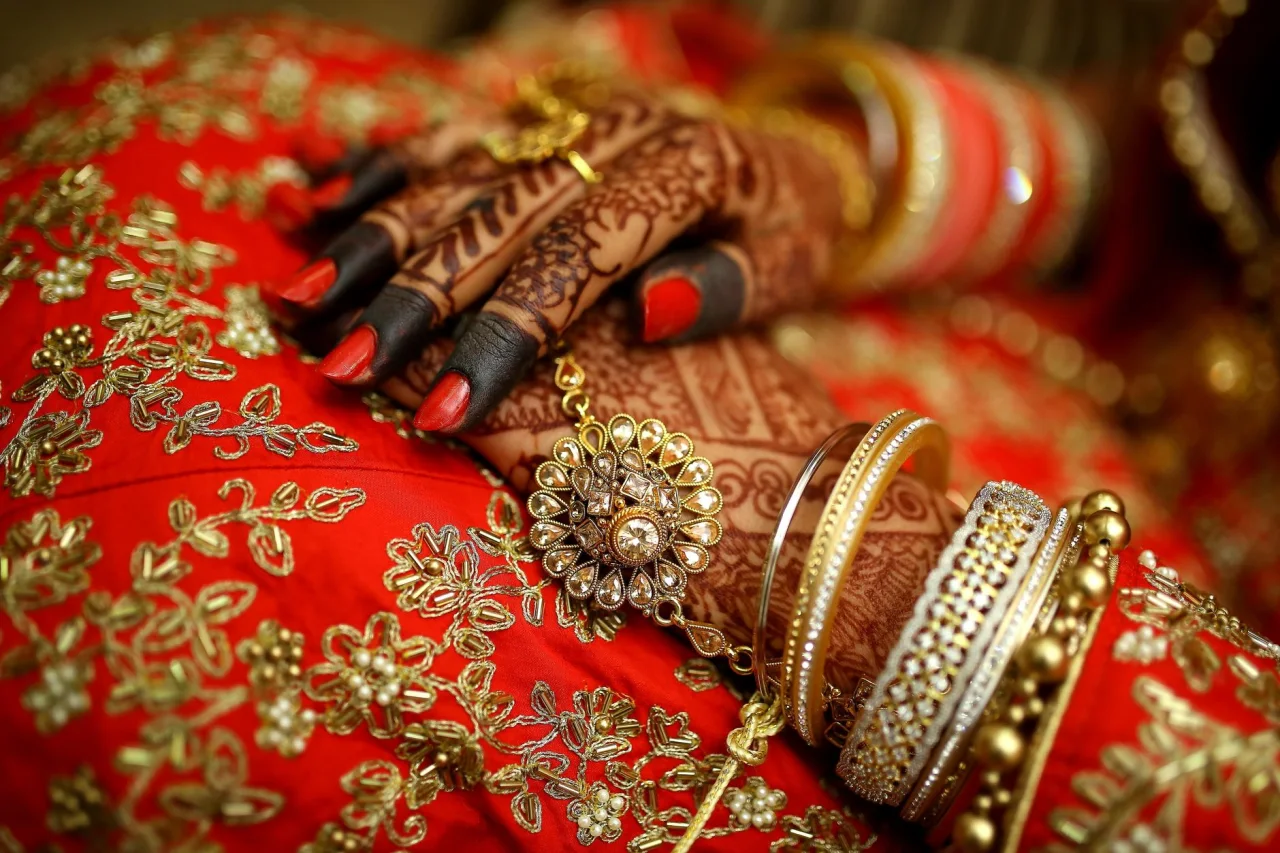
Jewellery is what turns an outfit into a look. The right set can lift a simple kameez into something festive, while the wrong choice can drown a beautiful lehenga. Desi jewellery is a craft with centuries of history behind it, from Mughal-era techniques to regional specialities, and understanding its language helps you accessorise with intention rather than guesswork. This guide walks through how to match jewellery to your neckline, colour, metal, and occasion, and names the traditional styles worth knowing.
The short version
- Let the neckline lead: high necks call for earrings, open necks call for a necklace.
- Match the metal to your outfit's undertone and to the embroidery already on the garment.
- Choose one hero piece and keep the rest supporting, so nothing competes.
- Traditional styles like kundan, polki, meenakari, and jhumkas each carry a different mood and formality.
Start with the neckline, not the jewellery
The most common styling mistake is picking jewellery first and forcing it onto the outfit. Work the other way around: the neckline decides what jewellery has space to sit. A closed or high neck already fills the area around the throat, so a necklace looks crowded and earrings should lead. An open, deep, or off-shoulder neck leaves a gap that a necklace fills beautifully.
Because the two are so linked, plan them together. Our neckline designs guide pairs each shape with the jewellery that flatters it, and the short version is: match the necklace shape to the neckline shape, or skip it entirely and let earrings do the work.
The same principle applies to length. A short choker sits well under a boat or off-shoulder neck, while a longer pendant or rani haar suits a deep V or scoop. If you own a necklace you love, choose an outfit neckline that gives it room rather than forcing a mismatch. The neckline and the necklace are a pair, and the outfit looks most intentional when they were clearly chosen for each other.
Choosing the right metal
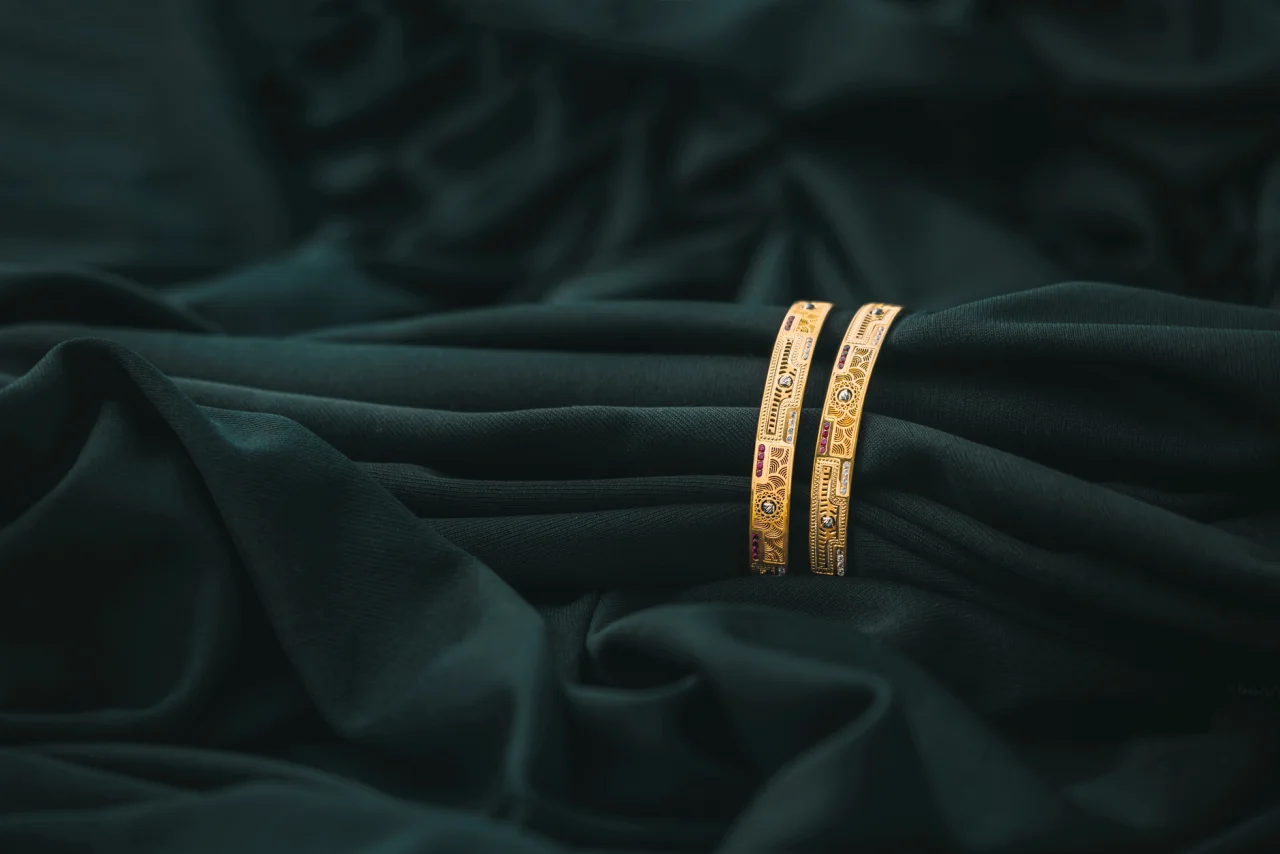
Metal sets the temperature of a look. The three broad choices:
- Gold: warm, festive, and traditional. Flatters warm undertones and pairs naturally with reds, maroons, greens, and mustard.
- Silver and white gold: cool and modern. Flatters cool undertones and pairs with blues, blacks, greys, and pastels.
- Antique, oxidised, and rose gold: muted and vintage. Versatile and especially good with earthy and pastel palettes.
A quick rule: match the metal to the dominant metallic already in your embroidery. If your suit carries gold zari or gota, gold jewellery reads as one deliberate choice; silver would fight it. The undertone test from our colour combinations guide works for metals too: gold flatters warm skin, silver flatters cool skin.
Traditional desi jewellery styles
Desi jewellery is a language of its own, and knowing the names helps you shop and coordinate:
- Kundan: a traditional Indian technique of setting gemstones with refined gold foil between the stone and mount. According to the kundan reference, the craft is historically centred on Jaipur and is a bridal mainstay.
- Meenakari: the art of enamelling metal with coloured glass fused under heat, famously associated with Rajasthan, per the meenakari reference. Often found on the reverse of kundan pieces.
- Polki: uncut, natural diamonds set in gold, prized for a soft, uncut sparkle.
- Jhumkas: bell-shaped dangling earrings, a festive classic that suits almost any traditional outfit.
- Chokers and rani haar: a close-fitting choker or a long layered necklace for bridal and heavy formal looks.
Stylist tip
Pick one hero piece and let everything else support it. If your earrings are big statement jhumkas, keep the necklace delicate or skip it. If your necklace is a heavy choker, wear studs. Two statement pieces at once usually cancel each other out.
Matching jewellery to colour
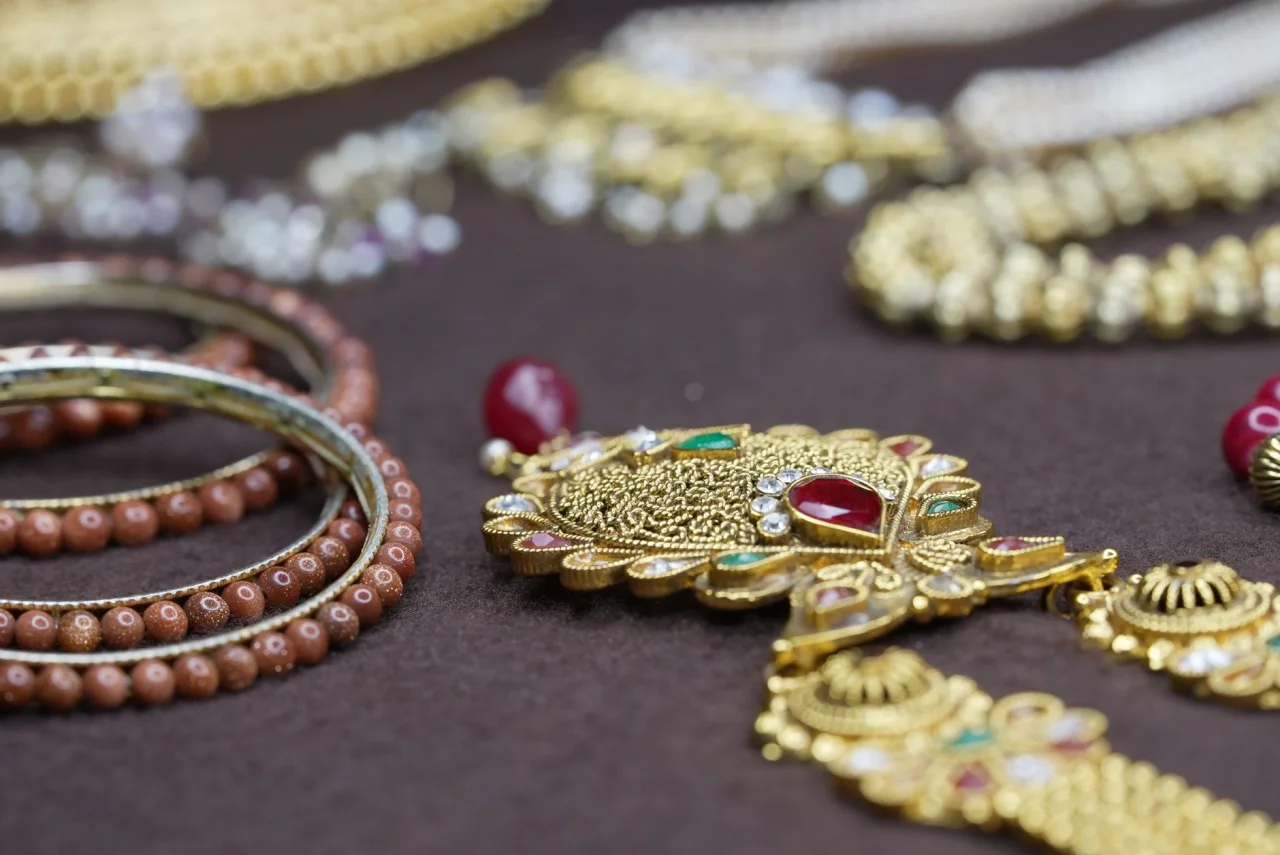
Coloured stones let you tie jewellery into your palette:
- Match: emerald stones with a green outfit, ruby with red, for a coordinated, classic look.
- Contrast: a green stone on a red outfit, or blue on mustard, for a livelier, complementary effect.
- Neutralise: pearl, kundan, or diamond-look pieces go with anything and are the safest choice for a busy print.
If your outfit is a bold multi-colour print, neutral or pearl jewellery keeps the look calm. If your outfit is a plain solid, coloured stones are a chance to add interest. This mirrors the fabric logic in our lehenga buying guide, where heavy work on the garment means lighter accessories.
Jewellery by occasion
- Office and daywear: studs, small hoops, a thin chain, one delicate ring. Minimal and practical.
- Eid and family events: jhumkas or statement earrings with a light necklace.
- Weddings as a guest: one bold set, either a statement necklace or big earrings, not both.
- Bridal: the full ensemble, maang tikka, choker, rani haar, jhumkas, and bangles, coordinated in one metal and stone family.
For brides especially, the jewellery should be chosen alongside the outfit, not after. Our bridal outfit ideas show how the jewellery and lehenga are planned as one look from the start.
Building a coordinated set
A polished ensemble is about balance, not matching everything:
- Keep all your metals in the same family (all gold or all silver, not a mix).
- Echo the stone colour in at least two pieces so the set reads as intentional.
- Balance the weight top to bottom: heavy earrings, lighter bangles, or the reverse.
- Coordinate, do not clone, your other accessories. Your shoes and clutch should complement the metal, which our matching shoes guide covers in detail.
Care note
Store gold-plated and kundan pieces in separate soft pouches away from moisture, and put jewellery on last, after perfume and hairspray, so the finish does not dull. Wipe pieces with a soft dry cloth after wear.
Beyond earrings and necklaces
A complete desi jewellery set reaches well past the ears and neck, and knowing the supporting pieces helps you build a balanced look rather than overloading one area:
- Maang tikka and matha patti: forehead and hairline pieces that frame the face, central to bridal styling and best worn with the hair pulled back.
- Bangles and kada: a stack of glass or metal bangles adds colour and sound; a single wide kada reads more modern and minimal.
- Rings and haath phool: a hand harness linking a ring to a bracelet, striking for brides and heavy formal looks.
- Nose ring or nath: a traditional bridal accent that carries strong cultural meaning and suits classic, heavier ensembles.
- Payal and anklets: a delicate finishing touch that pairs beautifully with open footwear.
The key is distribution. If you are wearing a maang tikka and a heavy necklace, keep the bangles and rings simple so the top of the look leads. If your outfit has a bare neckline and statement bangles, let the wrists be the focus and keep the earrings small. Spreading heavy pieces across every part of the body at once reads as costume rather than considered styling.
For everyday and office wear, a single well-chosen piece often does more than a full set. A pair of jhumkas with plain studs elsewhere, or one fine bracelet, keeps a daytime look polished without tipping into festive territory that feels out of place at a desk.
Common jewellery mistakes to avoid
- Two statement pieces at once: big earrings and a big necklace compete; pick one.
- Wrong metal for the embroidery: silver jewellery over gold zari looks accidental.
- Necklace with a high neck: it crowds the throat; wear earrings instead.
- Over-matching: stones, bag, shoes, and dupatta all in one exact colour looks dated. Coordinate loosely.
Frequently asked questions
How do I match jewellery to my outfit?
Start with the neckline: high necks call for statement earrings and no necklace, while open necks suit a necklace. Then match the metal to the embroidery already on the garment, gold with gold zari, silver with cool tones, and pick one hero piece so nothing competes.
Should jewellery match the outfit colour exactly?
Not necessarily. You can match stones to the outfit for a classic look, contrast them for a livelier effect, or use neutral pearl and kundan pieces that go with anything. For busy prints, neutral jewellery is safest; for plain solids, coloured stones add welcome interest.
Gold or silver jewellery, how do I choose?
Match the metal to your outfit's dominant metallic and to your undertone. Gold flatters warm skin and pairs with reds, greens, and mustard; silver flatters cool skin and pairs with blues, blacks, and pastels. If your embroidery is gold, wear gold so the look reads as one choice.
What jewellery goes with a heavily embroidered outfit?
Keep it minimal. When the outfit already carries heavy work, choose delicate or neutral jewellery such as pearls, small studs, or a single fine piece, so the accessories support rather than compete with the embroidery.
What is kundan jewellery?
Kundan is a traditional Indian technique of setting gemstones using refined gold foil between the stone and its mount, historically centred on Jaipur. It is a bridal and formal favourite, often paired with meenakari enamel work on the reverse of the pieces.
More on Styling Guides
Have a question or a topic to suggest?
We read every message. Tell us what you would like to see next in the journal.
Get in touch