Matching Shoes Style Guide
Coordinate colour and metal, match the heel to your hem, and finish the line from head to toe.
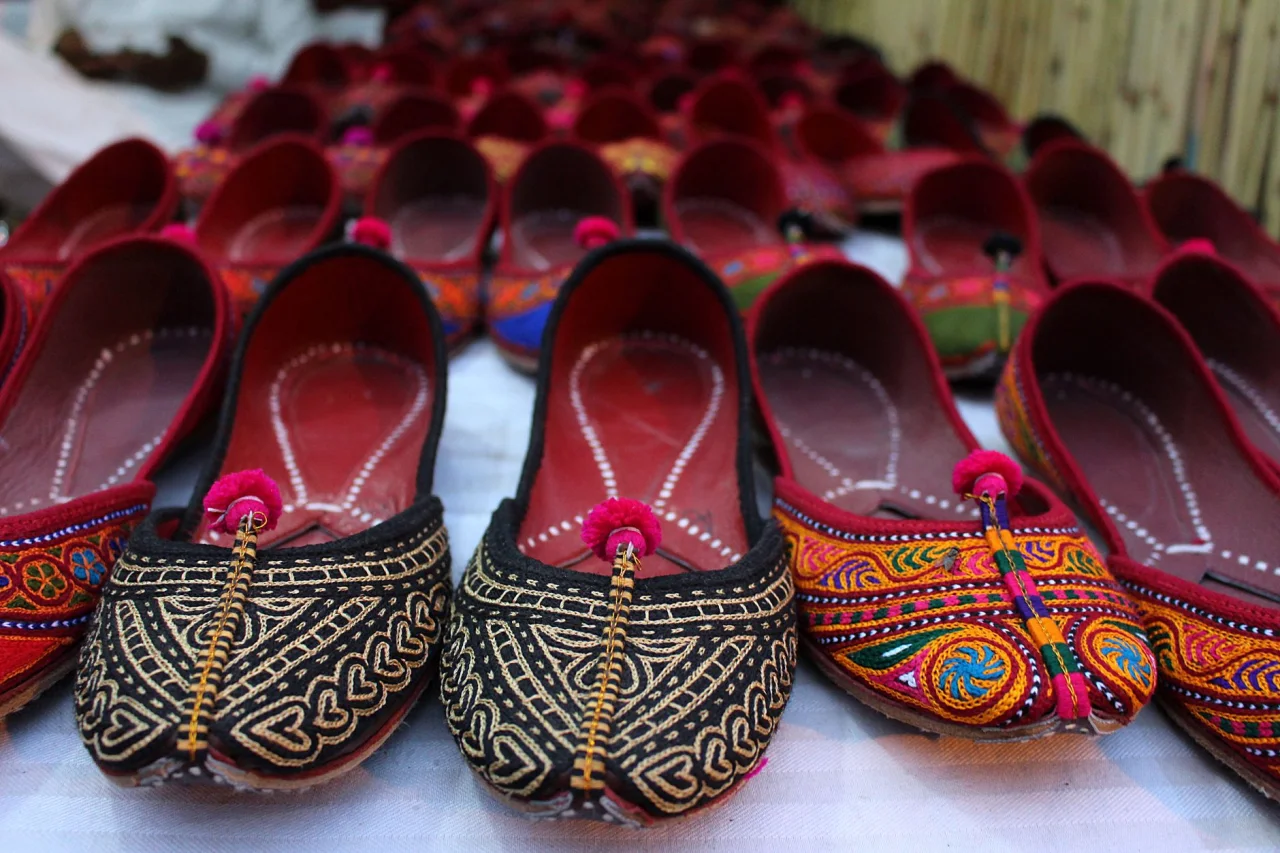
Shoes are the detail people forget until the photos come back. The right pair grounds an outfit and finishes the line from head to toe, while the wrong pair can throw off proportions or clash with everything above. Desi footwear also carries its own rich tradition, from handcrafted khussas to embellished mojaris, alongside the heels and flats borrowed from Western dressing. This guide covers how to match footwear to your outfit's colour, length, and occasion.
The short version
- Coordinate shoes with the outfit's metal and accent colour, not the dominant colour exactly.
- Hem length decides heel height: floor-length outfits need a heel, ankle-length outfits are flexible.
- Traditional styles like khussa and kolhapuri ground ethnic looks; heels and metallics dress them up.
- Comfort is non-negotiable for long events: choose a heel you can actually stand in for hours.
Why shoes finish the look
An outfit reads as one continuous line from the shoulders to the floor, and shoes are where that line ends. Get them wrong and the eye snags at the bottom; get them right and the whole look feels resolved. Shoes also do quiet practical work: they set your final height, which changes how the hem sits, and they carry you through events that can run for hours.
Like jewellery, shoes should be chosen with the outfit rather than grabbed at the last minute. They are part of the same accessory conversation covered in our matching jewellery guide: coordinate the metals and let one area lead.
There is also a practical reason to plan shoes early. The hem of a stitched outfit is finished to a chosen heel height, so the shoe is effectively part of the garment's measurements. Deciding late, or switching heel height on the day, is the single most common reason a well-made outfit ends up dragging on the floor or riding awkwardly short. Treat the shoe as part of the fitting, not an afterthought.
Traditional and ethnic footwear
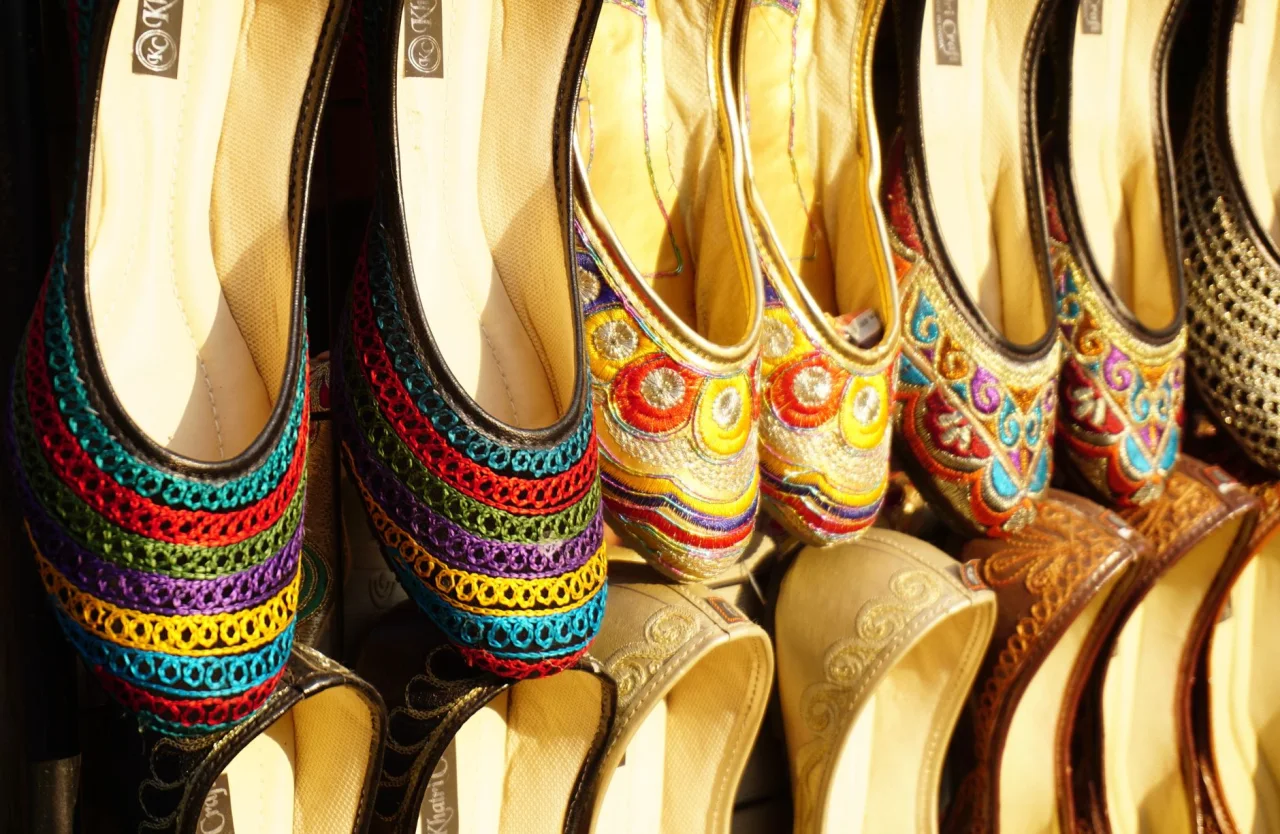
Desi footwear has its own beautiful vocabulary, and traditional styles ground an ethnic outfit instantly:
- Khussa: handcrafted leather shoes from the Punjab region, embellished with embroidery, mirrors, and beads, per the khussa reference. Perfect with shalwar kameez and casual festive wear.
- Mojari or juti: a related mule-style handcrafted shoe made across India and Pakistan, historically decorated with colour and ornament, according to the mojari reference.
- Kolhapuri chappals: flat leather sandals, comfortable and earthy, ideal for daytime and casual looks.
- Embellished flats and mules: modern takes on the tradition, easy to wear all day.
Traditional footwear is especially at home with fluid, everyday silhouettes. If you are styling relaxed ethnic wear, our kurta styling guide shows how flats and khussas keep a look grounded and comfortable.
Heels, flats, and everything between
The Western-influenced options each send a different signal:
- Stiletto and pump heels: the most formal and lengthening, ideal for floor-length lehengas and gowns.
- Block heels and wedges: the comfort compromise, giving height with stability for long events.
- Flats and ballet pumps: practical and youthful, best with ankle-length or slightly short hems.
- Embellished sandals and heels: a middle ground that dresses up an outfit without full formality.
Heel height should be decided by your hem. A floor-sweeping lehenga or gharara needs a heel to keep the hem off the floor, while a mid-length anarkali or trousers give you freedom to go flat. Our gharara fit guide explains why getting the hem-to-heel relationship right matters for these fuller silhouettes.
Stylist tip
Always try shoes on with the actual outfit before an event, standing on a hard floor. Hems are usually finished to a specific heel height, so switching from heels to flats on the day can leave the fabric pooling or the trousers dragging.
Matching shoes to colour
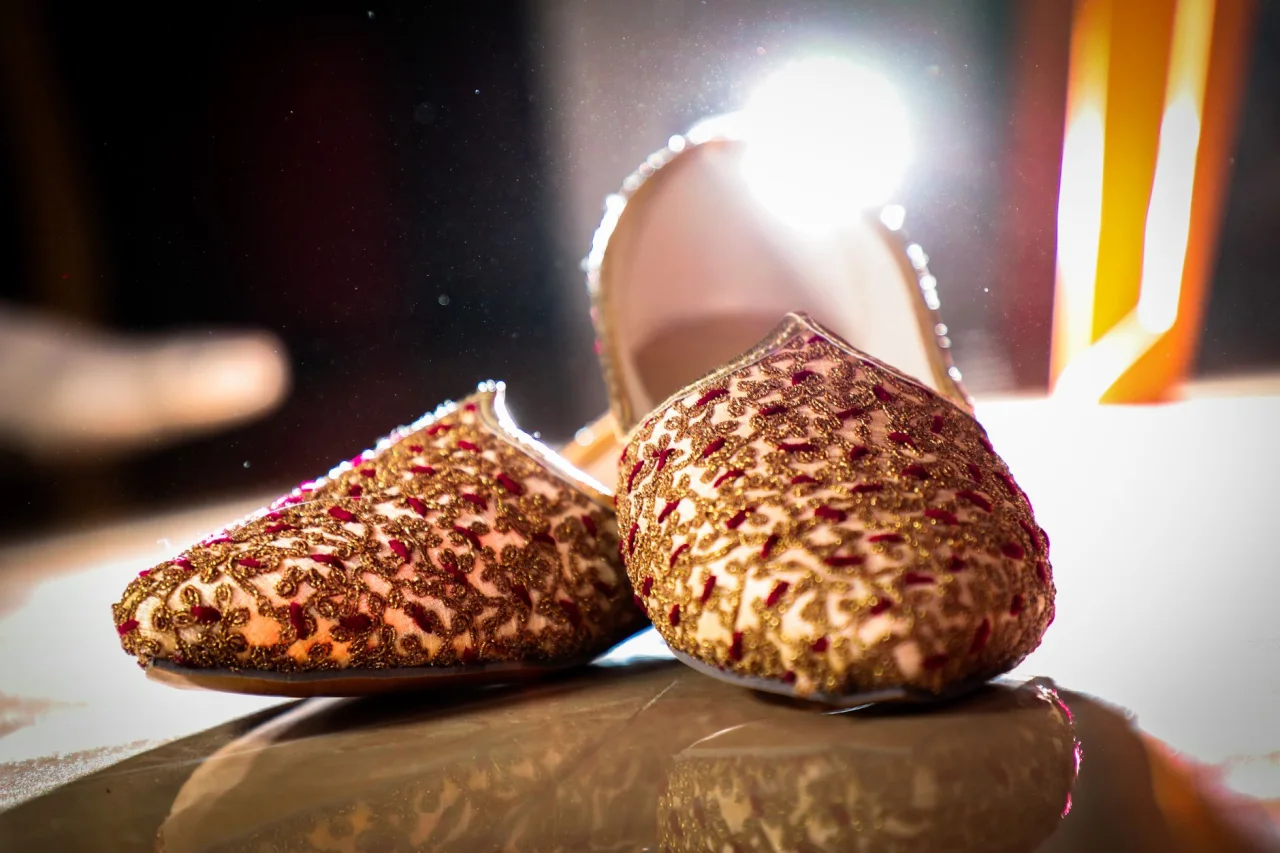
The safest approach is to coordinate, not clone. Three reliable strategies:
- Match the accent, not the base: pick up a secondary colour from the dupatta or embroidery rather than the main outfit colour.
- Go metallic: gold, silver, rose gold, and nude metallics work with almost everything and match your jewellery.
- Use a neutral: nude, tan, black, or ivory shoes are versatile and lengthen the leg, especially in a shade close to your skin tone.
Metallic and nude shoes are the two most useful pairs to own, because they finish nearly any outfit without the need for an exact colour match. This is the same coordinate-do-not-clone logic from our colour combinations guide.
Matching shoes to the metal
Because shoes and jewellery are seen together, keep their metals in the same family. Gold jewellery pairs with gold or nude shoes; silver jewellery pairs with silver or pewter shoes. A gold clutch, gold earrings, and silver sandals will read as a small mismatch even if no one can name why. Coordinating these metallics is one of the quickest ways to make a look feel finished. The safest habit is to decide your jewellery first, then choose shoes in the same metal or a neutral that will not fight it, so the two ends of the outfit agree.
Shoes by occasion
- Office and daywear: block heels, loafers, ballet flats, or neat khussas in neutral tones.
- Eid and family events: embellished flats, mojaris, or low block heels for comfort and shine.
- Weddings as a guest: metallic or nude heels that photograph well and match your jewellery.
- Bridal: a comfortable block heel or wedge you can wear for hours, in gold, ivory, or a tone that matches the lehenga.
For long wedding functions, comfort should win over height. Many brides keep a pair of decorated flats to change into after the ceremony, a practical trick our lehenga styling guide recommends for surviving a full day of events.
Comfort note
Break in new heels for a few short sessions at home before the event, and pack gel pads or plasters for the day. A blister ruins the evening faster than any style misstep, so a slightly less glamorous but comfortable shoe is almost always the better choice.
Building a small, versatile shoe wardrobe
You do not need a different pair for every outfit. A handful of well-chosen shoes will cover almost every desi occasion, which saves both money and cupboard space:
- A metallic block heel: gold or antique, the single most useful pair for weddings, Eid, and formal events.
- A pair of nude heels: a versatile lengthener that works under almost any colour and suits floor-length outfits.
- Embellished flats or khussas: the comfort default for daytime functions and long celebrations.
- Neutral everyday sandals or loafers: for office and casual ethnic wear in tan, black, or ivory.
With those four, you can dress almost any outfit up or down. Add colour-specific shoes only for pieces you wear often, such as a bridal lehenga or a favourite formal that needs a matched heel. For everything else, the metallic and nude pairs will quietly do the work.
When you do invest in a special pair, prioritise the sole and the fit over decoration. A beautifully embellished shoe that pinches will sit in the cupboard, while a comfortable, well-made pair in a versatile finish earns its place season after season. Leather and cushioned soles last longer and feel better across a long function than stiff synthetic ones, so spend where it counts.
Common shoe mistakes to avoid
- Wrong heel for the hem: flats under a floor-length lehenga leave the fabric dragging.
- Clashing metals: silver shoes with an all-gold jewellery set looks accidental.
- Over-matching: shoes in the exact main colour of the outfit can look flat; pick up an accent instead.
- Untested heels: shoes you cannot walk in will show in your posture all evening.
Frequently asked questions
How do I match shoes to a desi outfit?
Coordinate rather than clone. Pick up a secondary or accent colour from the dupatta or embroidery, or go with a metallic or nude that works with everything. Keep the shoe metal in the same family as your jewellery, and choose a heel height that suits the hem length.
What colour shoes go with everything?
Metallic shoes in gold, silver, or rose gold and neutral shoes in nude, tan, or black are the most versatile. Metallics match your jewellery and festive outfits, while nude shoes in a shade close to your skin tone lengthen the leg and suit almost any colour.
What heel height should I wear with a lehenga?
A floor-length lehenga usually needs a heel to keep the hem off the floor, since hems are finished to a specific height. A block heel or wedge gives that height with far more comfort than a stiletto, which matters for long wedding functions.
Are khussas suitable for formal events?
Khussas suit festive and semi-formal ethnic wear beautifully, especially with shalwar kameez and daytime functions. For very formal evening events or floor-length outfits, an embellished heel is usually more appropriate, though decorated khussas can work for a relaxed celebration.
Should my shoes match my bag?
They should coordinate, not match exactly. Keeping the shoes and clutch in the same metal or tonal family looks polished, but an identical colour match across shoes, bag, and outfit can look dated. Aim for a shared metallic or a shared accent colour instead.
More on Styling Guides
Have a question or a topic to suggest?
We read every message. Tell us what you would like to see next in the journal.
Get in touch