Sharara vs Gharara
The real difference is at the knee: a gharara gathers and flares there, while a sharara flares in one smooth sweep from the waist.
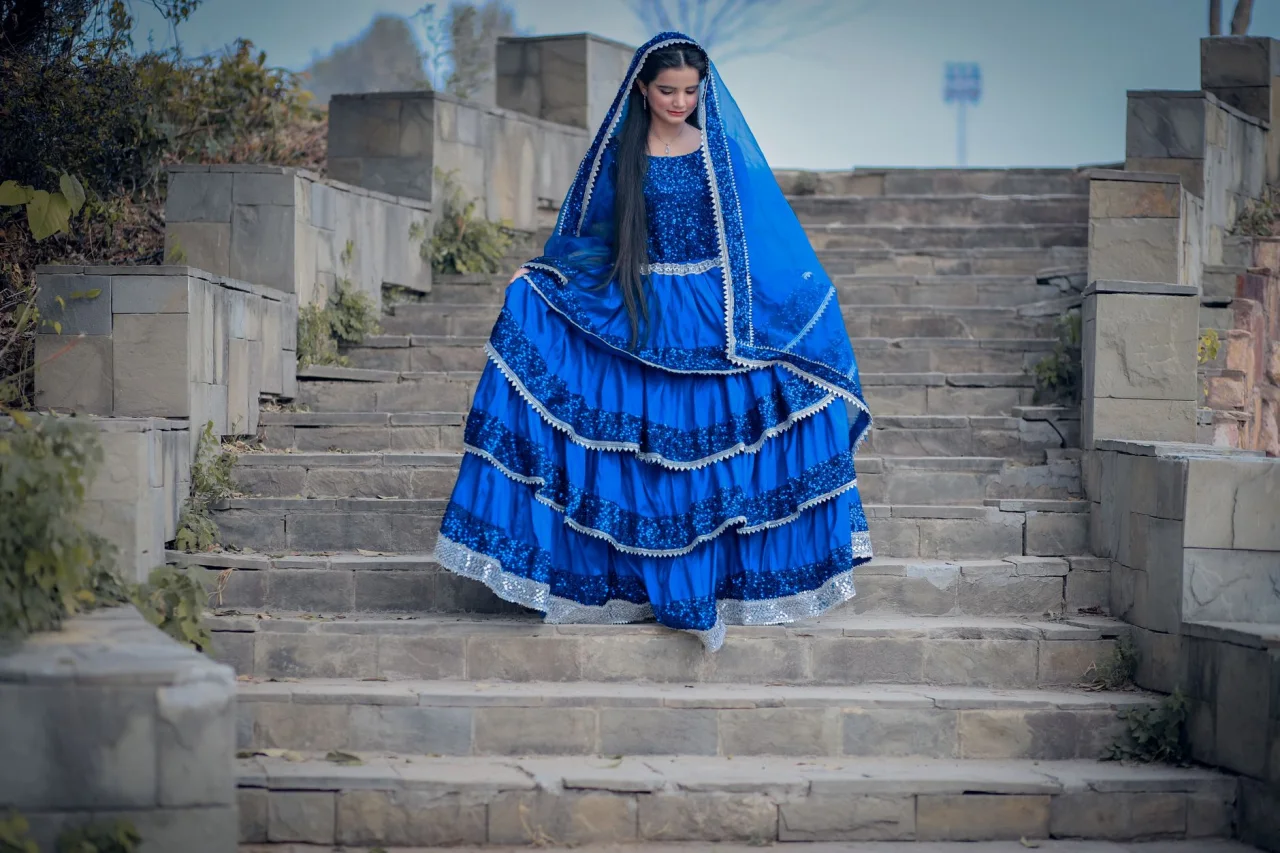
Sharara and gharara are two of the most regal silhouettes in South Asian occasion wear, and because both are wide, flared and worn with a short kurti and dupatta, they are constantly confused. The real difference lives at the knee. A sharara flares in one smooth sweep from the waist, while a gharara is fitted to the knee and then bursts into a gathered, flared panel. This guide makes the distinction clear and helps you pick the right one.
The short version
- A gharara is fitted from waist to knee, then flares from a gathered, ruched knee joint into voluminous wide legs.
- A sharara flares gradually from the waist or hip down in one continuous, skirt-like line, with no knee break.
- Both are traditionally worn as a three-piece: a short kurti, a dupatta and the wide legs.
- Choose a gharara for an ornate, heritage bridal look and a sharara for an easier, flowing, more contemporary drape.
What is a gharara?
A gharara is a traditional Lucknowi outfit made of three parts: a kurti (short tunic), a dupatta and distinctive wide-legged pants. According to Wikipedia's gharara entry, the defining feature is fabric ruched at the knee so the legs flare out dramatically, and each leg can take over 12 metres of fabric, often silk brocade. The gathered knee section is called the gota, and it is often elaborately embroidered in zari and zardozi work. The garment emerged from the Awadh region of Uttar Pradesh during the Nawab era and became everyday wear for Muslim women across the Hindi-Urdu belt in the late nineteenth and early twentieth centuries. It later gained prominence in Pakistan and Bangladesh in the 1950s and 60s and today survives mainly as wedding wear. Our complete guide to the gharara covers it in full.
What is a sharara?
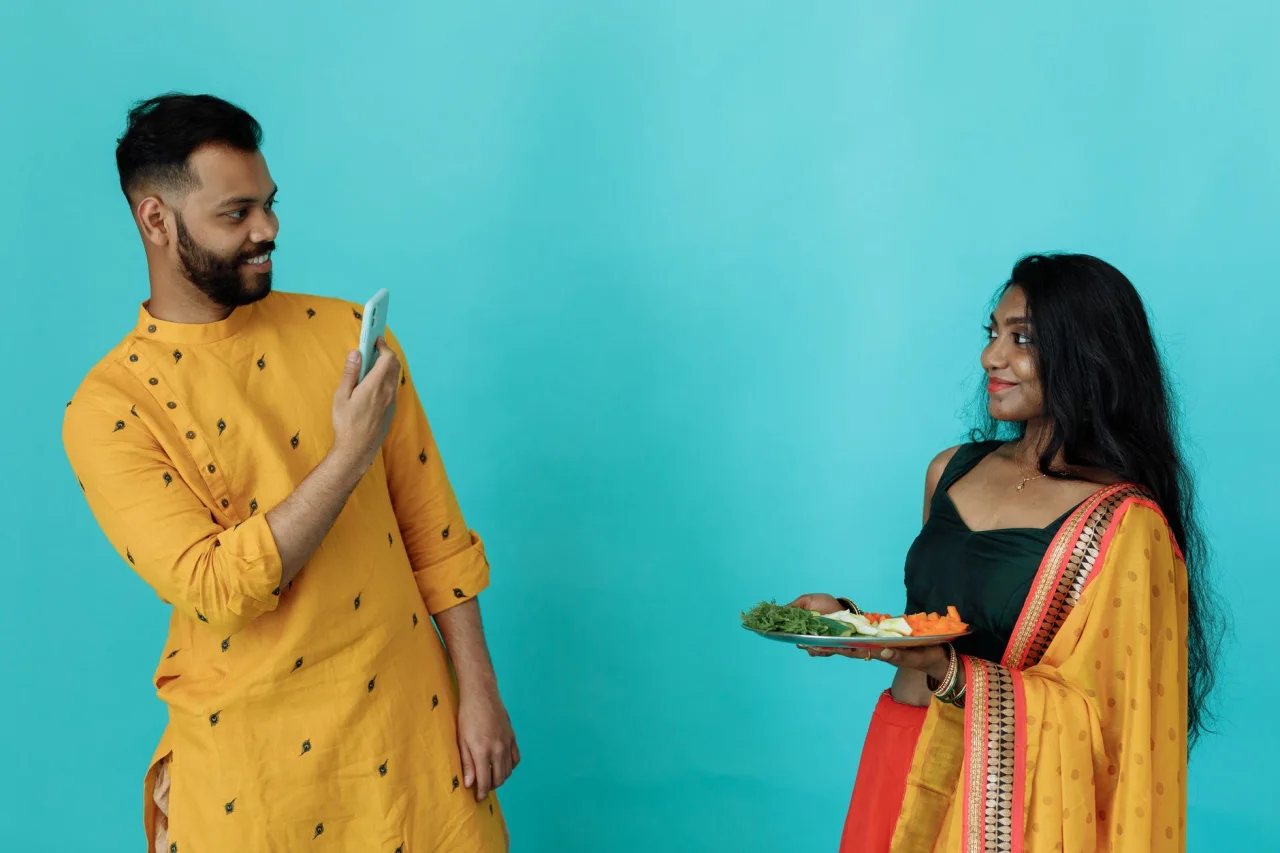
A sharara is also a three-piece set of a short kurti, a dupatta and wide flared trousers, but its cut is different: the trousers flare gradually from the waist or hip downward in a single continuous line, without the fitted-to-the-knee section and the gathered joint that define a gharara. The result reads more like a divided skirt or wide palazzo, moving in a smooth, flowing sweep rather than a structured, ruffled cascade. That makes the sharara feel a touch more relaxed and modern while still being firmly occasion wear. For the deeper background, see our complete guide to the sharara.
How to tell them apart at a glance
Look at the knee. If there is a visible seam or gathered band around the knee where the leg changes from fitted to full, it is a gharara. If the leg widens smoothly from the waist with no break, it is a sharara. In motion, a gharara swishes with ruffled volume at the bottom, while a sharara flows like a long skirt.
The knee: the one difference that matters
Everything else follows from the construction at the knee. A gharara is fitted through the thigh and then attaches a voluminous flared panel at a pronounced knee joint, so the volume is concentrated below the knee and the transition is deliberately visible. A sharara distributes its flare across the whole leg, starting the widening high and letting it grow steadily, so there is no single point where the shape changes. If you remember only one thing, remember this: gharara equals a gathered knee, sharara equals a seamless flare.
Silhouette and movement
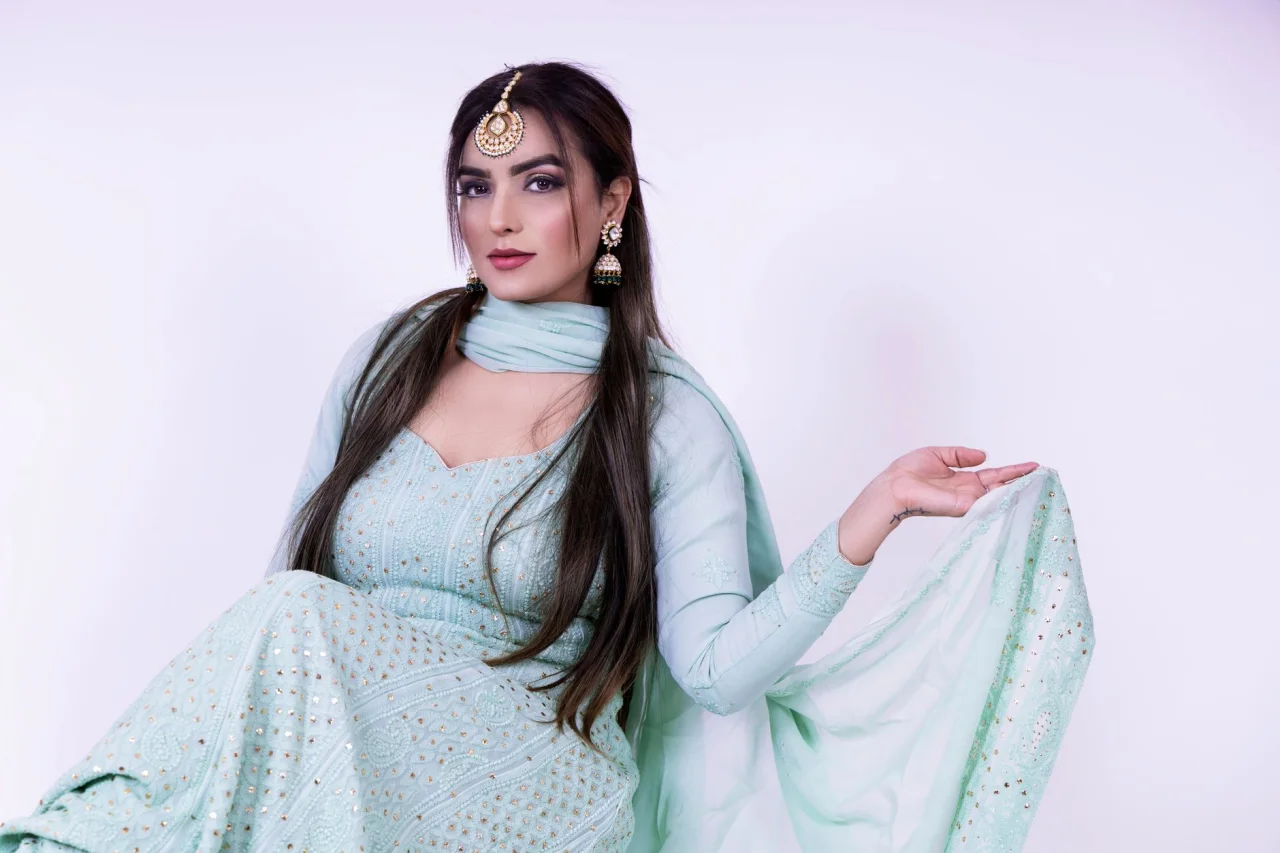
The two shapes move quite differently, which affects how they photograph and how they feel to wear:
- Gharara: more visual weight low on the leg, an ornate and structured line, and a swishing, ruffled movement when you walk.
- Sharara: a soft, continuous, skirt-like drape that flows and sways, reading as effortless and elegant.
Neither is more flattering in the abstract; it depends on the effect you want. A gharara makes a statement and holds embellishment beautifully at the knee, while a sharara gives a longer, leaner, more fluid line.
Fabric and embellishment
Both are occasion garments, so both lean on rich cloth: silk brocade, jamawar, raw silk, organza and net, often with heavy work. The gharara's gathered knee is a natural canvas for dense zari and zardozi, a heavy metal-thread embroidery that, as Wikipedia notes, is worked on silk, satin or velvet and is strongly associated with Lucknow and Mughal-era craft. A sharara, with its uninterrupted sweep, often carries embellishment along the hem and across the panels instead. To match cloth to the look you want, our notes on the best fabrics for winter dresses and on types of embroidery in Pakistani fashion are useful companions.
Which occasion suits which
Both belong at weddings and big festive events, but they tilt slightly differently:
- Gharara: heritage bridal and family functions where you want an ornate, traditional, unmistakably regal look. It is a natural mehndi or nikah choice.
- Sharara: engagements, receptions, Eid and festive parties where you want drama with more ease of movement and a contemporary flow.
For styling ideas, see how to wear each in our guides to gharara looks for every occasion and sharara looks for every occasion.
Styling note
Because both put volume at the legs, keep the kurti short and relatively fitted so the silhouette stays balanced, and let the dupatta echo the outfit rather than add a third busy element. Heeled shoes help both shapes clear the floor and show their movement.
Sharara vs gharara at a glance
| Feature | Gharara | Sharara |
|---|---|---|
| Flare starts | At the knee | At the waist or hip |
| Knee joint | Gathered, ruched band (gota) | None, smooth line |
| Movement | Swishing, ruffled volume | Flowing, skirt-like |
| Feel | Ornate, heritage, structured | Elegant, easy, contemporary |
| Origin | Awadh, Lucknow, Nawab era | Wide flared trouser tradition |
| Best for | Bridal, mehndi, nikah | Engagement, reception, festive |
Which should you buy?
Choose a gharara if you want a rich, traditional, statement piece with the classic gathered knee and room for heavy embroidery, especially for a wedding role. Choose a sharara if you prefer a smoother, more flowing silhouette that is easier to move in and reads a little more modern. If you like the flared-leg family in general, you may also want to compare the revived farshi shalwar against the gharara, and for other side-by-side buying decisions see our kurti versus kurta explainer.
Frequently asked questions
What is the main difference between a sharara and a gharara?
The main difference is where and how the legs flare. A gharara is fitted from the waist to the knee and then flares from a gathered, ruched knee joint, while a sharara flares gradually from the waist or hip in one smooth, continuous line with no knee break.
Which one is more traditional?
The gharara has the older, more clearly documented heritage, emerging from the Awadh region around Lucknow during the Nawab era and worn by Muslim women across the Hindi-Urdu belt. Its gathered knee, often heavily embroidered in zari and zardozi, gives it an especially ornate, heritage character.
Are sharara and gharara worn the same way?
Yes, both are traditionally worn as a three-piece set with a short kurti and a dupatta over the wide flared legs. The kurti is usually kept short and fitted so that the volume of the legs remains the focal point of the outfit.
Which is better for a bride?
A gharara is the more classic bridal and mehndi choice because its gathered knee showcases heavy embroidery and reads as regal and traditional. A sharara suits brides or wedding guests who want a similar sense of drama with a smoother, more flowing and slightly more contemporary line.
How much fabric does a gharara use?
A gharara is famously fabric-heavy. According to Wikipedia, each leg can take over 12 metres of fabric, often silk brocade, which is what gives the garment its dramatic volume below the gathered knee.
Can I tell them apart in a photo?
Usually yes. Look at the knee: a visible gathered seam or band where the leg changes from fitted to full means it is a gharara, while a leg that widens smoothly from the waist with no break means it is a sharara.
More on Buying Guides
Have a question or a topic to suggest?
We read every message. Tell us what you would like to see next in the journal.
Get in touch