How to Style a Gharara
Complete casual, office, festive and bridal gharara looks, with dupatta drapes, jewellery and footwear pairings.
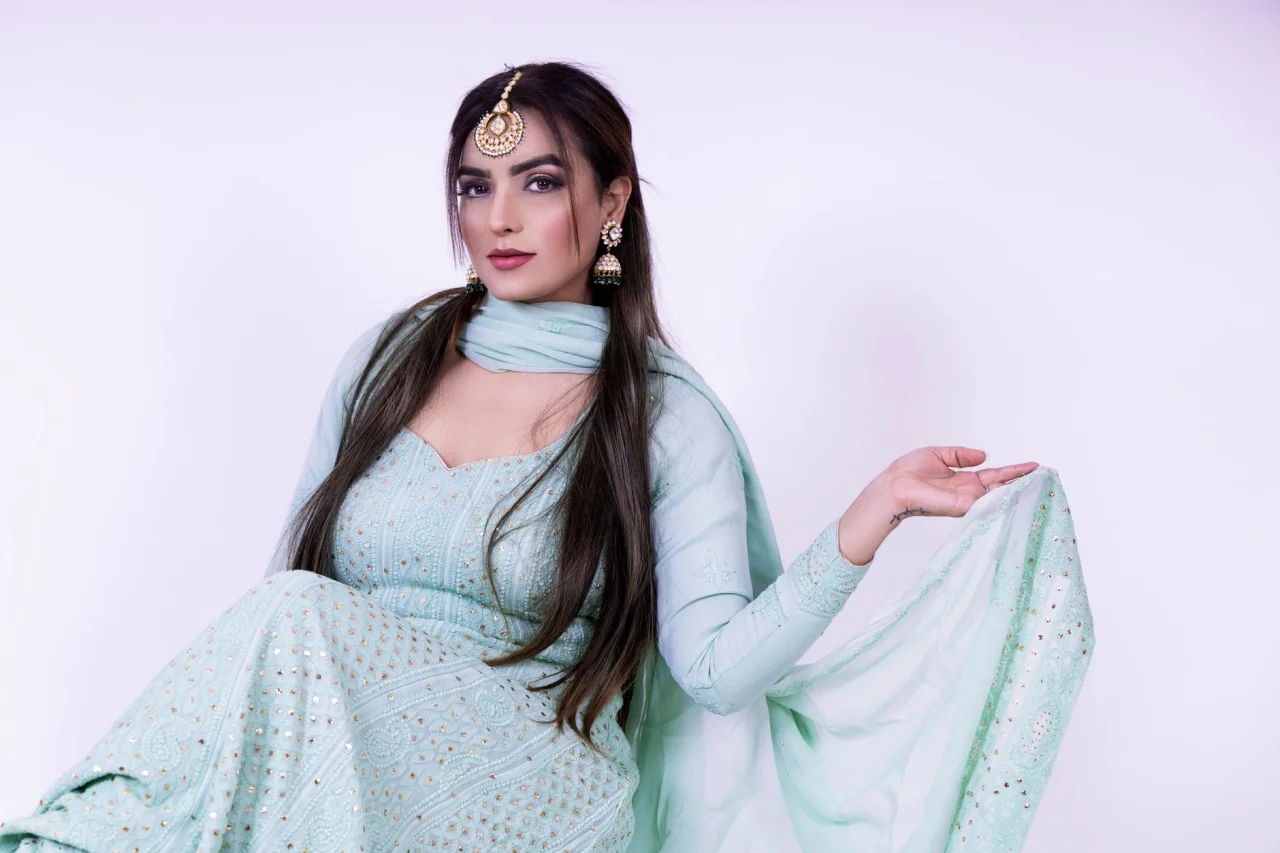
Owning a beautiful gharara is only half the job. The magic is in how you style it: the dupatta drape, the jewellery weight, the shoes that stay hidden under the flare, and the hair that keeps the focus on your face. This guide walks through complete gharara looks for casual, office, festive and wedding occasions, so you always know how to finish the outfit.
The short version
- Balance is everything: heavy gharara means lighter jewellery, simple gharara means you can go bigger on accessories.
- The dupatta drape sets the tone: a single shoulder pleat reads modern, a two-shoulder or head drape reads traditional.
- Footwear should add height so the flare just clears the floor, and it barely shows, so comfort wins.
- Match formality to occasion through fabric and embroidery, not by piling on accessories.
Start with the gharara's proportions
Before you accessorise, get the outfit itself sitting right. The gharara is fitted to the knee and then flares from the decorated knee joint, the gota, so the kurti length and the trouser break matter more than anything you add on top. If you want a refresher on the anatomy, our complete gharara guide covers the structure.
Two proportion rules carry every look: keep the kurti ending at or just above the knee joint so the gota stays visible, and hem the trousers so they just kiss the floor with your chosen heel. Get these two right and even a simple gharara looks intentional and polished.
It also helps to understand why the gharara reads as formal in the first place. It is a Lucknowi garment from the Awadh region, historically worn by Muslim women of North India and now largely reserved for weddings and festive occasions, as documented on Wikipedia. That heritage is exactly why a gharara can look special with very little styling: the silhouette is doing the heavy lifting, so your job is to support it, not to compete with it.
Casual and daytime looks
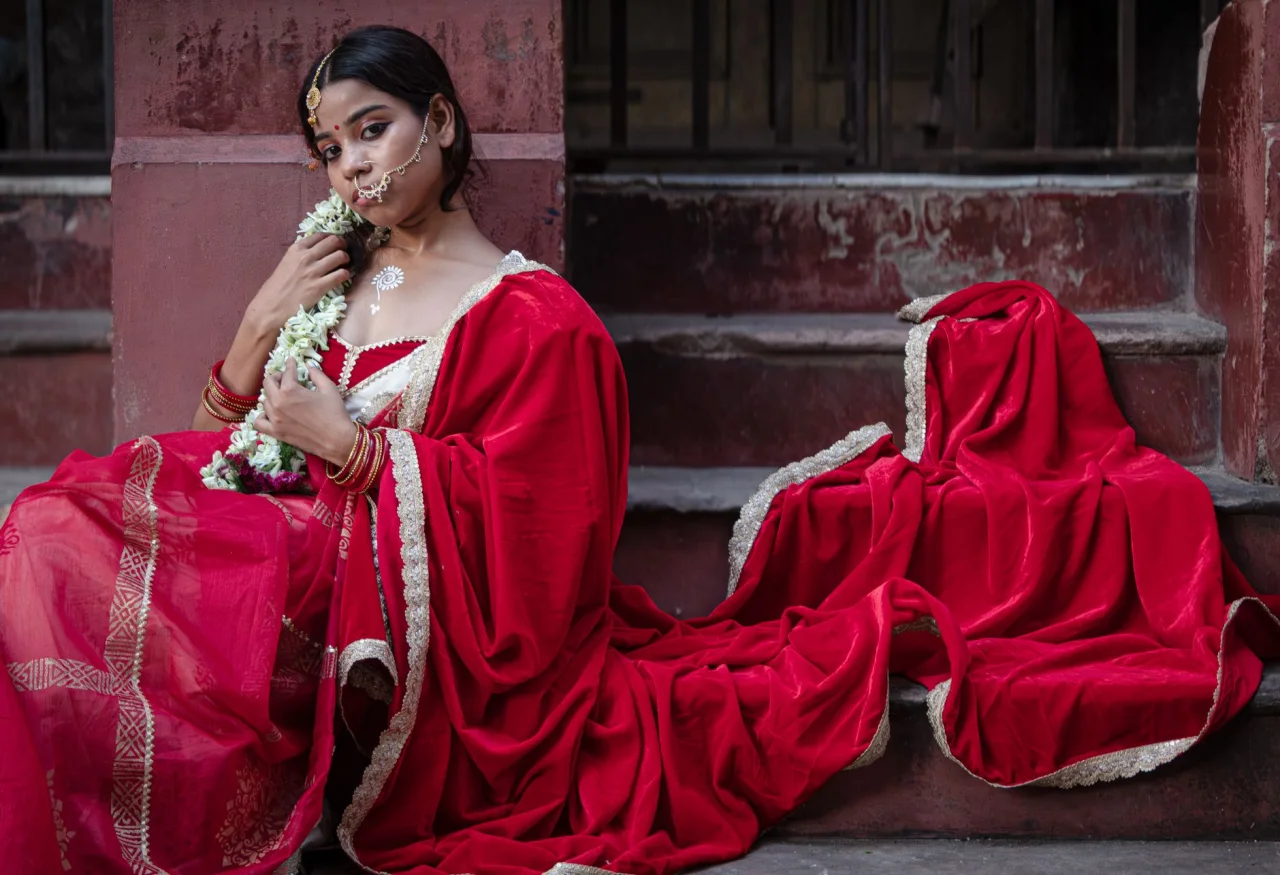
Yes, a gharara can be casual. In cotton, lawn or light printed fabric it works for a relaxed family lunch, a daytime festive gathering or an informal function.
- Outfit: a printed or solid cotton gharara with a short, simple kurti and a light cotton or chiffon dupatta.
- Jewellery: small studs or light jhumkas and a couple of thin bangles. Keep it minimal.
- Dupatta: a loose single-shoulder drape, or simply carried over one arm.
- Footwear: flat kolhapuris or a low block heel for comfort.
Office and smart looks
A gharara is not everyday office wear because of its volume, but a restrained version works well for a workplace Eid lunch, a festive office event or a semi-formal daytime meeting.
- Outfit: a solid, muted gharara in a structured fabric with minimal thread work, paired with a tailored kurti.
- Jewellery: one clean statement, such as small hoops or a delicate pendant, nothing jangling.
- Dupatta: a neat single-shoulder pleat pinned in place so it stays put.
- Footwear: a closed or low heel in a neutral tone.
Balance tip
The golden rule of gharara styling: if the outfit is loud, keep the accessories quiet, and if the outfit is quiet, let one accessory speak. Never let both the gharara and the jewellery compete for attention.
Festive and Eid looks
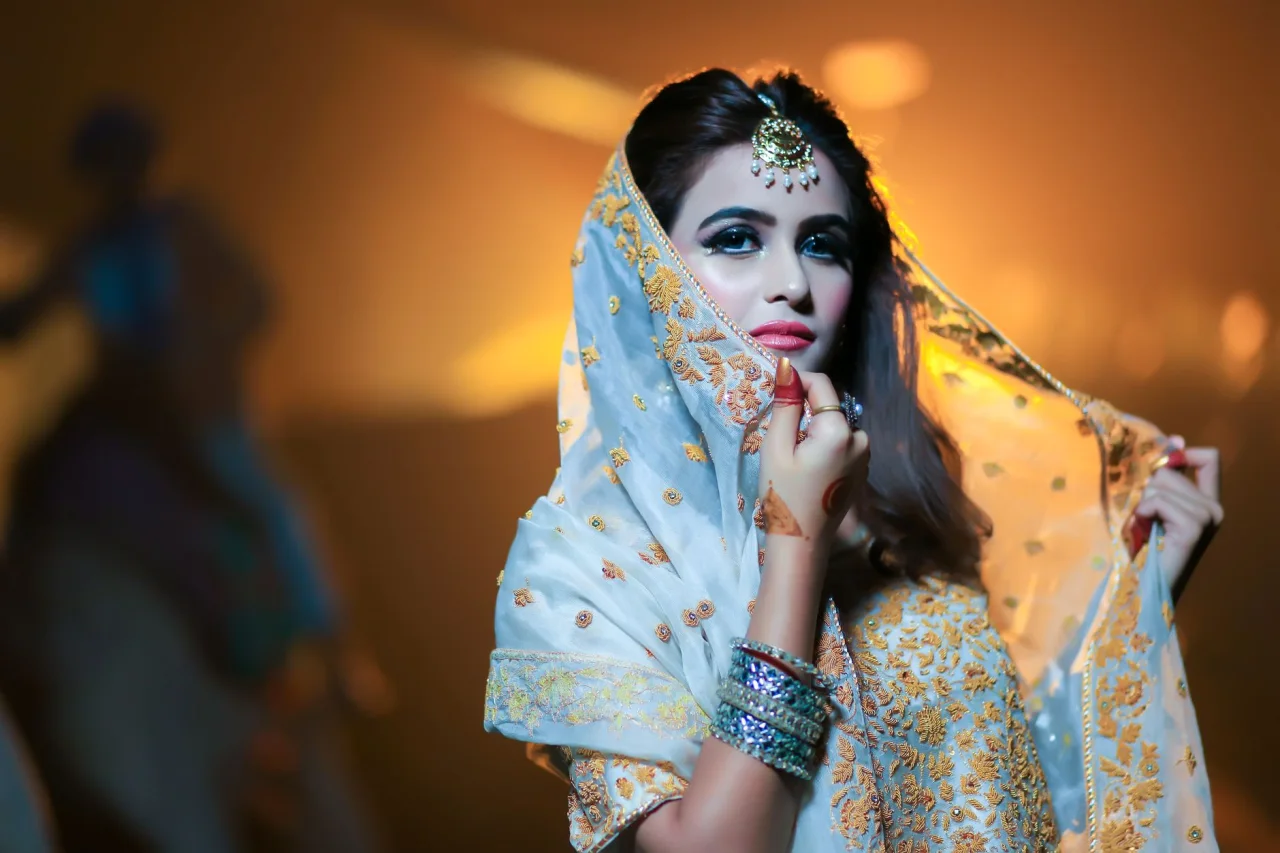
Festive occasions are the gharara's sweet spot, formal enough to feel special but relaxed enough to enjoy. Lighter luxe fabrics like organza and net shine here.
- Outfit: a pastel organza or net gharara with light gota work and a matching or contrast dupatta.
- Jewellery: jhumkas plus a delicate maang tikka or a single kada. Coordinate metal tones.
- Dupatta: a two-shoulder drape for a fuller, more traditional silhouette.
- Footwear: embellished juttis or a mid heel.
For more festive outfit inspiration beyond the gharara, browse our Eid outfit ideas.
Wedding and bridal looks
This is where the gharara pulls out all the stops. Whether you are the bride or a close guest, a wedding gharara can carry rich fabric and heavy embroidery.
- Bride: a silk brocade, velvet or zardozi gharara in a classic palette, with a dupatta draped over the head. Keep the kurti neckline structured to balance the volume below. The zardozi gold-thread work seen on many bridal ghararas has signalled status in this region since the Mughal era, as noted on Wikipedia.
- Guest: a jewel-tone net or raw silk gharara, dressed up with statement earrings but kept lighter than the bride's.
- Jewellery: for a bride, a layered necklace, jhumkas, maang tikka and bangles; for a guest, one or two statement pieces.
- Footwear: a comfortable heel you can dance in, since the flare hides it anyway.
Building a look for a specific event? Our guides to nikah outfits and walima dresses help you match formality to the function.
Mastering the dupatta drape
The dupatta changes the entire mood of a gharara, and it costs nothing to experiment. Three drapes cover almost every occasion:
- Single-shoulder pleat: neat and modern, best for casual and office looks. Pin it so it does not slide.
- Two-shoulder drape: falls down both sides for a fuller, traditional festive silhouette.
- Head drape: the most formal, ideal for brides and nikahs, framing the face and adding grace.
Match the dupatta fabric to the occasion too: a crisp organza dupatta holds a sculpted drape, while a soft chiffon one falls close to the body.
Jewellery, hair and finishing touches
The gharara draws the eye downward with its flare, so your accessories should pull some attention back up to your face. A few reliable choices:
- Earrings: jhumkas are the classic partner; chandbalis add drama for weddings.
- Neckline: keep necklaces in proportion to the kurti neckline, not overpowering a delicate one.
- Hair: a sleek bun or a soft side braid keeps the look elegant and shows off earrings.
- Bag: a small potli or clutch, never a large bag that fights the silhouette.
Comfort note
Because the flare covers your feet, prioritise a shoe you can stand and dance in over one that looks impressive but hurts. Nobody will see it, and your evening will be much better for it.
Common styling mistakes to avoid
Most gharara styling missteps come from fighting the silhouette rather than working with it. A few to sidestep:
- A kurti that is too long: if the top covers the knee joint, you lose the gota and the outfit reads like plain wide trousers.
- Competing embellishment: a heavy gharara plus heavy jewellery plus a worked dupatta is too much. Pick one hero.
- The wrong hem length: trousers that pool too much on the floor look untidy and trip you up; too short and the flare loses its drama.
- A bulky bag: a large tote fights the volume; reach for a potli or clutch.
- Overthinking the shoe: it barely shows, so choose comfort and height over decoration.
Correct these and your gharara will look considered rather than costume, whatever your budget. The best gharara looks almost always come from restraint: one clear focal point, clean proportions and accessories chosen to support the silhouette rather than crowd it. When in doubt, remove one thing rather than adding another.
Seasonal note
In summer, lean on organza, net and cotton ghararas with a light chiffon dupatta and minimal jewellery. In winter, velvet and silk brocade carry richer jewellery and a fuller dupatta drape beautifully. Let the season guide fabric first, then build the accessories to match.
Once your styling is sorted, make sure the gharara itself is the right one for you. Our guide to choosing the perfect gharara covers fit, fabric and budget, and our 2026 gharara design roundup shows current looks by occasion.
Frequently asked questions
What jewellery goes best with a gharara?
Jhumkas or chandbali earrings are the classic partner for a gharara. Balance the rest of your jewellery against the outfit: keep it minimal with a heavily embroidered gharara, and go bolder with a simple one. Match your metal tones for a cohesive look.
How should I drape the dupatta with a gharara?
A single-shoulder pleat reads modern and suits casual or office looks, a two-shoulder drape gives a fuller traditional festive silhouette, and a head drape is the most formal choice for brides and nikahs. Pin the dupatta so it stays in place.
What shoes should I wear with a gharara?
Choose footwear that adds a little height so the flared hem just clears the floor. Since the trousers hide your shoes, prioritise comfort: embellished juttis, a block heel or a mid heel you can walk and dance in all work well.
Can I wear a gharara casually?
Yes. In cotton, lawn or light printed fabric with a simple kurti and minimal jewellery, a gharara works for relaxed family lunches and daytime gatherings. The fabric and embroidery level, not the silhouette itself, decide how formal it looks.
How do I stop a gharara from looking too heavy?
Keep the kurti length near the knee joint so the proportions read clean, choose a lighter fabric like organza or net, and pair it with minimal jewellery and a single-shoulder dupatta drape. Let one element be the focus rather than layering drama everywhere.
More on Styling Guides
Have a question or a topic to suggest?
We read every message. Tell us what you would like to see next in the journal.
Get in touch