What Is a Shalwar Kameez?
Pakistan's national dress explained: spelling, regional cuts, the fabric calendar and how to wear it.
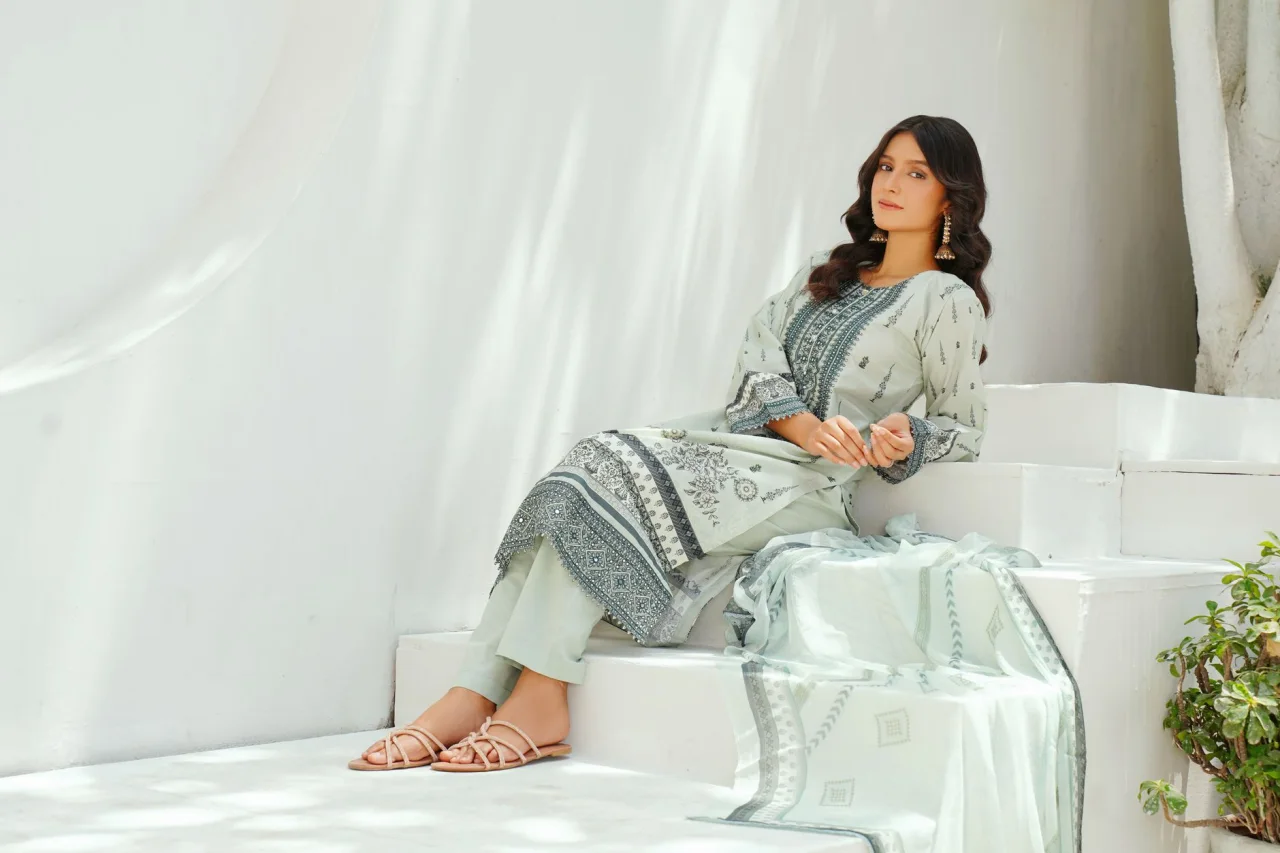
In Pakistan the shalwar kameez is not just an outfit, it is the national dress, worn to the office, the mosque, the mehndi and everywhere in between. This guide takes the Pakistani view of the garment: the spelling, the regional trouser cuts, the lawn-and-chiffon seasonal culture, and how it fits into everyday and formal wardrobes. If you arrived looking for the India-centric version, the outfit is the same, and we cross-reference it throughout.
The short version
- The shalwar kameez is a tunic (kameez) worn over trousers (shalwar), usually with a dupatta.
- It is the national dress of Pakistan and is worn by both men and women.
- "Shalwar" is the standard Pakistani spelling; "salwar" is more common in India for the same garment.
- Seasonal fabric culture drives the wardrobe: lawn in summer, khaddar and velvet in winter.
What the shalwar kameez is
The shalwar kameez is a coordinated two or three piece outfit built around a long tunic and soft trousers. The kameez covers the hips and often falls to the knee or below, the shalwar sits at the waist and tapers toward the ankle, and a dupatta usually completes the look. Its appeal is the same everywhere it is worn: it is modest, breathable, comfortable and adaptable, moving from casual to bridal purely through fabric and embellishment.
The spelling difference is worth settling early. As reference sources confirm, "shalwar kameez" and "salwar kameez" describe the same garment, with "shalwar" being the standard Pakistani form. For the broader, India-focused explainer of the identical outfit, see our guide to what a salwar kameez is.
The national dress of Pakistan
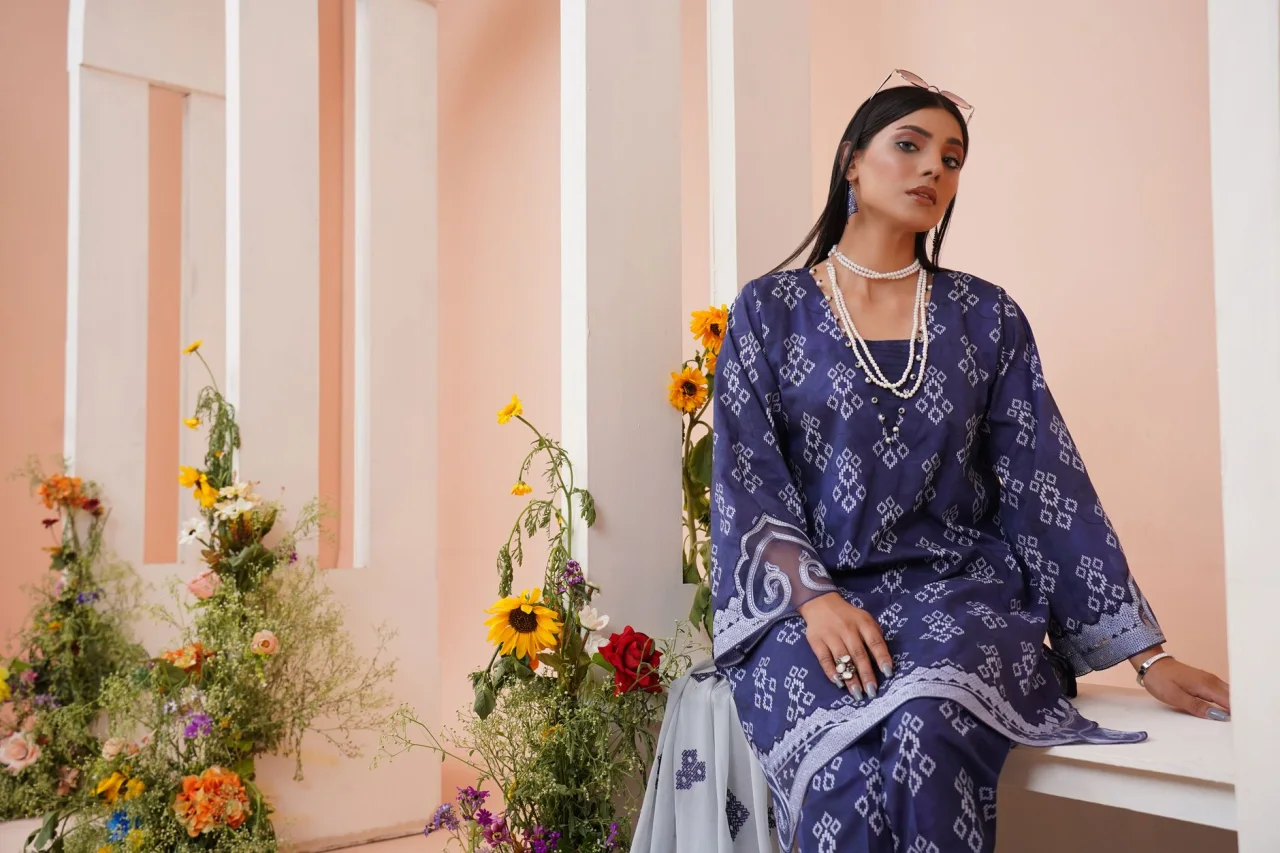
The shalwar kameez holds official status as Pakistan's national dress and is worn across the country by men and women, in every province and social setting. Men typically wear a plain kameez over a shalwar in solid cotton or wash-and-wear fabric, often with a waistcoat for formal occasions. Women's versions range from simple printed cottons for daily wear to elaborately embroidered chiffon and net for weddings and Eid.
Because it is so central to daily life, the garment carries a strong seasonal rhythm. Summer belongs to lightweight lawn and cotton, while winter shifts to khaddar, linen and velvet. This calendar shapes what people buy and when, which is unusual among traditional garments.
It is worth noting how differently the men's and women's versions have developed. Men's shalwar kameez has stayed relatively constant: a plain kameez, a straight or Peshawari shalwar, solid or muted colours, and a waistcoat or sherwani layered on for formal events. Women's shalwar kameez, by contrast, changes dramatically with fashion each season, absorbing new prints, cuts, embroidery styles and colour trends. The same two-word name therefore covers a fairly fixed men's staple and a fast-moving women's fashion category at once.
The three components
- Kameez: the tunic. Side seams are commonly left open below the waist for ease of movement, and the neckline and hem are where most of the design detail sits.
- Shalwar: the trousers, traditionally loose and gathered at the waist, then narrowed toward the ankle. Regional cuts change the whole character of the outfit.
- Dupatta: the scarf, worn over the shoulder, across the chest, or over the head. It is frequently the most decorated element and is central to modest dressing.
Regional and trouser variations
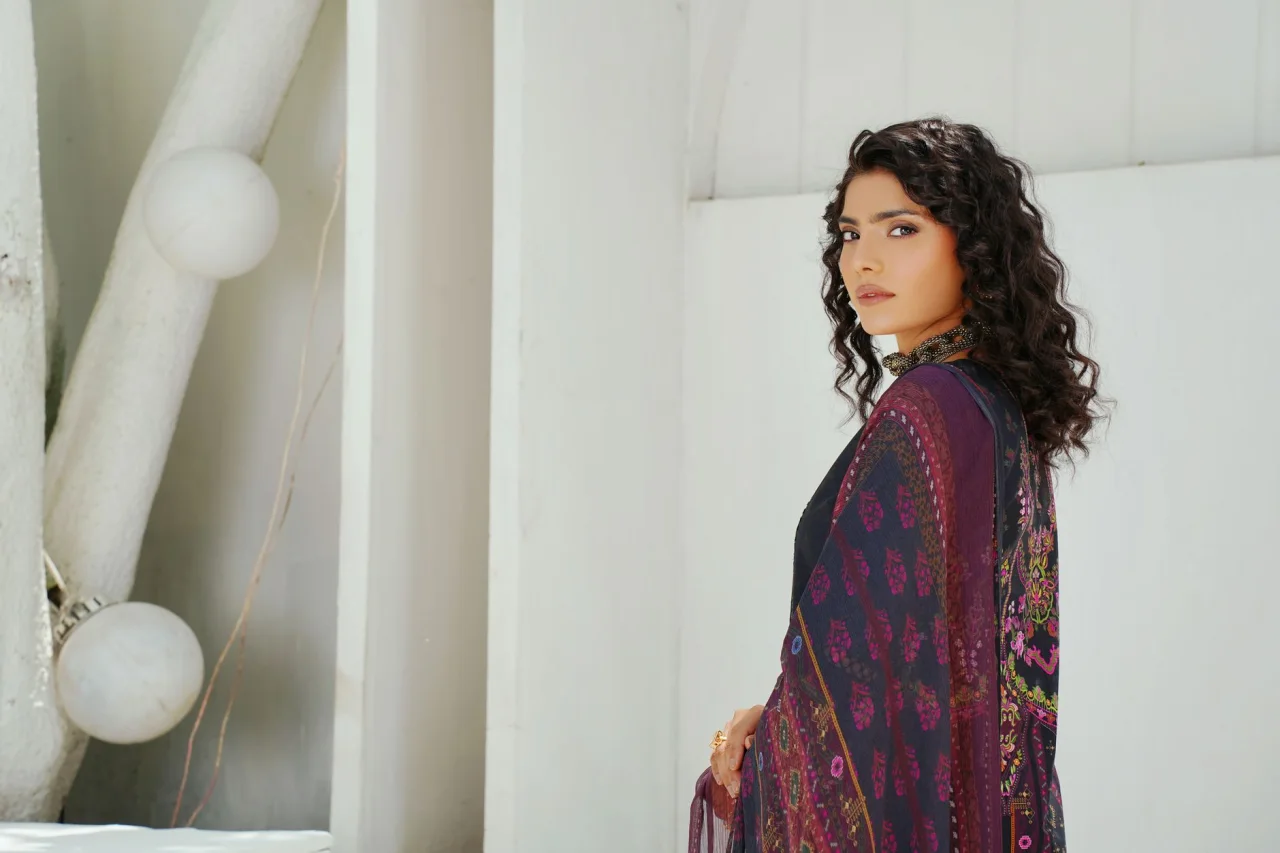
Much of the outfit's variety comes from the trouser, and Pakistan has several distinctive cuts.
- Peshawari shalwar: a very loose, generously cut trouser associated with Khyber Pakhtunkhwa, traditionally worn by men.
- Straight or slim shalwar: a cleaner, narrower cut that suits office and everyday wear.
- Churidar: a tight-fitting trouser cut long so surplus fabric folds into bangle-like rings, or churi, at the ankle, giving a formal, slim line.
- Patiala: a heavily pleated, high-volume trouser that crossed over from Indian Punjab and remains popular for a relaxed, draped silhouette.
- Farshi shalwar: a grand, floor-sweeping heritage style, covered in our guide to the farshi shalwar.
Styling note
The fastest way to change the mood of a shalwar kameez is the trouser. Swap a straight shalwar for a churidar and a simple lawn kameez instantly reads dressier. Keep the volume balanced: pair a fuller Peshawari or Patiala cut with a slimmer kameez, and a slim churidar with a longer, flared top.
Lawn season and the fabric calendar
One thing that sets the Pakistani shalwar kameez apart is its fabric culture, especially the annual lawn season. Lawn is a fine, lightweight plain-weave cotton that keeps the wearer cool in intense heat, and the spring release of new lawn collections is a genuine cultural event. If you want the detail, read our explainer on the lawn suit and our guide to the best fabrics for Pakistani summers.
When temperatures drop, the wardrobe changes. Khaddar, a handwoven cotton, and warmer linens take over for daytime, while velvet and raw silk appear for winter weddings and evening events. Our roundup of the best fabrics for winter dresses covers the cold-season options.
This fabric calendar is a genuinely distinctive feature of Pakistani dressing. In many wardrobes the shalwar kamez is bought by season rather than by single garment: a set of lawn prints for the hot months, then a switch to warmer khaddar and, for events, velvet and raw silk once the weather turns. Understanding this rhythm helps explain why lawn collections dominate spring conversation and why the same silhouette can look completely different from one season to the next.
How it differs from related outfits
The shalwar kameez sits within a family of related garments. An anarkali is a shalwar kameez with a long, flared frock-style kameez. A straight suit is a slimmer, column-shaped take on the same three pieces. A gharara or sharara swaps the shalwar for flared, skirt-like leg pieces and is usually reserved for weddings and festive events, as our gharara guide explains. The through-line is the tunic-over-trousers structure, adjusted for occasion.
Understanding these relationships makes shopping far easier, because it turns a confusing list of names into a simple map. Start with the shalwar kameez as the base, then think of the anarkali, straight suit, gharara and sharara as variations that change one element for a particular effect or event. You do not need to master every regional term to dress well; you only need to know which variation suits the occasion in front of you, and the base garment does the rest.
Everyday care
Care follows the fabric. Everyday lawn and cotton wash and dry easily, which is part of why they dominate daily wear. Embellished chiffon, net and velvet pieces should be dry cleaned or hand washed cold, then dried flat away from direct sunlight to protect colours and threadwork. Store heavily embroidered outfits folded with acid-free tissue so beads and zari do not snag. When you are ready to buy, our fit, fabric and price guide helps you judge quality and avoid common mistakes.
A little seasonal care extends the life of a wardrobe considerably. Rotate summer and winter pieces into and out of storage rather than crowding everything on one rail, keep occasion wear in breathable cotton covers rather than plastic, and air out embroidered pieces before packing them away so no moisture is trapped against the threadwork. Treated this way, a good shalwar kameez can serve for years and, in the case of heavier bridal and festive pieces, often becomes something worth keeping and passing on.
Frequently asked questions
Is a shalwar kameez the same as a salwar kameez?
Yes. They are the same garment with different spellings. "Shalwar kameez" is standard in Pakistan and "salwar kameez" is more common in India. Regional cuts and fabric traditions vary, but the tunic-and-trousers outfit is identical.
Why is the shalwar kameez important in Pakistan?
It is the national dress of Pakistan, worn by men and women across every province and social setting. It suits the climate, aligns with modest dressing customs, and works for both everyday life and the most formal occasions, which keeps it at the centre of the wardrobe.
What is lawn season?
Lawn season refers to the spring release of new collections in lawn, a fine lightweight cotton ideal for hot weather. These launches are a major part of Pakistani fashion culture, and lawn suits become the default summer wardrobe for many women.
What is a Peshawari shalwar?
A Peshawari shalwar is a very loose, generously cut trouser associated with the Khyber Pakhtunkhwa region and traditionally worn by men. It is roomier than the standard shalwar and is valued for comfort in warm weather.
Can a shalwar kameez be worn to a wedding?
Yes. In rich fabrics such as chiffon, net, velvet or raw silk with hand embroidery, the shalwar kameez is a common wedding and Eid choice. For grander events, related styles like the farshi shalwar, gharara or sharara offer more drama.
How is the shalwar different from a churidar?
A shalwar is a loose trouser gathered at the waist and tapered at the ankle, while a churidar is cut tight and extra long so the fabric bunches into ring-like folds at the ankle. The churidar gives a slimmer, dressier line.
More on Clothing Types
Have a question or a topic to suggest?
We read every message. Tell us what you would like to see next in the journal.
Get in touch