What Is a Farshi Shalwar?
The floor-trailing Awadhi garment explained: origin, silhouette, styling and how it differs from a gharara.
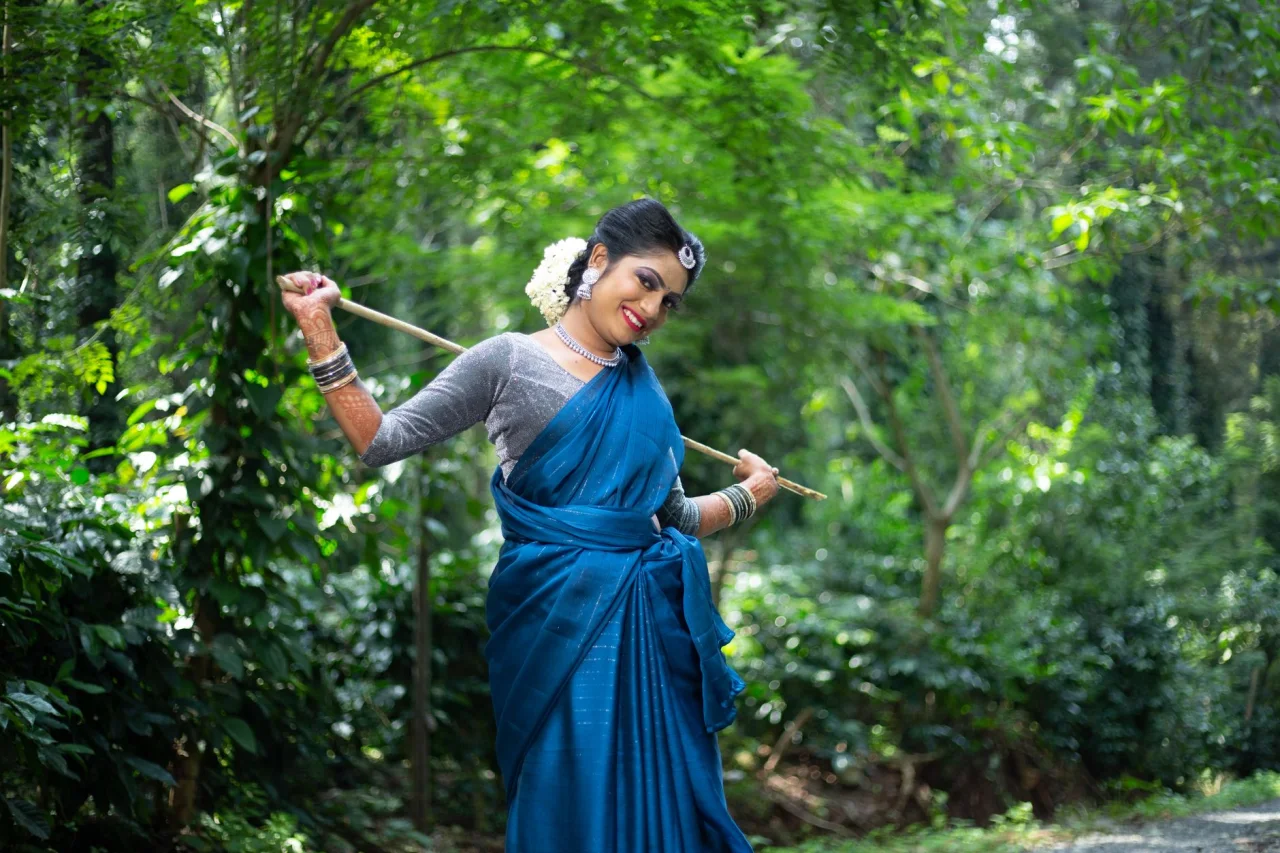
The farshi shalwar is one of the most dramatic garments in the South Asian wardrobe: a floor-trailing, heavily draped bottom that once signalled the refinement of the Awadh courts and has returned as a bridal and heritage-wedding favourite. This complete guide explains what it is, where it comes from, who it suits, and how it differs from the gharara, sharara and palazzo it is often confused with.
The short version
- A farshi shalwar is a wide, floor-length garment whose fabric flares out and trails onto the floor as you walk.
- The name comes from farsh, meaning floor, describing the pooling, trailing hemline.
- It originated in early 20th-century Awadh (Lucknow) and was worn by royalty and the privileged classes.
- Today it survives mainly as an occasion and bridal garment, usually as a three-piece with a kurta and dupatta.
What a farshi shalwar actually is
A farshi shalwar is a bottom garment cut so wide and long that, after falling straight to the ankle, it flares dramatically and pools onto the floor, trailing behind the wearer as she moves. It is traditionally worn as part of a three-piece ensemble: a kurta (long shirt) on top, a dupatta (stole), and the farshi shalwar itself, which is essentially a flowing, two-legged skirt held at the waist by drawstrings. You can read the documented background on the farshi pajama on Wikipedia, where it is also called the farshi pajama.
The defining feature is the trailing fabric. Historically the garment used a generous quantity of cloth, roughly nine to fifteen yards, so the flare could spread richly across the floor. Wearers manage the trail by gathering the excess in one hand as they walk, a practised, graceful gesture that is part of the garment's character.
Where the farshi shalwar comes from
The farshi shalwar originated in early twentieth-century Awadh, centred on Lucknow in what is now Uttar Pradesh, and was worn by royalty and the privileged classes of the courtly culture there. Its flowing, trailing form is often described as being modelled on the elegant gowns of the era, adapted into a distinctly local, layered silhouette. This heritage is why the garment still carries an air of nawabi refinement and is chosen to recreate a sense of old-world grandeur.
That Lucknow connection also links the farshi shalwar to the region's celebrated crafts. Fine chikankari hand embroidery, a white-on-white needlework tradition from Lucknow, and rich metallic zardozi goldwork both appear on heritage and bridal farshi shalwars, reinforcing the garment's association with craftsmanship and occasion.
The silhouette, up close
Understanding the construction helps explain why the garment moves the way it does.
- Waist. Gathered and held by a drawstring (naala), so the fullness sits at the top and releases downward.
- Upper leg. Falls relatively straight from waist to ankle, keeping the top half neat.
- Flare. From around the ankle the fabric flares outward dramatically into a wide, sweeping pool.
- Trail. The excess fabric spreads and trails on the floor, the feature that gives the garment its name.
Good to know
Because the trail is the whole point, a true farshi shalwar needs floor space and a smooth surface to look its best. Modern, shortened versions reduce the trail for practicality, but they trade away some of the signature drama.
Farshi shalwar versus gharara, sharara and palazzo
These garments are frequently mixed up because they are all wide, festive bottoms. The differences are in the cut and the drama.
- Farshi shalwar. Falls straight then flares only near the floor into a trailing pool; the drama is at the hem.
- Gharara. Fitted to the knee, then flares sharply into wide, gathered legs, often with a decorative join at the knee.
- Sharara. Flares gradually from the waist or hip into wide, skirt-like legs, without the trailing pool.
- Palazzo. A modern, evenly wide-legged trouser with no flare or trail, meant for everyday and fusion wear.
In short, the farshi shalwar is the most floor-dramatic of the group, defined by the trailing hem rather than the shape of the leg.
Who the farshi shalwar suits, and when to wear it
This is unambiguously an occasion garment. Because of its volume and trail, it is worn for events where you can move with intention and be photographed at your best.
- Best for. Weddings, especially the bride and close family, plus formal cultural and heritage events.
- Height and frame. It flatters most heights; taller wearers carry the length easily, while a well-set waist gathering keeps petite frames balanced.
- Setting. Indoor venues with smooth flooring show the trail best; it is impractical for casual or outdoor settings.
- Comfort. Expect to manage the fabric with one hand while walking, which is part of wearing it gracefully.
For wedding-day inspiration, see our bridal dress ideas and walima dress guide, where the farshi shalwar sits among other heritage silhouettes.
Fabrics and embellishment
Because the garment uses so much cloth and trails on the floor, fabric choice affects both the drape and the weight you carry.
- Silk and raw silk. Hold structure and give the flare a rich, sculptural fall.
- Jamawar and jacquard. Woven, patterned fabrics that suit the garment's regal heritage.
- Georgette and net. Lighter, more fluid options for a softer, more manageable trail.
- Velvet. A winter-wedding choice with weight and depth of colour.
- Embellishment. Zardozi goldwork, gota, dabka and tilla along the hem and flare emphasise the trailing sweep.
Caring for a farshi shalwar
- Store flat or rolled. Heavy embellishment can distort on a hanger; roll or lay flat with acid-free tissue.
- Spot clean and dry clean. Embellished and metallic-work pieces should go to a specialist, not a washing machine.
- Protect the hem. The trailing edge takes the most wear; check and repair it after each event.
- Keep it dark and dry. Store away from light and damp to protect zari and colour.
Frequently asked questions
What does farshi shalwar mean?
The word farshi comes from farsh, meaning floor. A farshi shalwar is therefore a garment whose fabric falls to the floor and trails as you walk, which is its defining feature.
Where did the farshi shalwar originate?
It originated in early twentieth-century Awadh, centred on Lucknow in present-day Uttar Pradesh, where it was worn by royalty and the privileged classes of the courtly culture. It carries a strong association with nawabi refinement and the region's craft traditions.
What is the difference between a farshi shalwar and a gharara?
A farshi shalwar falls straight to the ankle then flares only near the floor into a trailing pool, so the drama is at the hem. A gharara is fitted to the knee and then flares sharply into wide gathered legs, usually with a decorative join at the knee. The gharara does not trail on the floor the way a farshi shalwar does.
Is the farshi shalwar only for brides?
It is most popular as bridal and close-family wedding wear because of its grandeur, but it also suits formal cultural and heritage events. It is not an everyday garment given its volume and trailing hem.
How much fabric does a farshi shalwar use?
Traditionally the garment used a generous quantity of cloth, roughly nine to fifteen yards, so the flare could spread and trail richly across the floor. Modern, shortened versions use less fabric for practicality.
More on Clothing Types
Have a question or a topic to suggest?
We read every message. Tell us what you would like to see next in the journal.
Get in touch