How to Store a Bridal Lehenga
Dry clean, wrap breathable, fold with tissue: protect your most precious outfit.

A bridal lehenga is often the single most expensive and most sentimental outfit a woman owns, and it is also the most fragile in storage. Heavy zari, beadwork, and metallic thread tarnish, snag, and crush if the outfit is folded away carelessly. This is the complete, save-worthy guide to storing a bridal lehenga so it survives the years looking as good as it did on the day.
The short version
- Get the lehenga professionally dry cleaned before storing it, because invisible sweat and food stains oxidise and set over time.
- Store it in a breathable cotton or muslin cover, never sealed plastic, which traps moisture and yellows fabric and metalwork.
- Fold with acid-free tissue between the layers, or better, store the heavy skirt flat or rolled to protect embroidery.
- Keep it cool, dark, and dry, refold it every few months, and check for damp and insects.
Why a bridal lehenga needs special care
A lehenga choli is a three-piece ensemble: a long, embroidered, pleated skirt (the lehenga or ghagra), a fitted blouse (choli), and a dupatta. For weddings, the embroidery is heavier in pearls, silk, sequins, and zari, and silk remains the preferred base fabric. That combination of a delicate natural fibre and dense metallic and beaded work is exactly why bridal pieces are so vulnerable in storage: the fabric reacts to damp and light, while the metalwork tarnishes and the beads pull threads if crushed.
If you are still shopping and want the outfit to be worth preserving in the first place, our guides to how to choose the perfect bridal lehenga and the complete lehenga guide cover fit, fabric, and construction.
Step one: clean it before you store it
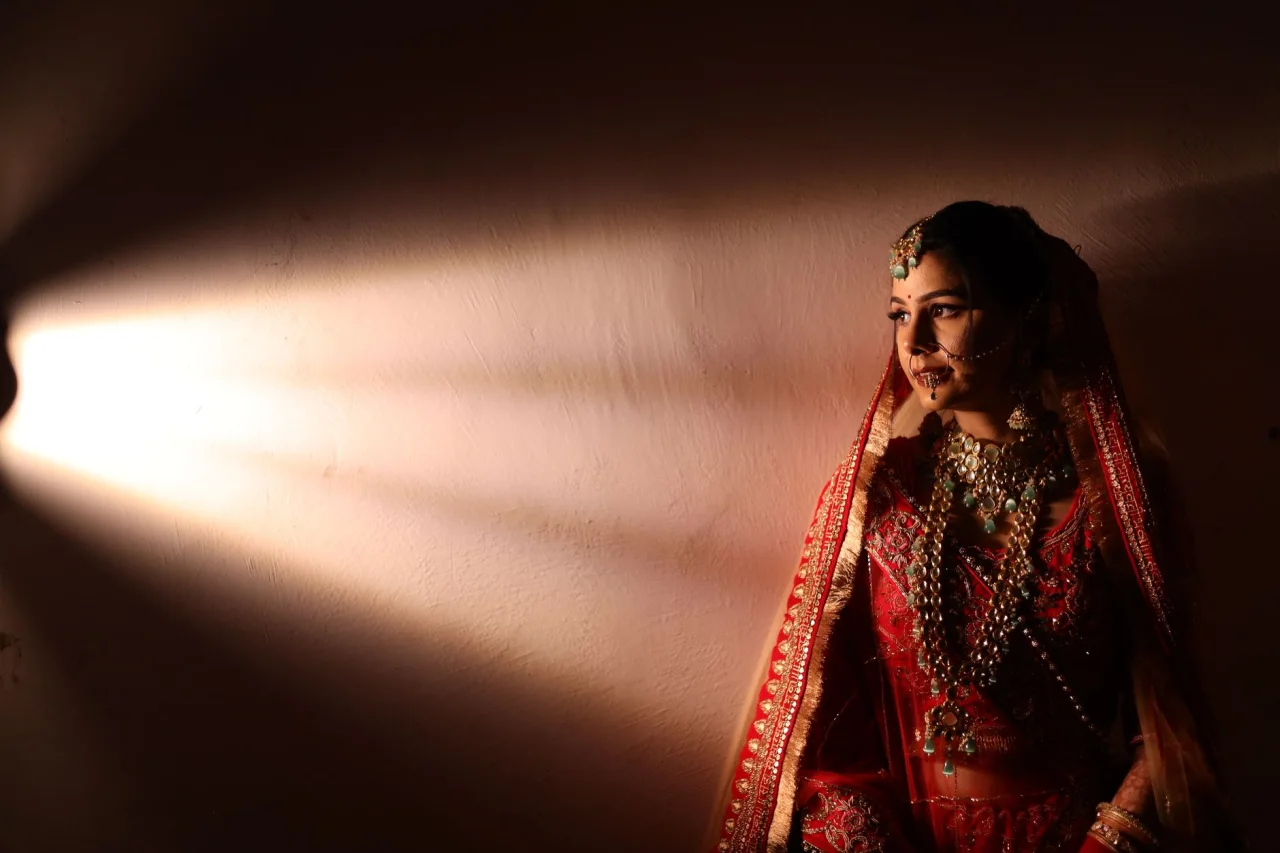
The biggest storage mistake is putting a lehenga away dirty. Sweat, perfume, deodorant, and food splashes are often invisible on the day but oxidise into yellow and brown stains over months, and they attract insects.
- Dry clean professionally. Take it to a cleaner experienced with heavy bridal work and metallic embroidery. Point out any stains and ask them to test-clean delicate embellishment.
- Air it fully first. Before storing, let the outfit hang in a dry, shaded, airy spot for a few hours so no residual moisture is trapped.
- Never store it damp. Even slight dampness invites mildew and can corrode metallic thread.
Choose the right cover and never use plastic
The material wrapped around your lehenga matters as much as the storage spot. The plastic cover it came in is for transport, not long-term storage.
- Use breathable fabric. Wrap the lehenga in a clean cotton or muslin cloth, or use a breathable cotton garment bag, so air circulates and moisture does not build up.
- Avoid sealed plastic and vacuum bags. Plastic traps humidity, which yellows fabric, encourages mildew, and can tarnish zari. Vacuum compression also crushes embroidery.
- Separate the metalwork from the fabric. Lay acid-free tissue over heavy zari and beadwork so the metal does not rub against or discolour the base cloth.
Why tissue, and why acid-free
Ordinary paper and cardboard are slightly acidic and can yellow delicate fabric where they touch it over years. Acid-free tissue paper is neutral, so it cushions folds and separates embellished layers without staining. Tuck it into the folds of the skirt and between the choli and dupatta.
Folding vs rolling vs hanging

How you position the outfit decides where creases and stress fall. Each method suits a different piece.
- Hang the choli and light dupatta on a padded hanger so the shoulders keep their shape, but only if the pieces are light enough not to stretch.
- Do not hang a heavy skirt for long. A fully worked bridal lehenga is heavy, and hanging it for months lets its own weight pull and distort the waist and embroidery.
- Fold the skirt loosely with tissue. Fold along soft lines, not sharp creases, and cushion every fold with acid-free tissue to stop the embroidery crushing.
- Roll delicate dupattas. A net or organza dupatta stores best rolled loosely around a tube rather than folded. Our guide to caring for organza covers this in detail.
Where to keep it: the right environment
Even perfectly wrapped, a lehenga suffers in the wrong spot. Three enemies matter most: humidity, light, and pests.
- Cool and dry. Store it in a part of the wardrobe away from exterior walls that get damp. In humid climates, silica gel sachets nearby help absorb moisture; replace them periodically.
- Dark. Keep it out of direct and even strong indirect light, which fades dye and can dull metalwork.
- Protected from insects. Silverfish and moths damage silk and thread. Use natural deterrents like neem leaves or cloves rather than mothballs resting directly on the fabric.
- Off the floor. Store it on a shelf or in a chest, never on the floor where damp and pests gather.
The maintenance habit that saves the outfit
Storing a lehenga is not entirely set and forget. A quick check a few times a year prevents slow, permanent damage.
- Refold every three to four months. Opening and refolding along different lines stops permanent creases setting where the fabric is always folded.
- Air it briefly. Let it breathe in a shaded, dry spot for an hour or two before folding it away again.
- Inspect for trouble. Look for any yellowing, damp smell, tarnish, or insect signs, and act early if you spot them.
- Replace moisture absorbers. Swap out spent silica gel and refresh natural deterrents.
These same principles protect any heavily worked festive piece, not just bridalwear. For the wider world of wedding dressing, see our complete bridal dresses guide, and if your outfit is a rich winter fabric, the velvet lehenga styles and care guide has fabric-specific tips.
Common mistakes that ruin a stored lehenga
- Storing it unwashed. Invisible stains oxidise and set. Always dry clean first.
- Sealing it in plastic. Traps humidity, yellows fabric, and tarnishes zari. Use breathable cotton instead.
- Hanging a heavy skirt for months. The weight distorts the waist and stresses embroidery.
- Folding with no tissue. Sharp folds crush embroidery and let metalwork mark the fabric.
- Keeping it in a humid or sunny spot. Damp brings mildew and pests; light fades dye and dulls metal.
- Never checking it. Small problems become permanent when the outfit is left untouched for years.
Frequently asked questions
Should I get my bridal lehenga dry cleaned before storing it?
Yes, always. Sweat, perfume, and food marks are often invisible on the day but oxidise into yellow and brown stains over months and attract insects. Have it professionally dry cleaned by someone experienced with heavy bridal embroidery, air it fully, and only then store it.
Can I store a lehenga in the plastic cover it came in?
No. Plastic covers are fine for transport but trap humidity in long-term storage, which yellows fabric, encourages mildew, and can tarnish metallic thread. Wrap the lehenga in a breathable cotton or muslin cloth, or a cotton garment bag, so air can circulate.
Is it better to hang or fold a bridal lehenga?
Fold a heavy, fully worked skirt loosely with acid-free tissue in the folds, because hanging it for months lets its own weight distort the waist and stress the embroidery. A light choli and dupatta can hang on padded hangers. Very delicate net or organza dupattas store best rolled.
How do I stop the zari and embroidery from tarnishing?
Keep the outfit cool, dark, and dry, away from plastic and humidity, and lay acid-free tissue over the metalwork so it does not rub the base fabric. In damp climates, silica gel sachets nearby help. Moisture and trapped air are the main causes of tarnish, so breathability is key.
How often should I check a stored lehenga?
Every three to four months, open it, air it briefly in a shaded dry spot, refold it along different lines to avoid permanent creases, and inspect for damp, yellowing, tarnish, or insects. Replace any silica gel or natural deterrents at the same time.
Sources: Wikipedia: Gagra choli and Wikipedia: Silk.
More on Styling Guides
Have a question or a topic to suggest?
We read every message. Tell us what you would like to see next in the journal.
Get in touch