Dabka Lehenga Designs Worth Buying 2026
Judging heavy coil work, weight and backing on a bridal-scale metallic lehenga.
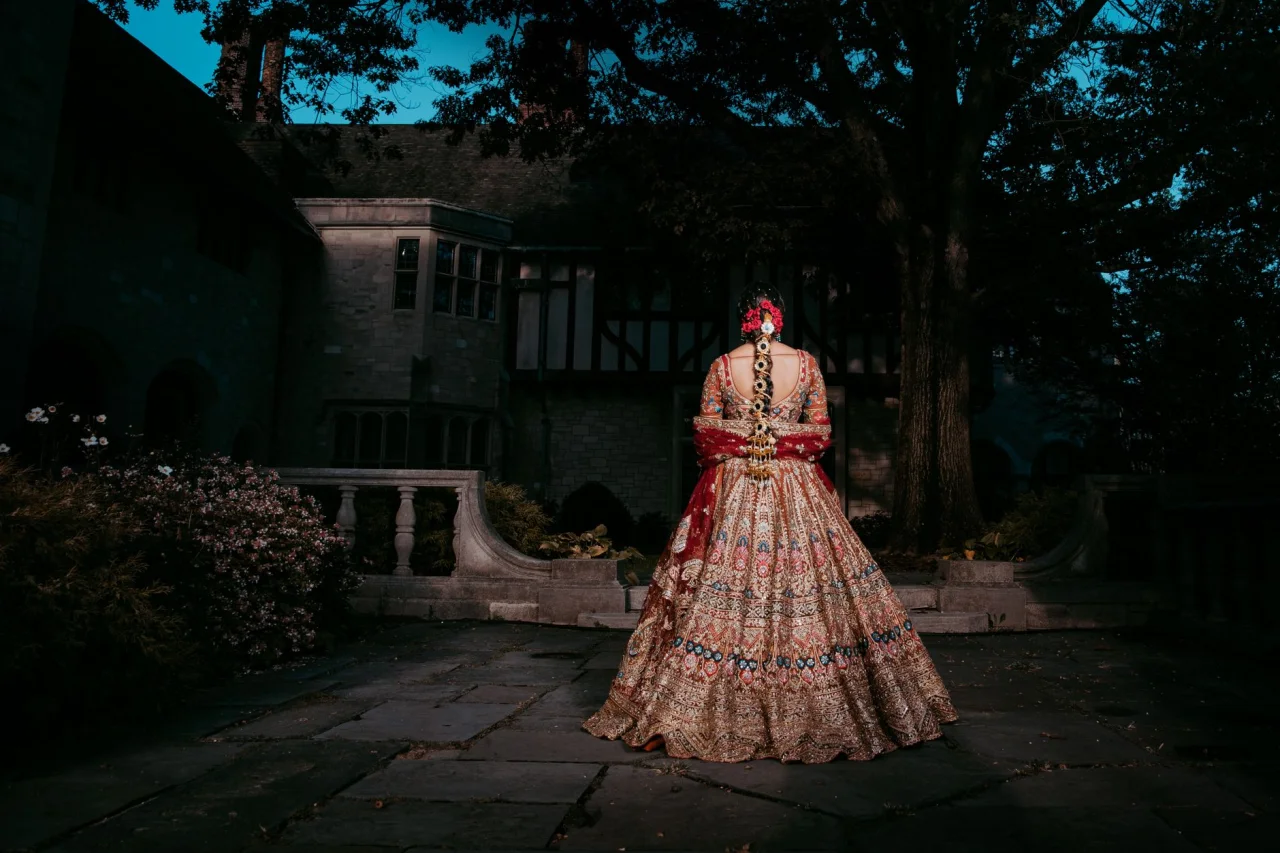
A dabka lehenga is the heavyweight of metallic embroidery: raised coils of gold or silver wire massed across a full skirt, a fitted choli and a flowing dupatta. This is the piece you buy for a wedding, a mehndi or a milestone celebration, so both the craft and the investment deserve care. Here are the dabka lehenga designs worth buying in 2026, how to read quality on a heavily worked garment, and how to keep it looking new.
The short version
- Dabka is coiled metallic wire from the zardozi and goldwork tradition, couched onto fabric so it stands raised and reflective, ideal for grand occasion wear.
- On a lehenga the sheer volume of work makes weight, backing and secure couching the make-or-break quality signals.
- Prices span a very wide range depending on fabric, density of hand work and detailing, so always treat figures as ranges and confirm current pricing.
- Match density and colour to the event and to how much weight you can comfortably carry through a long function.
Why dabka suits a lehenga so well
Dabka is a fine metal wire coiled into a springy hollow tube, cut into short lengths and couched onto fabric with a second thread. It belongs to the family of metal thread embroidery, where the coiled wire is known as purl or bullion, and it links directly to zardozi, the heavy metal embroidery worked on silk, satin and velvet since the Mughal era. A lehenga gives that raised, light-catching work the scale it was made for: broad skirt panels, a richly worked choli and a bordered dupatta all reflecting light as you move. For the underlying craft, our explainer on what dabka is and how to spot quality is a good starting point.
Scale is also what makes a dabka lehenga so demanding to make well. A single line of coil work on a kurti forgives small inconsistencies, but a full skirt of dabka multiplies every choice: the density has to stay even across metres of fabric, the backing has to carry real weight without sagging, and the motifs have to repeat cleanly around a curved hem. That is why genuinely fine dabka lehengas take skilled artisans weeks to complete, and why the difference between a good piece and a rushed one is so visible in person. When you understand the labour involved, the price ranges make more sense and the quality checks below become second nature.
Dabka lehenga designs worth buying in 2026
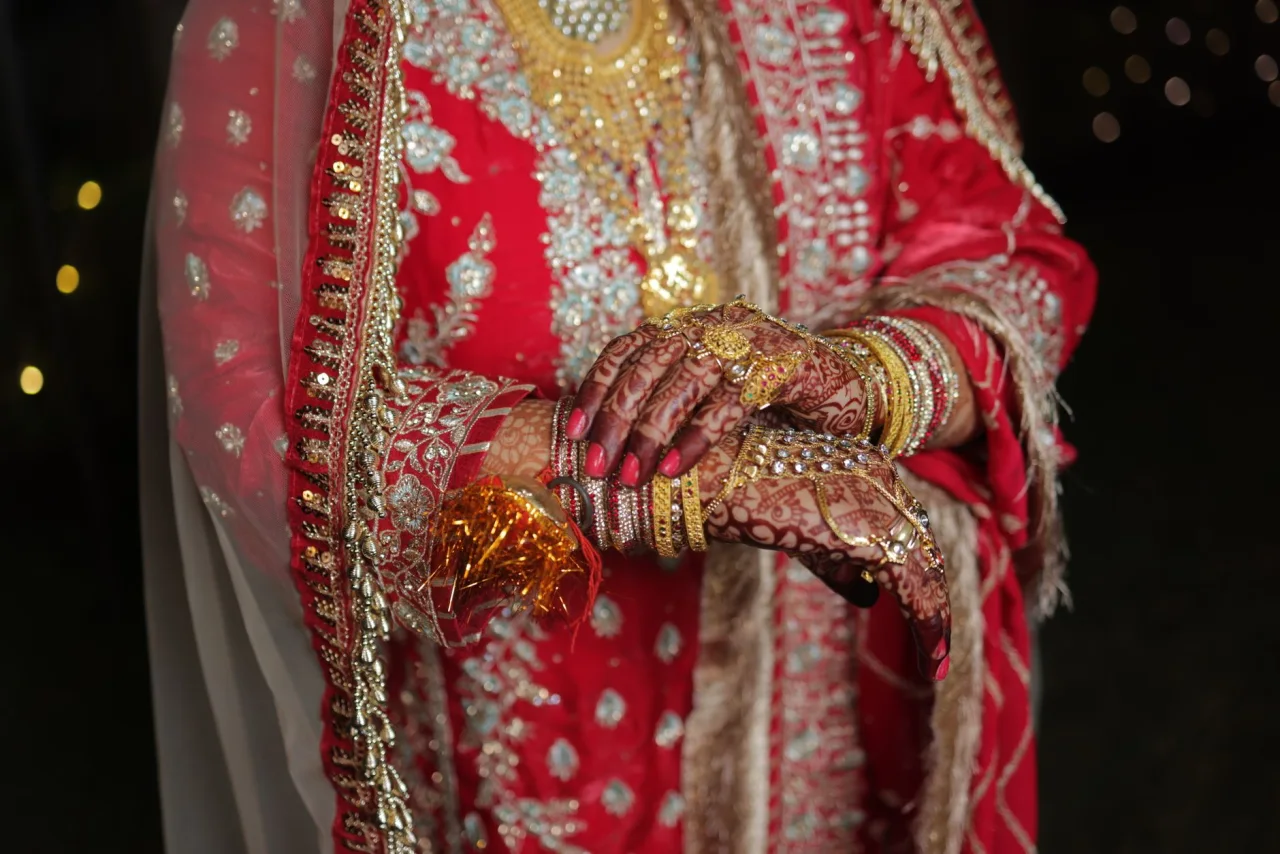
Rather than a fake trend ranking, work from placement families that flatter and photograph well.
- All-over skirt lehenga: dabka worked densely across the full skirt for maximum grandeur. The most formal, and the heaviest to wear.
- Border-and-motif lehenga: a rich dabka hem border with scattered motifs climbing the skirt, lighter than all-over work but still opulent.
- Panelled lehenga: vertical worked panels alternating with plainer sections, which elongate the silhouette and reduce total weight.
- Choli-focused lehenga: concentrated dabka on the blouse with a lightly bordered skirt, so the upper body leads and the skirt flows.
- Dupatta-led lehenga: a heavily bordered dabka dupatta paired with a subtler skirt, letting the drape carry the drama.
Styling note
With a heavily worked lehenga, choose one focal piece. If the skirt is all-over dabka, keep the choli and dupatta calmer. Balancing weight visually also balances it physically, which matters across a long function.
How to judge a dabka lehenga before you commit
On a garment this worked, quality is everything. Turn worked sections over and study the reverse.
- Secure couching: every coil should be firmly held, with no gaps or slipping. On a skirt that moves constantly, loose work sheds quickly.
- Proper backing: heavy panels must be supported so the fabric does not sag, pucker or tear under the weight of metal.
- No sharp ends: run a hand gently over the work. Poking wire ends catch on the lining, the dupatta and your skin.
- Even, consistent runs: spacing and coil height should stay uniform across large worked areas.
- Manageable weight: lift the skirt. A well-engineered lehenga distributes weight so you can actually wear it, not just admire it on a hanger.
Fabrics that carry the weight
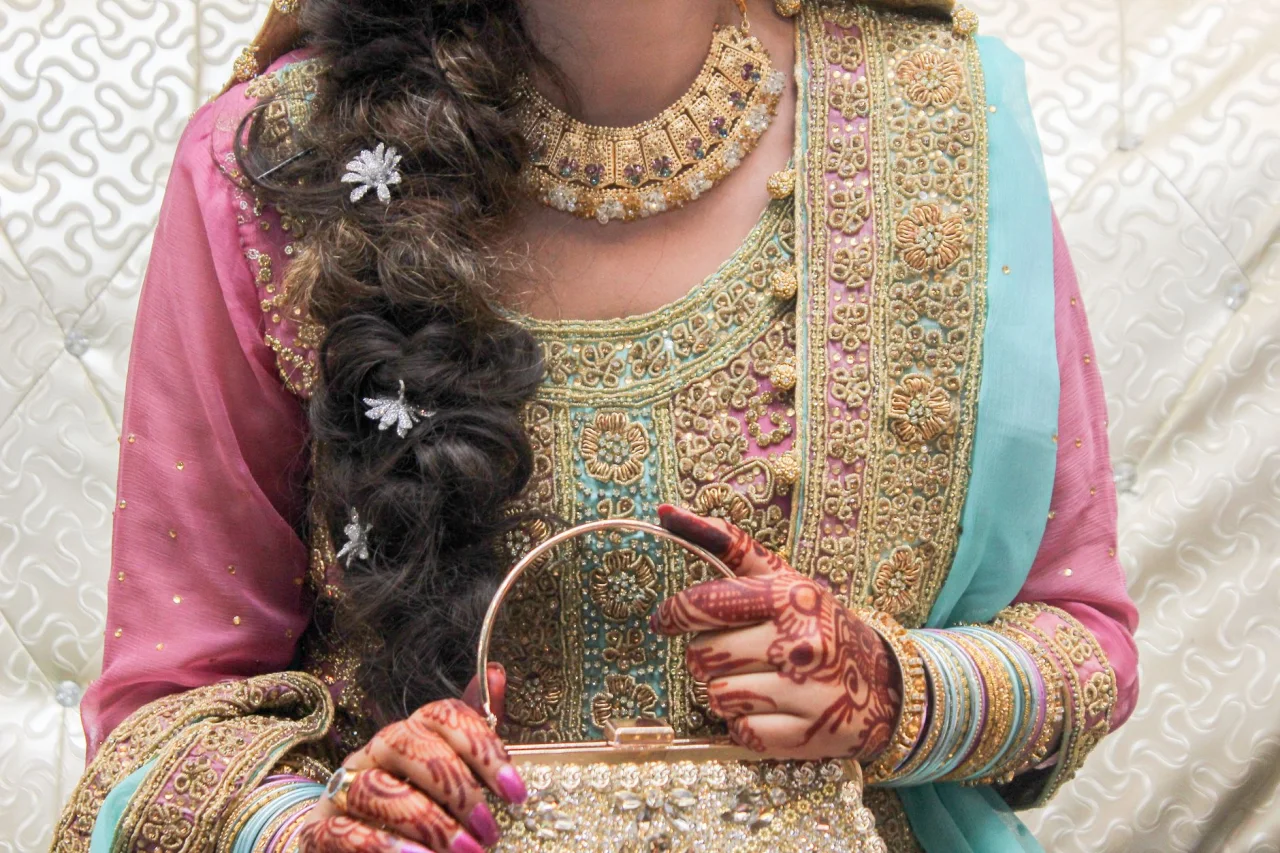
Heavy metal work needs a base with body.
- Raw silk and silk: classic, structured grounds that hold dense dabka beautifully. See our raw silk guide.
- Velvet: rich, winter-friendly and a traditional home for heavy metal thread, ideal for evening weddings. Our velvet lehenga guide covers this in depth.
- Net and organza: lighter and airy for the skirt volume, but the worked areas need careful backing so they do not droop.
- Jacquard: a patterned, substantial ground that pairs well with border-led designs.
The lining matters as much as the outer fabric on a piece this heavy. A well-made dabka lehenga uses a smooth, sturdy inner lining and often a structured underskirt or canvas at the hem, which supports the weight of the metal and helps the skirt hold its shape and flare. Cheap linings feel scratchy, twist as you walk, and let the skirt collapse rather than swish. Before buying, lift the outer skirt and check the inside: a considered lining is one of the clearest signs that the maker took the whole garment, not just the visible embroidery, seriously.
Matching a dabka lehenga to the occasion
Weddings, mehndis and grand receptions are the natural home for a dabka lehenga. For a bride, an all-over or heavily bordered design in classic gold reads ceremonial. For a guest or a bridesmaid, a panelled or choli-focused lehenga gives festive shine without upstaging the bride. Consider the length of the event too: a lighter panelled design is far kinder across hours of standing and dancing. Our wedding wear ideas and bridal lehenga buying guide help you place the piece within a full occasion wardrobe.
Colour choice deepens the effect. Classic gold dabka on deep red, maroon or emerald reads unmistakably ceremonial and photographs richly under warm lighting, which is why it dominates bridal wear. Silver or antique-gold coils on pastels, ivory and dusty tones give a softer, more modern feel that suits mehndi and daytime functions. Because the metal reflects whatever light surrounds it, it is worth picturing the piece under the actual venue lighting: a lehenga that glows under evening chandeliers can look quite different in flat daylight, so ask about the setting before you commit to a shade.
Care in one line
Metal thread work does not survive laundering, so a dabka lehenga should be aired after wear, spot cleaned gently, professionally dry cleaned only when needed, and stored flat or on a padded hanger with the work protected.
Caring for and storing a dabka lehenga
A heavily worked lehenga is an investment piece, and metal thread will not hold up to repeated laundering, so treat it as occasional wear from day one. Air it after the event rather than washing, spot clean small marks, and use a specialist dry cleaner for anything serious. For storage, lay it flat or hang it on a broad padded hanger so the weight does not stretch the skirt, cover the worked areas with soft tissue, and keep it in a breathable cloth bag rather than plastic. Our guide to storing a bridal lehenga covers the details for long-term keeping.
Is a dabka lehenga worth the investment?
For a genuine milestone, yes, provided the work is secure and the weight is manageable. Fine hand dabka carries real craft value and photographs beautifully, and a well-made piece can be preserved or even reworked for future generations. If your event is less formal or your budget is tighter, a lighter border-led design or a machine-assisted piece delivers shine at a friendlier price. The mistake to avoid is paying a hand-work premium for insecure work, so let quality, not just density, guide the decision.
Frequently asked questions
Is a dabka lehenga suitable for a bride?
Yes. All-over or heavily bordered dabka in classic gold reads ceremonial and photographs well, which is why it is a popular bridal choice. Just make sure the weight is distributed so you can wear it comfortably through a long function.
How heavy is a dabka lehenga to wear?
It depends on how much work it carries. All-over designs are genuinely heavy, while panelled or border-led designs are much lighter. A well-engineered lehenga spreads the weight so it stays wearable, so always lift and feel the skirt before buying.
Can a dabka lehenga be washed?
No. Metal thread work does not survive laundering. Air the garment after wear, spot clean gently, and use professional dry cleaning only when necessary. Never machine wash it.
How much does a dabka lehenga cost?
The range is very wide, driven by fabric, density of hand work and detailing, so any single price would mislead. Treat listings as ranges and confirm current pricing directly with the retailer.
How should I store a dabka lehenga between uses?
Store it flat or on a broad padded hanger so the weight does not stretch the skirt, cover the worked areas with tissue, and keep it in a breathable cloth bag rather than plastic to let the fabric breathe.
More on Embroidery
Have a question or a topic to suggest?
We read every message. Tell us what you would like to see next in the journal.
Get in touch