Angrakha vs Anarkali
One is about the closure, the other about the flare. A clear side-by-side comparison, history and styling guide.
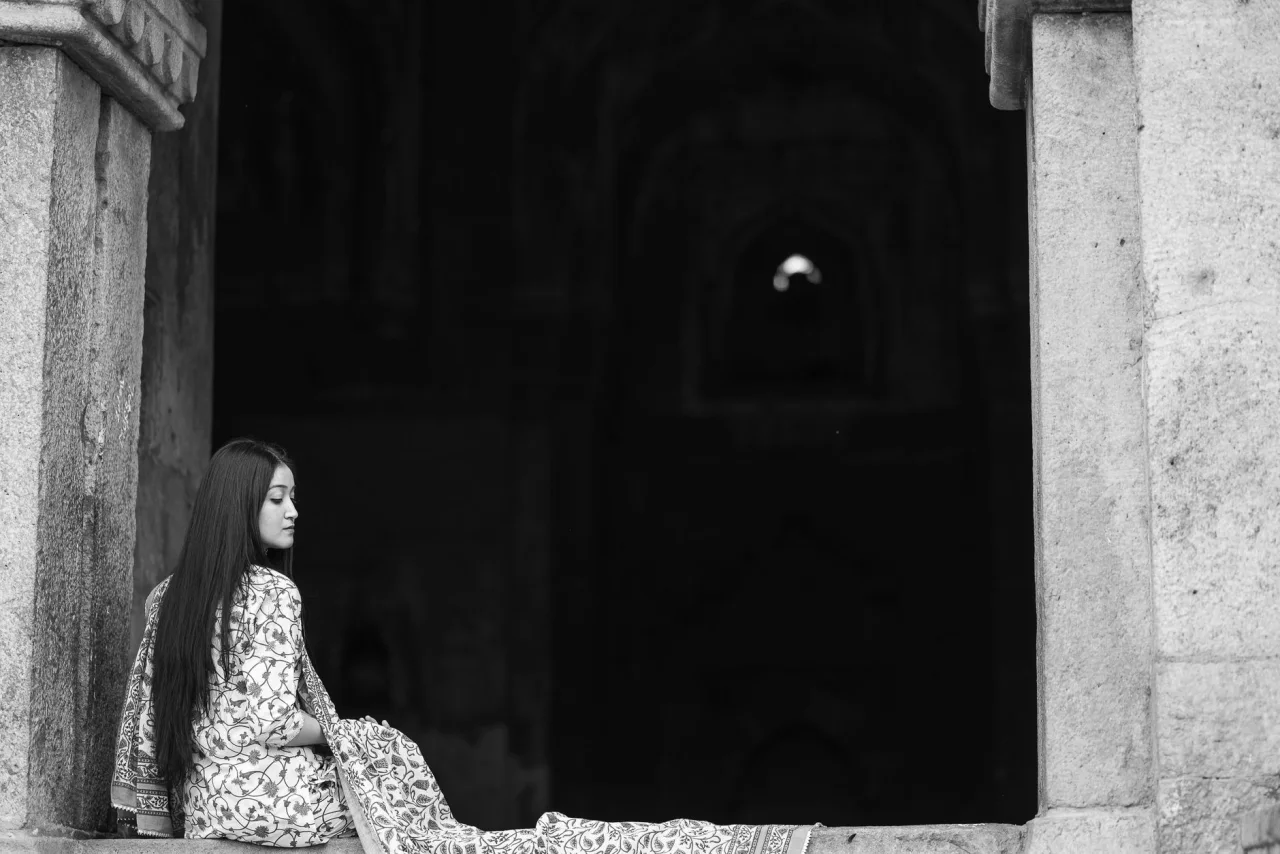
Angrakha and anarkali sound similar and often share the same festive rail, but they are two different ideas. One is defined by a wrap-and-tie front, the other by a fitted bodice that explodes into a flared frock. This guide lays them side by side: what each one actually is, where it comes from, how to tell them apart in seconds, and how to style each so you buy the right thing for the occasion.
The short version
- An angrakha is defined by its closure: an overlapping front panel tied at the side or shoulder, historically a robe or coat.
- An anarkali is defined by its shape: a fitted bodice that flares into a long, full frock.
- They can overlap. An angrakha anarkali borrows the side-tied wrap and adds a flared skirt.
- Choose angrakha for a soft, asymmetric, heritage look, anarkali for maximum flare and drama.
The quick answer
The simplest way to separate them: an angrakha is about how the garment closes, and an anarkali is about how it flares. An angrakha is traditionally a long tunic or coat tied on one side, with one front panel crossing over the other and fastening with ties. An anarkali is a frock-style suit that fits through the bust and torso, then flares into a full skirt. You can have a flared angrakha or a plain-front anarkali, so the two are not opposites, they simply describe different features.
What an angrakha is
The angrakha is one of the older documented South Asian garments. Its name comes from the Sanskrit angarakshaka, meaning body-protector, and it evolved from earlier Persian robe forms into a distinctly Indian shape in the late medieval to early modern period. The defining detail is the overlapping front: one panel wraps across the chest and ties at the side or shoulder, giving a soft, asymmetric line rather than a centre opening.
Historically the angrakha was worn as formal dress, and by the nineteenth century it had become widely accepted attire for men in public life. In modern desi fashion the idea has been adapted for women, where the wrap-front detail appears on kurtas, frocks and gowns. Our full angrakha guide covers the construction and contemporary cuts in depth, and the angrakha designs roundup shows how it looks now.
Because the closure is the whole point, the angrakha carries a distinct visual signature. The crossover creates a diagonal line across the chest, often trimmed with a border or piping that draws the eye to the tie. Many versions reveal a peek of a contrasting inner panel where the two front sections overlap, which designers use for a subtle colour story. That soft asymmetry is why the angrakha reads as understated and heritage-led even when the fabric is rich.
What an anarkali is
The anarkali is defined by silhouette. A fitted bodice sits close through the chest and waist, then releases into a long, panelled skirt built from triangular sections called kalis. It is worn with a slim bottom, usually a churidar, and a dupatta. The name comes from the legendary Anarkali of Emperor Akbar's court, although historians note her real existence is unverified and the story is largely folklore.
Where the angrakha whispers heritage through its closure, the anarkali announces itself through volume. It is the flare that makes it. To go deeper on its story and current cuts, see what an anarkali is, history and modern styles, and for panel counts and body-fit detail read the complete anarkali guide.
The anarkali's flare is engineered, not accidental. It is built from triangular panels called kalis joined below the fitted bodice, and the more panels a maker uses, the fuller and rounder the sweep. That construction is why an anarkali can look either softly draped or grandly architectural depending on panel count and fabric, and it is a useful thing to check when you shop, since a thin, under-panelled frock will never give the swirling movement the silhouette is famous for.
Angrakha vs anarkali at a glance
Here is the side-by-side that answers most shopping questions.
| Feature | Angrakha | Anarkali |
|---|---|---|
| Defining trait | Overlapping front tied at side or shoulder | Fitted bodice flaring into a full frock |
| Origin | Robe form, Sanskrit "body-protector", Persian influence | Mughal-court flared frock, named after the Anarkali legend |
| Front | Asymmetric wrap with ties | Usually a centred or concealed opening |
| Shape | Can be straight or flared | Always flared from bust or waist |
| Mood | Soft, heritage, understated | Regal, dramatic, voluminous |
How to tell them apart in the shop
Look at the neckline and front seam first. If one panel crosses over the other and ties to the side, it is an angrakha, regardless of how much it flares. If the front is centred and the story is all about the sweeping skirt, it is an anarkali. When a piece does both, it is an angrakha anarkali.
Where they overlap: the angrakha anarkali
Because the two describe different features, designers happily combine them. An angrakha anarkali keeps the fitted bodice and full flared skirt of an anarkali, then adds the crossed-over, side-tied front of an angrakha. The result is a frock with a soft asymmetric opening, often revealing a contrast lining or an inner panel. This hybrid is popular for festive and semi-bridal wear because it reads both traditional and distinctive. If you like the wrap detail but want the drama of flare, this is the piece to look for.
Fabrics and embroidery for each
Both garments follow the same fabric logic, but their signatures differ slightly.
- Angrakha: the tie-front and any inner panel look best in fabrics with a clean drape, such as cotton, lawn, silk and georgette. Border and placket embroidery is emphasised because the crossed front frames the chest.
- Anarkali: the flare wants fabric that either floats, like chiffon and georgette, or holds structure, like net and velvet for formal pieces. Work is often spread across the yoke and hem to accent the sweep.
To understand the surface crafts on either, our guides to zari and chikankari are a good place to start.
How to style each one
Different silhouettes reward different styling.
- Styling an angrakha: let the tie-front be the focus. Keep jewellery simple around the neckline so the crossover is visible, and pair with slim trousers or a churidar. A light dupatta draped on one shoulder keeps the asymmetry clean.
- Styling an anarkali: balance the volume with a fitted bottom and a statement dupatta. Heavier earrings and a defined waist accent work well because the skirt carries the drama below.
For occasion-by-occasion looks, our anarkali styling guide is a useful companion, and both silhouettes sit comfortably in the wider world of festive wear.
Which one should you choose?
Choose an angrakha when you want something quieter and more heritage-led, with a flattering wrap that suits many body shapes and works from daywear up to festive dressing. Choose an anarkali when you want maximum flare and a formal, photogenic silhouette for Eid, dinners, weddings and engagements. If you cannot decide, the angrakha anarkali gives you both features in one garment. None is more correct than another, it comes down to whether you want the drama in the closure or in the skirt.
Budget and wear frequency can settle it too. An angrakha in a comfortable everyday fabric earns its keep across many occasions and packs down easily for travel, so it is a practical first buy. An anarkali, especially a heavily worked floor-length one, is more of an occasion investment that you will wear less often but photograph beautifully. Thinking about how many times you will actually wear the piece, and where, usually points to the right silhouette faster than any style rule.
Frequently asked questions
What is the main difference between an angrakha and an anarkali?
An angrakha is defined by its overlapping front panel that ties at the side or shoulder, so it is about the closure. An anarkali is defined by its fitted bodice that flares into a full frock, so it is about the shape. One describes how the garment closes, the other how it flares.
Can a garment be both an angrakha and an anarkali?
Yes. An angrakha anarkali keeps the fitted bodice and flared skirt of an anarkali while adding the crossed-over, side-tied front of an angrakha. It is a popular hybrid for festive and semi-bridal wear.
Which is older, the angrakha or the anarkali?
The angrakha is a long-documented robe form whose name comes from the Sanskrit word for body-protector and which evolved from earlier Persian robe styles. The anarkali is named after a Mughal-era legend and describes a flared court frock. Both have deep roots, but the angrakha as a garment type is very old.
Is the angrakha only for men?
Historically the angrakha was worn as formal male dress and became widely accepted attire for men by the nineteenth century. In modern desi fashion the wrap-front detail has been adapted widely for women on kurtas, frocks and gowns.
Which is more flattering?
Both are forgiving. The angrakha's wrap creates a soft, adjustable line that suits many shapes, while the anarkali's flare falls away from the waist and skims the hips and tummy. Choose by the mood you want rather than by body type alone.
More on Buying Guides
Have a question or a topic to suggest?
We read every message. Tell us what you would like to see next in the journal.
Get in touch