What Is an Angrakha?
The tie-front wrap garment explained: its Mughal and Rajput roots, how the overlap ties, and modern styles.
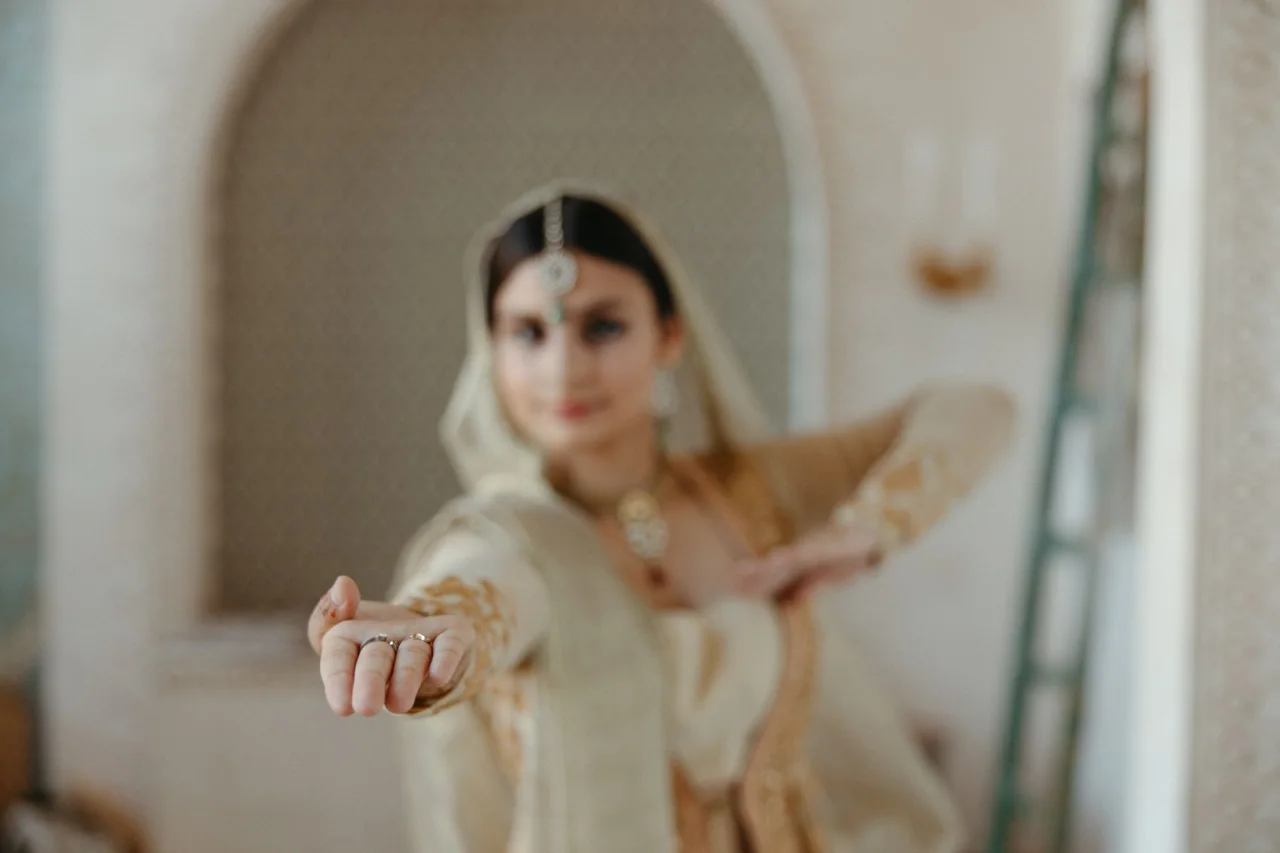
The angrakha is one of the most graceful garments in South Asian dress: a robe or tunic whose front panels cross over and tie to one side, creating a soft, asymmetric wrap. Rooted in Mughal and Rajput court dress, it has been reimagined for modern kurtas, suits and gowns. This guide explains what an angrakha is, where it comes from, how the tie front works, and how to wear it today.
The short version
- An angrakha is a garment with overlapping front panels that tie or knot to one side rather than button up the centre.
- Its name derives from the Sanskrit angarakshaka, meaning body-protector, and it evolved into an Indian form of earlier robes.
- It rose to prominence in the Mughal era and is especially associated with Rajasthan and Punjab.
- Today it appears as angrakha kurtas, suits and gowns, prized for its heritage look and flattering wrap.
What an angrakha actually is
An angrakha is defined not by its hem but by its front. Two panels of fabric overlap across the chest and are secured with ties or knots to one side, so the opening sits off-centre rather than down the middle. Historically it was a formal robe with long sleeves that was tied on one side and worn as an outer garment over other clothing. The overlap can be shallow, giving a subtle diagonal line, or deep and dramatic, revealing a contrast panel beneath.
That wrap construction is what gives the angrakha its distinctive silhouette: soft, fluid and gently asymmetric, with the ties often becoming a decorative feature in their own right. Where most desi tunics are described by how their hem behaves, straight, A-line or flared, the angrakha is instead defined by its front. That is an important distinction, because an angrakha body can itself be cut straight or flared while still counting as an angrakha, so long as it keeps the signature crossover and side tie.
The history and origin of the angrakha
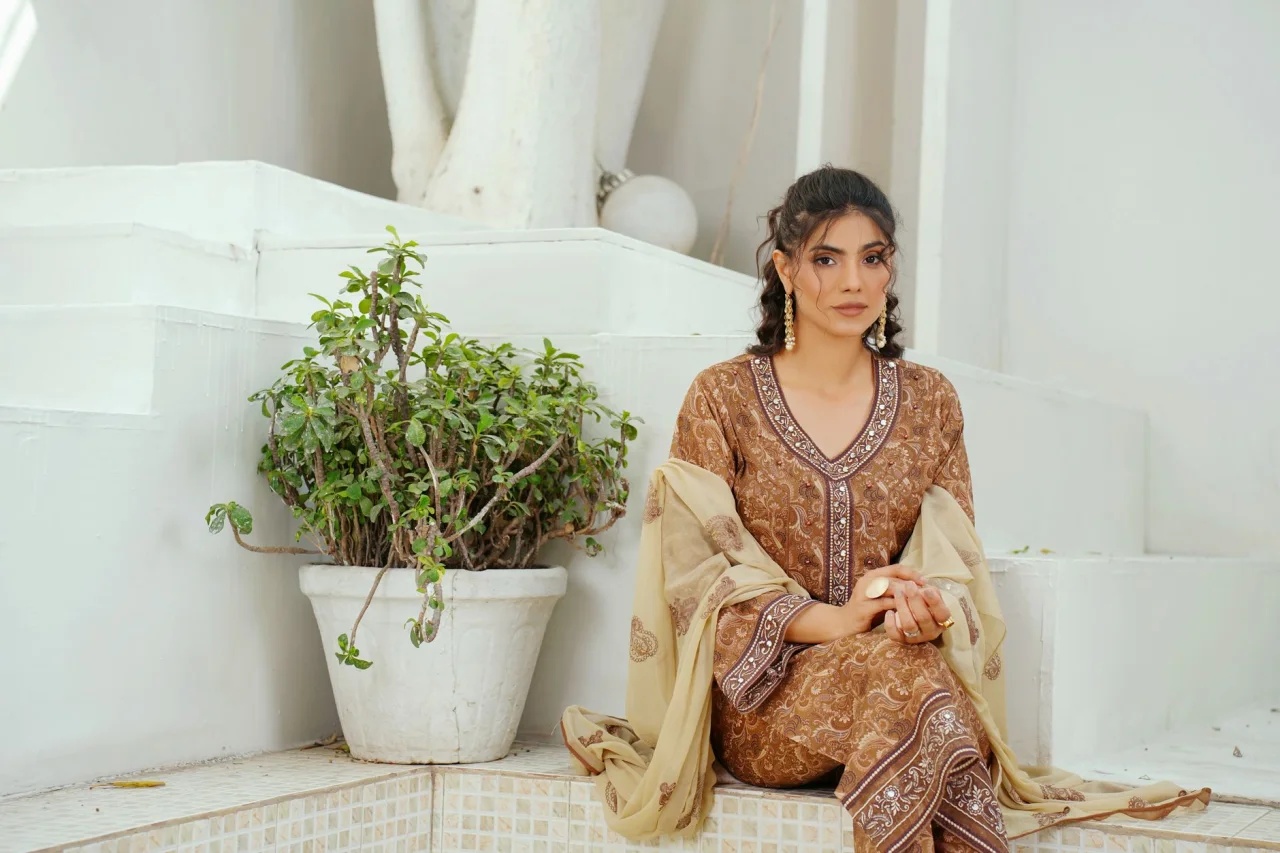
The word angrakha comes from the Sanskrit angarakshaka, meaning body-protector. The garment developed as earlier robes, including Persian forms such as the balaba and chapkan, were gradually given a more Indian shape. It gained prominence during the Mughal era, and by the 19th century the angarkha had become the generally accepted attire of an educated man in public across the subcontinent. These facts are documented in the Wikipedia entry on the angarkha.
While it was worn widely, the angrakha holds particular significance in Rajasthan and Punjab, and it features in museum collections from regions such as Marwar. In everyday dress its traditional form is now rare, preserved mainly in cultural and museum contexts, but the wrap silhouette has been enthusiastically revived in contemporary desi fashion. It is worth treating this heritage with care rather than reducing it to a passing trend: the angrakha carries centuries of court and craft history, and the most respectful modern versions tend to honour its proportions and hand techniques rather than simply borrowing the look.
Cultural note: The angrakha was historically worn by both men and women in various forms. Men wore it as a formal court robe, and today the wrap style appears across menswear and womenswear alike, from sherwani-inspired angrakhas to angrakha kurtas and gowns.
How the tie front works
The defining mechanism of the angrakha is the side fastening. Understanding it helps when you shop or wear one.
- Overlapping panels: the inner panel crosses first and ties at the side seam, then the outer panel crosses over it and ties on the opposite side.
- Decorative ties: the fastenings, called dori or naala, are often tasselled and become a visible design element.
- The angrakha "V": the overlap creates a soft V or diagonal at the chest, sometimes framed with embroidery or a contrast border.
- Adjustable fit: because it ties rather than buttons, the wrap accommodates a range of sizes gracefully.
Angrakha vs other desi silhouettes
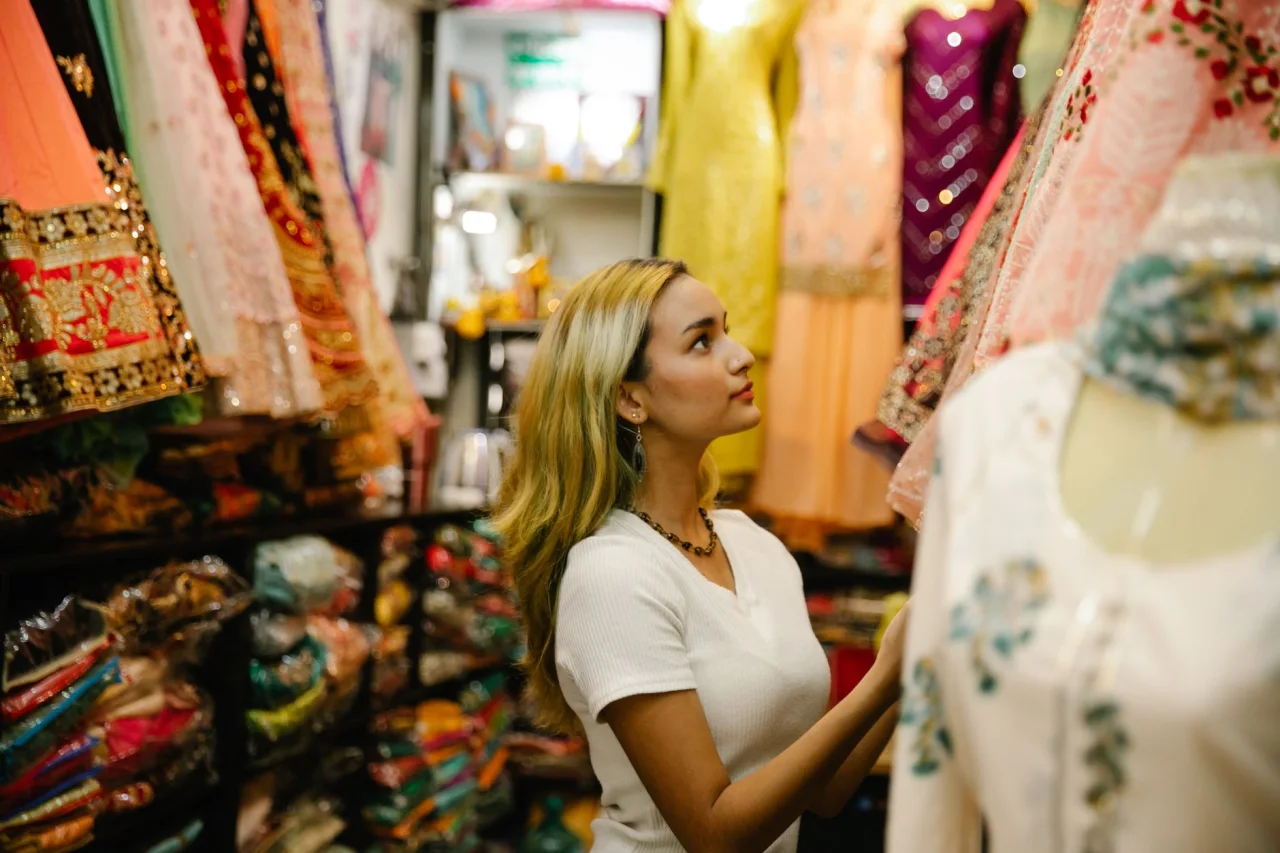
The angrakha is easy to distinguish once you know what to look for.
- Angrakha vs anarkali: the anarkali is defined by its flared, gathered skirt; the angrakha is defined by its tie-over front and can be straight or flared.
- Angrakha vs straight suit: a straight suit has a centred or side opening and a columnar cut, without the crossover wrap.
- Angrakha vs A-line: the A-line kurta is defined by its widening hem, and an angrakha front can be applied to an A-line body.
Modern angrakha styles
Designers and everyday wearers have adapted the wrap into several contemporary forms.
- Angrakha kurta: a knee-length kurta with a tie front, worn with churidar, cigarette pants or palazzos.
- Angrakha suit: a full salwar kameez set with an angrakha-style top, often with a contrast inner panel.
- Angrakha gown or anarkali: a floor-length version that combines the wrap front with a flared skirt for occasions.
- Angrakha for men: a heritage-inspired kurta or short jacket that nods to its formal court roots.
The wrap front pairs beautifully with traditional surface work. A gota, zari or resham border along the overlap draws the eye to the angrakha's signature diagonal; see our guides to gota work and zari.
How to style and wear an angrakha
The angrakha does a lot of the work on its own, so styling is about supporting its lines.
- Keep bottoms simple: churidar or cigarette pants let the wrap front stay the focus.
- Play the contrast panel: if the inner panel shows, choose a bottom or dupatta that picks up its colour.
- Choose fluid fabrics: georgette, chiffon, silk and soft cotton drape well and let the ties fall naturally.
- Occasion dressing: a plain cotton angrakha suits daywear, while embroidered silk or velvet versions work for festive and wedding events.
Fabrics and occasions for an angrakha
The wrap front drapes best in fabrics with a little fluidity, and the cloth you choose largely decides how formal the finished garment feels.
- Cotton and lawn: light and breathable, ideal for a casual, everyday angrakha kurta.
- Georgette and chiffon: soft and floaty, so the panels fall and the ties settle naturally.
- Silk and raw silk: add body and quiet sheen for festive and semi-formal wear.
- Velvet: rich and structured, well suited to winter weddings and evening events.
A plain cotton angrakha suits daywear and warm climates, while an embroidered silk or velvet version steps comfortably into wedding and celebration territory. For a deeper look at surface work that flatters the wrap front, our guide to zari explains one of the most traditional options.
Who the angrakha suits
The tie-front construction is unusually accommodating, which is part of why the silhouette has endured.
- Most body types: because it ties rather than buttons, the wrap skims the torso and adjusts to the wearer.
- Those who like a defined waist: the crossover naturally draws the eye inward at the middle.
- Anyone wanting a heritage look: the angrakha carries visible history while still feeling contemporary.
- Both men and women: the wrap works across menswear and womenswear, from short jackets to full gowns.
Caring for an angrakha
Because ties and overlaps add stress points, gentle care keeps an angrakha looking its best.
- Everyday cottons: hand or gentle machine wash cool, and press the ties flat.
- Silk and embroidered pieces: dry clean to protect the fastenings and surface work.
- Storage: tie the panels loosely before hanging so the overlap keeps its shape, and use padded hangers.
- Ties and tassels: check and re-stitch the dori fastenings occasionally, as they take the most strain each time you wear the garment.
A little routine care goes a long way with a wrap garment, because the points that make the angrakha beautiful, its ties, overlaps and edge embroidery, are also the points that wear first.
Frequently asked questions
What is an angrakha?
An angrakha is a garment whose front panels overlap and tie to one side rather than buttoning up the centre, creating a soft, asymmetric wrap. The name comes from the Sanskrit angarakshaka, meaning body-protector, and it was historically a formal robe worn across the Indian subcontinent.
Where does the angrakha come from?
The angrakha evolved from earlier robes, including Persian forms, into a distinctly Indian garment. It rose to prominence during the Mughal era and by the 19th century was widely worn by educated men in public. It is especially associated with Rajasthan and Punjab.
How is an angrakha different from an anarkali?
An anarkali is defined by its flared, gathered skirt, while an angrakha is defined by its overlapping tie front. An angrakha body can be straight or flared, and some occasion pieces combine an angrakha front with an anarkali-style skirt.
Can men wear an angrakha?
Yes. The angrakha has strong roots in menswear, where it was worn as a formal court robe. Today it appears as heritage-inspired kurtas and short jackets for men, alongside angrakha kurtas, suits and gowns for women.
What do you wear under an angrakha kurta?
Churidar and cigarette pants are the most common pairings because they keep the focus on the wrap front. Palazzos also work for a more relaxed look. If the angrakha has a visible inner panel, choosing a bottom that echoes its colour ties the outfit together.
More on Clothing Types
Have a question or a topic to suggest?
We read every message. Tell us what you would like to see next in the journal.
Get in touch