Silk vs Raw Silk
Smooth mulberry silk against textured raw silk, compared for feel, drape, price and use.
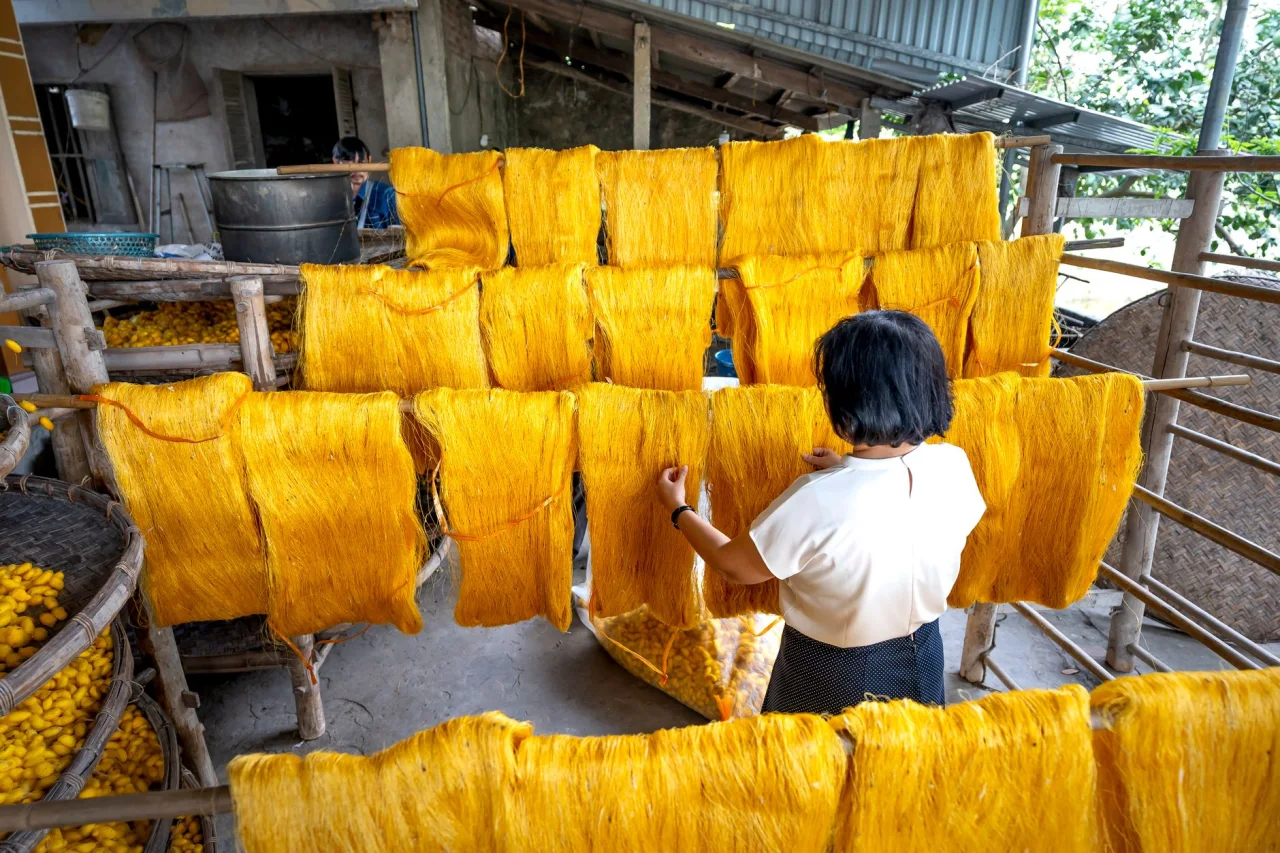
Silk and raw silk sit side by side on the same shelf, yet they behave like different personalities: one is fluid and glossy, the other structured and matte. Knowing which is which saves you from buying a slinky drape when you wanted crisp body, or vice versa. This guide breaks down feel, sheen, climate, price and stitching so you can pick the right silk for the outfit in your head.
The short version
- Fine "silk" (usually mulberry silk) is smooth, fluid and highly lustrous. Raw silk is textured, stiffer and has a soft, dull sheen.
- Technically, raw silk means silk still carrying its natural sericin gum; in South Asian retail the term also covers slubby, matte textured silks.
- Smooth silk drapes and flows; raw silk holds structured, sculptural shapes.
- Choose smooth silk for fluid saris and gowns, raw silk for tailored suits, kurtas and winter formalwear.
What "silk" means
Silk is a natural protein fibre spun by insect larvae, most famously the mulberry silkworm Bombyx mori reared in sericulture. According to Wikipedia's silk entry, the fibre is built mainly from fibroin protein with a sericin coating, and its signature shimmer comes from the triangular, prism-like structure of the filament, which refracts light and produces that shifting glow. When people say "pure silk" or simply "silk," they usually mean fine, degummed mulberry silk: smooth, soft, strong and very lustrous.
For a fuller breakdown of the fibre and how to care for it, see our explainer on what silk is, its properties, uses and care.
What "raw silk" means
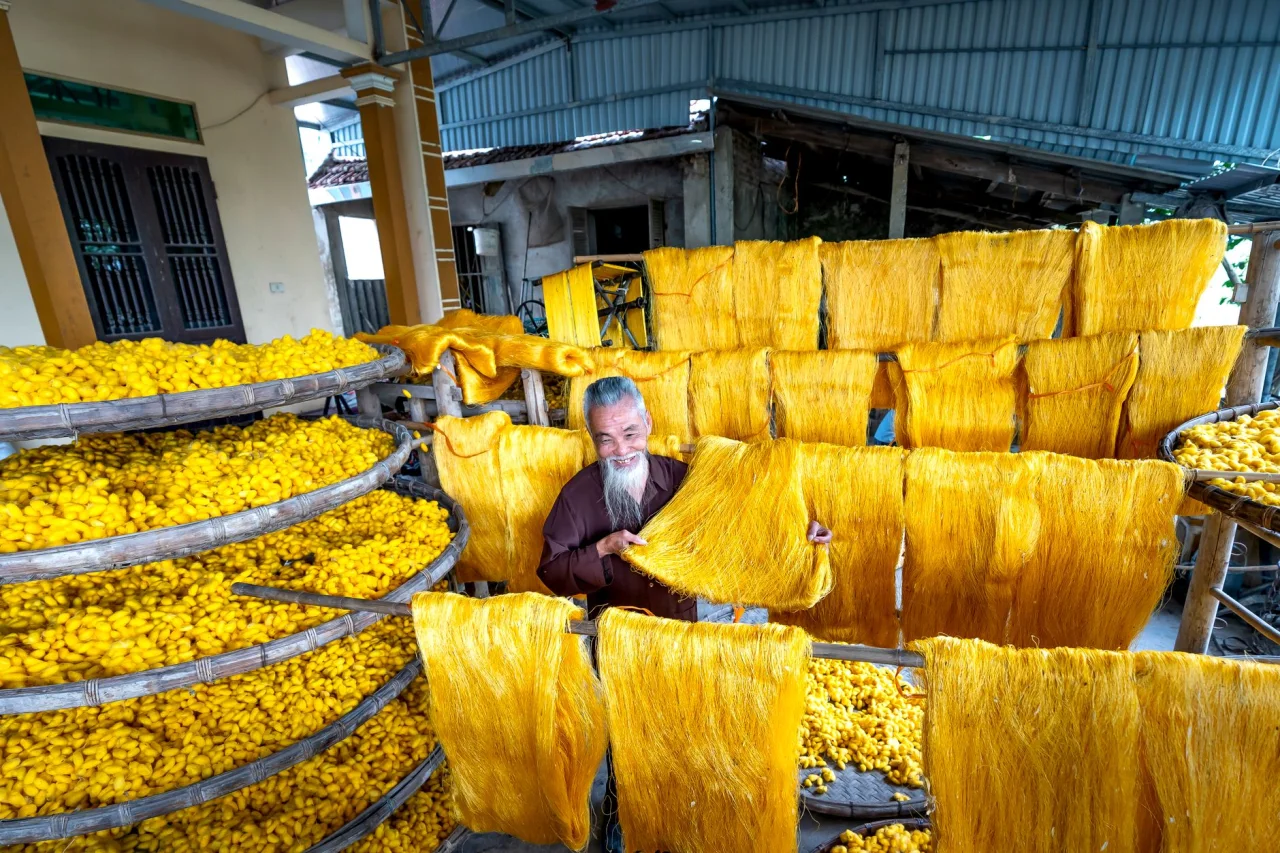
Here honesty matters, because "raw silk" carries two overlapping meanings. In strict textile terms, raw silk is silk that has not been fully degummed, so it still holds its natural sericin gum, which makes it stiffer, drier to the touch and less glossy than refined silk. In everyday South Asian retail, "raw silk" is also used loosely for textured, matte, slightly slubby silks with visible surface irregularity and firm body, close in character to what the trade calls dupioni.
Wild silks such as tussar sit in this same family. As Wikipedia notes, tussar is a wild silk with a rich texture, a naturally deep-gold tone and a duller sheen, produced from Antheraea silkworms rather than domesticated Bombyx. Its shorter fibres make it more textured but less durable than cultivated mulberry silk. Whichever version you are shown, the shared thread is texture and structure over glossy fluidity. Our guide to raw silk properties, uses and care goes deeper.
Buyer's tip
Ask the seller specifically what they mean by "raw silk": pure silk with the gum still in, a wild silk like tussar, or a textured art-silk blend. The word covers all three in different shops, and the fibre content changes how the fabric wears, prices and lasts.
Feel and hand
This is the clearest divide. Smooth mulberry silk feels cool, slippery and soft, sliding through the fingers with almost no resistance. Raw silk feels drier, firmer and grainier, with a subtle slub you can feel across the surface. Neither is better in the abstract: one gives you fluid movement, the other gives you body and hold.
- Smooth silk: soft, cool, slinky, catches the light.
- Raw silk: crisp, textured, matte, stands away from the body.
Sheen and appearance
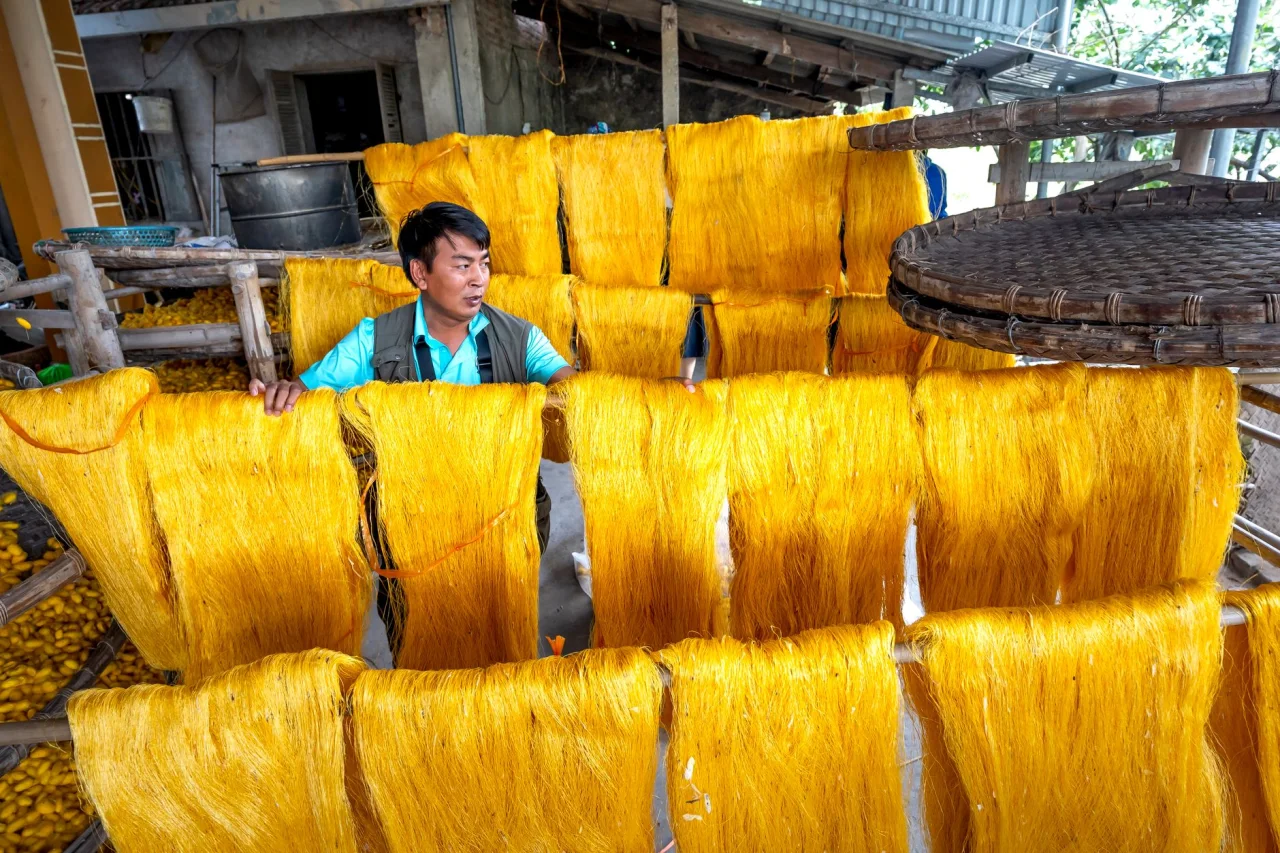
Fine silk is prized for its liquid, high-shine lustre that shifts colour as it moves. Raw silk has a much quieter, dull sheen and a visible texture that reads as understated and rich rather than flashy. If you want a formal outfit that glows under lights, smooth silk delivers. If you want a refined, matte, tailored look, raw silk suits it better.
Climate suitability
Silk is a natural fibre with good moisture regain and low thermal conductivity, so it tends to hold warmth close to the skin, which makes both types lean toward cooler-weather and formal wear rather than peak summer daywear. That said, lightweight smooth silks can feel cool and airy in a fluid sari, while stiffer raw silk traps a little more air and works well for structured winter formals.
- Warm evenings, fluid drape: lightweight smooth silk breathes and moves well.
- Winter formals and structured suits: raw silk holds shape and adds a touch of warmth.
For a seasonal shortlist, see our guide to the best fabrics for winter dresses.
Price: what drives it
Pure mulberry silk is generally the pricier of the two because it is fine, strong and highly lustrous, and prices climb further with weight, weave and any handwork. Raw silk spans a wide range: genuine wild or gummed silk can be costly, but many affordable "raw silk" fabrics on the market are art-silk or blends made to imitate the texture at a lower price. Because the label covers everything from pure tussar to synthetic blends, always confirm fibre content and current pricing before buying rather than trusting a headline figure.
Styling note
Let the fabric's nature lead the silhouette. Smooth silk shines in gathered, draped and bias-cut pieces where movement is the point. Raw silk excels in straight kurtas, structured jackets and sculptural gowns where you want the fabric to hold a clean line.
Stitching and tailoring behaviour
The two silks behave very differently on the cutting table, so plan the fabric around the outfit:
- Smooth silk is slippery and shifts while cutting and sewing. Use fine pins, a sharp needle and tissue or a walking foot to control it. It frays and can pull at seams, so finish edges carefully.
- Raw silk is far more stable and forgiving to cut, holds pleats and structured seams cleanly, but frays readily at raw edges and can crease, so overlock seams and press over a cloth.
- Water spotting: both, especially smooth silk, can water-mark, so many silk garments are dry-clean only. Test a scrap before washing at home.
To see which made-up looks flatter each, browse our notes on silk outfits and on raw silk outfits.
The verdict: which for what
They are complements, not competitors. Use this table to match the silk to the job:
| Your goal | Best pick | Why |
|---|---|---|
| Fluid saris and flowing gowns | Smooth mulberry silk | Liquid drape and high lustre |
| Structured suits and kurtas | Raw silk | Body, texture and clean lines |
| Maximum shine under lights | Smooth silk | Bright, shifting sheen |
| Understated, matte formalwear | Raw silk | Rich texture, quiet finish |
| Winter occasion wear | Raw silk | Holds shape, adds slight warmth |
| Easy-to-sew formal fabric | Raw silk | Stable, does not slip |
Choose smooth silk when you want movement and glow, and raw silk when you want structure and texture. If your event leans formal and structured, you might also compare it against other occasion fabrics in our guide to velvet versus jacquard.
Frequently asked questions
Is raw silk real silk?
It can be, but not always. In strict terms, raw silk is genuine silk that still holds its natural sericin gum, and wild silks like tussar are also real silk. However, many fabrics sold as "raw silk" are art-silk or blends made to copy the texture, so ask about fibre content before assuming it is pure.
Which is more expensive, silk or raw silk?
Pure mulberry silk is usually pricier because it is fine, strong and highly lustrous. Raw silk covers a wide range: genuine wild or gummed silk can be costly, while imitation raw silk blends are cheaper. Confirm fibre content and current pricing before buying rather than relying on the name alone.
Which drapes better?
Smooth silk drapes far better because it is fluid and slippery, making it ideal for saris and flowing gowns. Raw silk is stiffer and holds structure, so it is better for tailored suits, kurtas and sculptural shapes rather than soft drape.
Can I wear silk in summer?
Silk tends to hold warmth close to the skin, so it leans toward cooler weather and formal wear. Lightweight smooth silk can feel airy in a fluid sari on a warm evening, but stiffer raw silk is better kept for winter formals or air-conditioned occasions.
How do I care for silk and raw silk?
Both can water-spot and lose some strength when wet, so many silk garments are dry-clean only. If you wash at home, test a hidden scrap first, use cool water and a gentle detergent, avoid wringing, and press on the reverse over a cloth. Raw silk in particular frays, so finish seams well.
Why does raw silk feel rougher?
Raw silk feels drier and grainier because it either still carries its natural gum or is woven from shorter, more textured wild-silk fibres such as tussar. Those irregularities create the characteristic slub and matte surface, which is exactly what gives raw silk its structured, understated look.
More on Fabrics
Have a question or a topic to suggest?
We read every message. Tell us what you would like to see next in the journal.
Get in touch