Net Fabric vs Organza
Feel, climate, price and stitching compared, ending with a plain which-for-what verdict for two sheer fabrics.
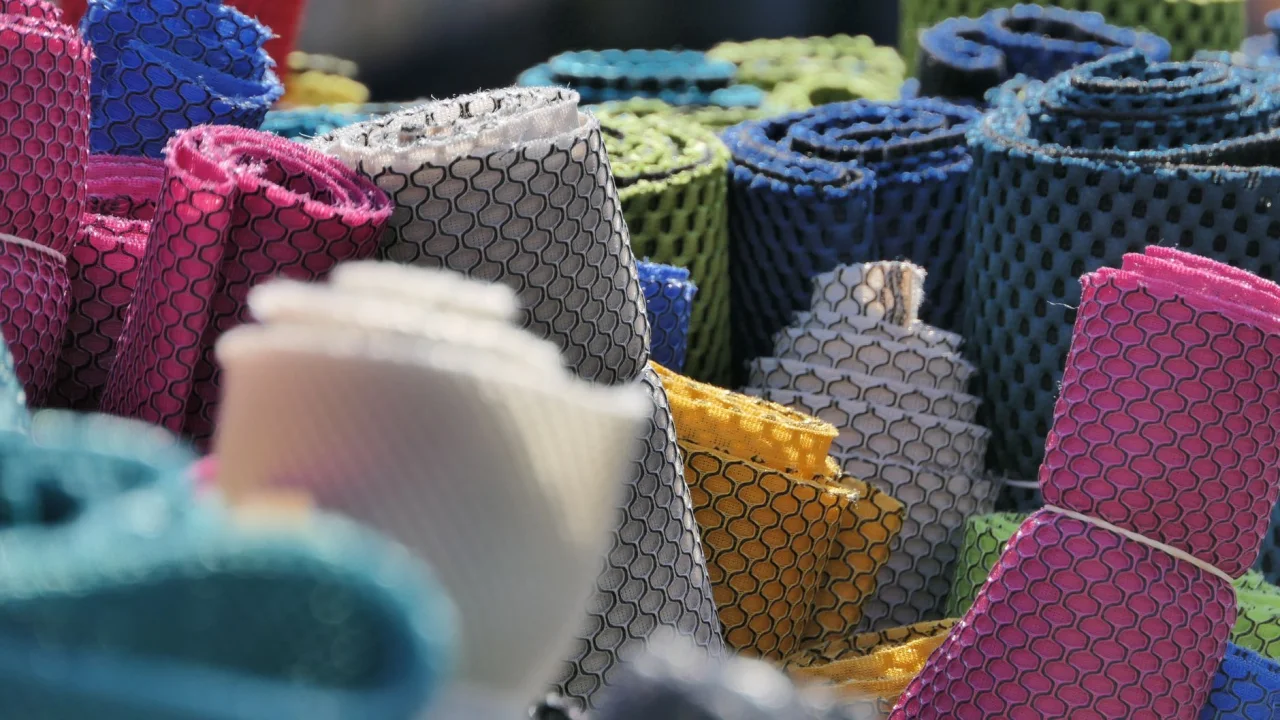
Net and organza are the two fabrics people reach for when an outfit needs drama, structure and a bit of sheen. They look similar in a shop photo, but they behave very differently once you drape them, stitch them or wear them through a long function. This side by side guide breaks down feel, climate, price and sewing behaviour, then gives you a plain which-for-what verdict.
The short version
- Net is an open mesh: light, airy and forgiving, ideal for layered dupattas, sleeves and voluminous flares.
- Organza is a tightly woven sheer: crisp, glossy and structured, ideal for sculpted ruffles, capes and stand-away silhouettes.
- Organza holds its shape without support; net usually needs lining or gathering to look intentional.
- Both are commonly available in synthetic versions, so verify fibre content and confirm current pricing before you buy.
What each fabric actually is
Net, also called tulle in its finer form, is a form of netting made of small gauge thread knotted or knitted into a hexagonal mesh. Because it is mostly open space, it is extremely light and see-through, and it takes starch well when a stiffer hand is wanted. Historically the name tulle comes from the French town of Tulle, a centre of lace and silk production in the eighteenth century, and the fabric became famous through Parisian ballet costumes before spreading everywhere.
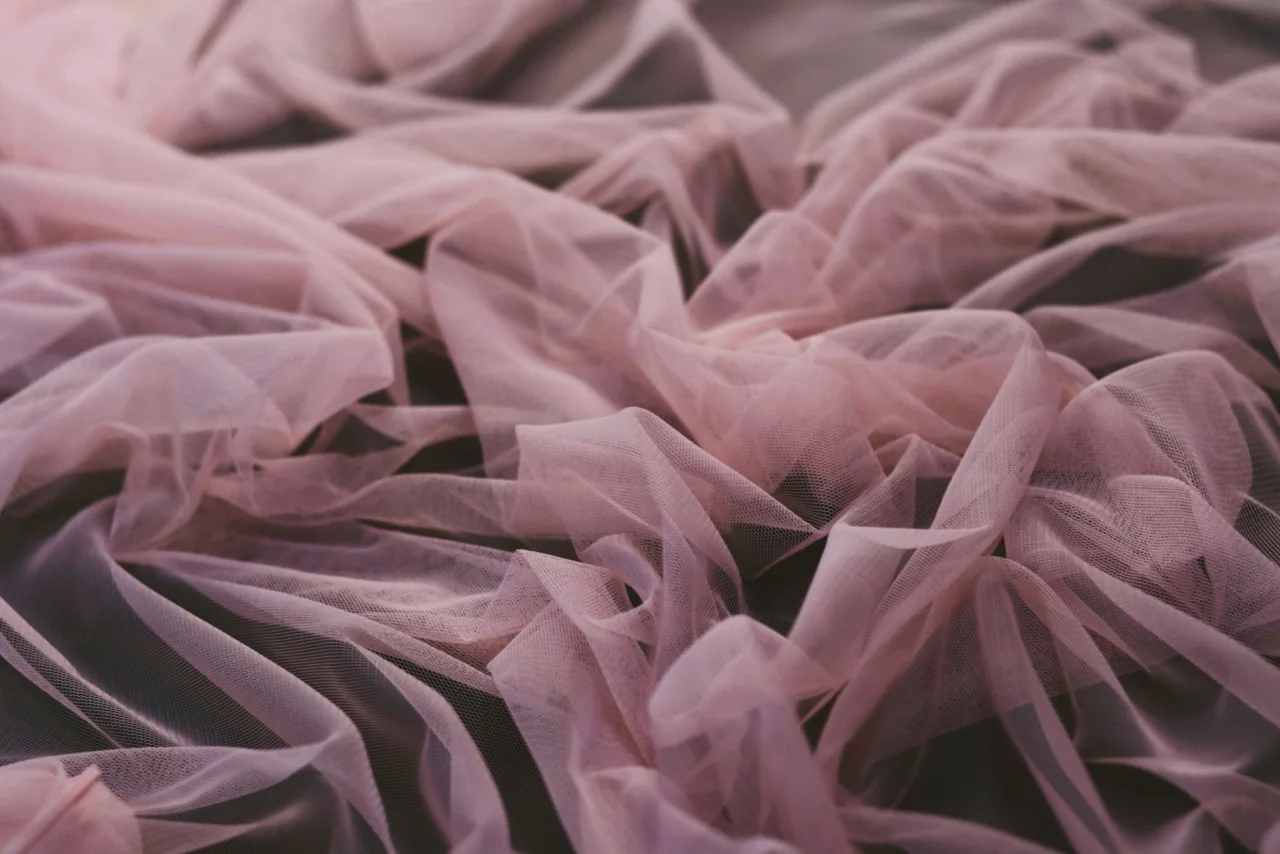
Organza is different in construction. It is a plain weave sheer made from tightly twisted yarns, which gives it a crisp hand, a slight sheen and noticeable stiffness relative to its weight. It was traditionally woven from silk, and the name is thought to trace back through the French organsin to Urgench, a Central Asian trading city on the northern Silk Road. Today a lot of organza is woven from polyester or nylon filament, and coarser grades are produced in India while deluxe silk versions come from France and Italy.
If you want the full property breakdown of each on its own, see our guides on what net fabric is and what organza is.
Feel and hand
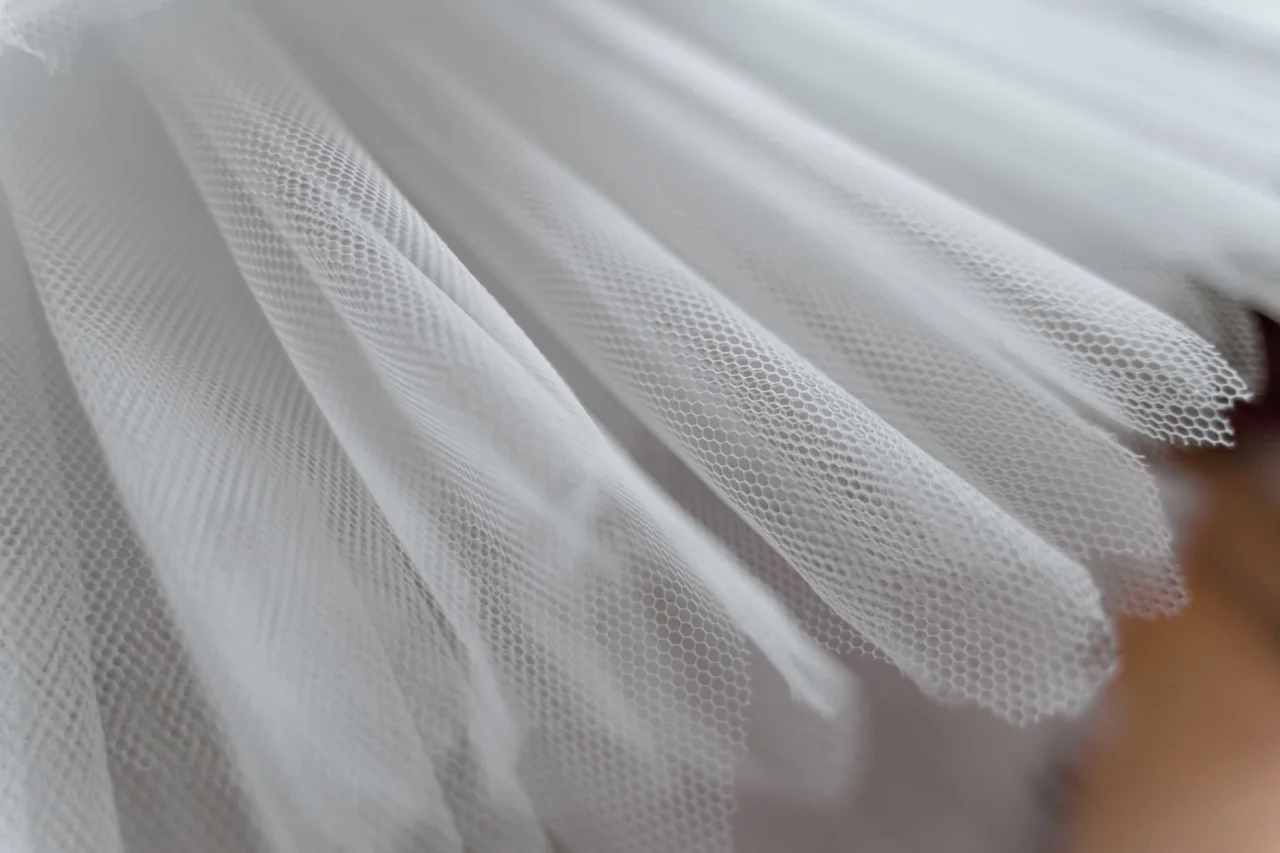
Run both across your palm and the difference is immediate. Net feels soft, springy and almost weightless, and because it is a mesh it can feel slightly scratchy against bare skin, which is why net kameez and net sleeves are usually lined or worn over a slip. Organza feels papery and cool, with a smooth surface that glides and a body that pushes back when you crush it in your hand, then springs open again.
That springy memory is the single most useful thing to understand. Organza wants to stand up and away from the body, so it is brilliant for a stiff ruffle, a sculptural sleeve or a cape that keeps its shape all evening. Net collapses softly unless it is gathered, layered or stiffened, which is exactly why it is the classic choice under a lehenga for volume or in multiple layers for a floaty, romantic flare.
Sheen, transparency and look
Both are sheer, but they read differently. Net is a visible mesh, so it looks textured and lacy up close and is the obvious ground for sequins, cutwork and heavy embroidery that seems to float on skin. Organza is a continuous sheer with a subtle glassy shine, so it photographs as a smooth veil of colour and catches light along folds and ruffles.
For a glossier, more liquid drape than either, organza is often compared with chiffon; our organza vs chiffon comparison covers when to pick a soft flowing sheer instead of a crisp one.
Climate suitability
Neither fabric is a hot weather workhorse, but there are real differences for a South Asian summer.
- Net is the more breathable of the two because its open mesh lets air move freely. The catch is that net is almost always used as a decorated or layered fabric, and once you add heavy embroidery, lining and multiple layers, that breathability disappears.
- Organza is tightly woven and synthetic organza in particular can feel warm and non-absorbent against skin in humidity. Its saving grace is that it is usually used as a light overlay, sleeve or ruffle rather than a full lining, so contact with the body stays limited.
For genuinely cool everyday wear you are better served by breathable cottons; see our roundup of the best fabrics for Pakistani summers.
Styling note
Use organza where you want the fabric to hold a shape you can see: a portrait sleeve, a stiff frill on a kameez hem, a structured dupatta that stays put on the shoulder. Use net where you want softness and volume that moves: gathered flares, layered dupattas, and embroidered panels that should look weightless.
Stitching and sewing behaviour
This is where home sewers and tailors feel the biggest gap.
- Organza frays readily at raw edges and shows needle holes, so it rewards fine needles, French or rolled hems and careful pressing on low heat. Its stiffness actually helps here: it feeds evenly and holds a crisp pressed edge.
- Net does not fray, which is a big advantage, and raw edges can often be left as is or simply trimmed, making ruffles and layers quick to assemble. Because it is stretchy and slippery, though, it can shift under the presser foot and needs pinning or tissue paper to sew a straight seam.
For finished garment ideas, our pages on organza outfits and net fabric outfits show what each sews into best.
Price and care
Both fabrics span a wide price range depending on fibre and quality. Synthetic polyester or nylon versions of each are the most affordable and are what most ready to wear and mid market suits use. Pure silk organza sits at the premium end and costs considerably more per metre. Prices vary by fabric, work and retailer, so treat any figure as a guide and confirm current pricing before you commit.
On care, both are delicate. Organza creases sharply and needs gentle low heat pressing, ideally with a cloth between the iron and fabric. Net resists creasing but snags easily on jewellery and rough surfaces, and embroidered net should be handled and stored flat or rolled rather than crushed.
The verdict: which for what
There is no single winner. Match the fabric to the job.
- Choose organza for structured ruffles, capes, portrait sleeves, stiff dupattas and any look that should hold a crisp, sculptural shape on its own.
- Choose net for volume and softness: layered lehenga flares, floaty dupattas, and embroidered or sequinned panels that should look like they float on the skin.
- Choose organza if you want a subtle glassy sheen; choose net if you want visible texture and an easy base for heavy surface work.
- For a cooler feel in heat, lean net, but remember both are occasion fabrics rather than everyday summer cottons.
Frequently asked questions
Is net or organza better for a dupatta?
Both work, but they give different results. An organza dupatta stays crisp and holds its drape on the shoulder, which suits a structured, formal look. A net dupatta is softer and floatier and layers beautifully, which suits a romantic or voluminous look. Pick organza for structure and net for movement.
Which fabric is more see-through?
Both are sheer. Net is an open mesh so you literally see through the gaps, while organza is a continuous sheer weave with a slight sheen. Net usually looks more transparent, which is why it is often lined or layered, whereas organza reads as a smooth translucent veil.
Is organza hotter to wear than net?
Generally yes, because organza is tightly woven and synthetic versions are not very absorbent, while net is an open mesh that lets air pass through. That said, both are occasion fabrics, and heavy embroidery or lining on either will reduce breathability, so neither is a true hot weather choice.
Which is easier to sew at home?
Net is friendlier for beginners because it does not fray, so edges and ruffles are quick to finish, though it can shift and needs pinning. Organza frays and shows needle marks, so it wants fine needles and careful hems, but its stiffness helps it feed evenly and hold a pressed edge.
Are net and organza always synthetic?
No. Both exist in natural and synthetic forms. Traditional organza is silk and traditional net can be silk too, but a large share of the market today is polyester or nylon because it is cheaper and more durable. Always check the fibre content label if fibre matters to you.
More on Fabrics
Have a question or a topic to suggest?
We read every message. Tell us what you would like to see next in the journal.
Get in touch