Net Outfits: What Styles Best
The flared silhouettes, frills, and overlays where sheer net brings volume and drama to festive wear.
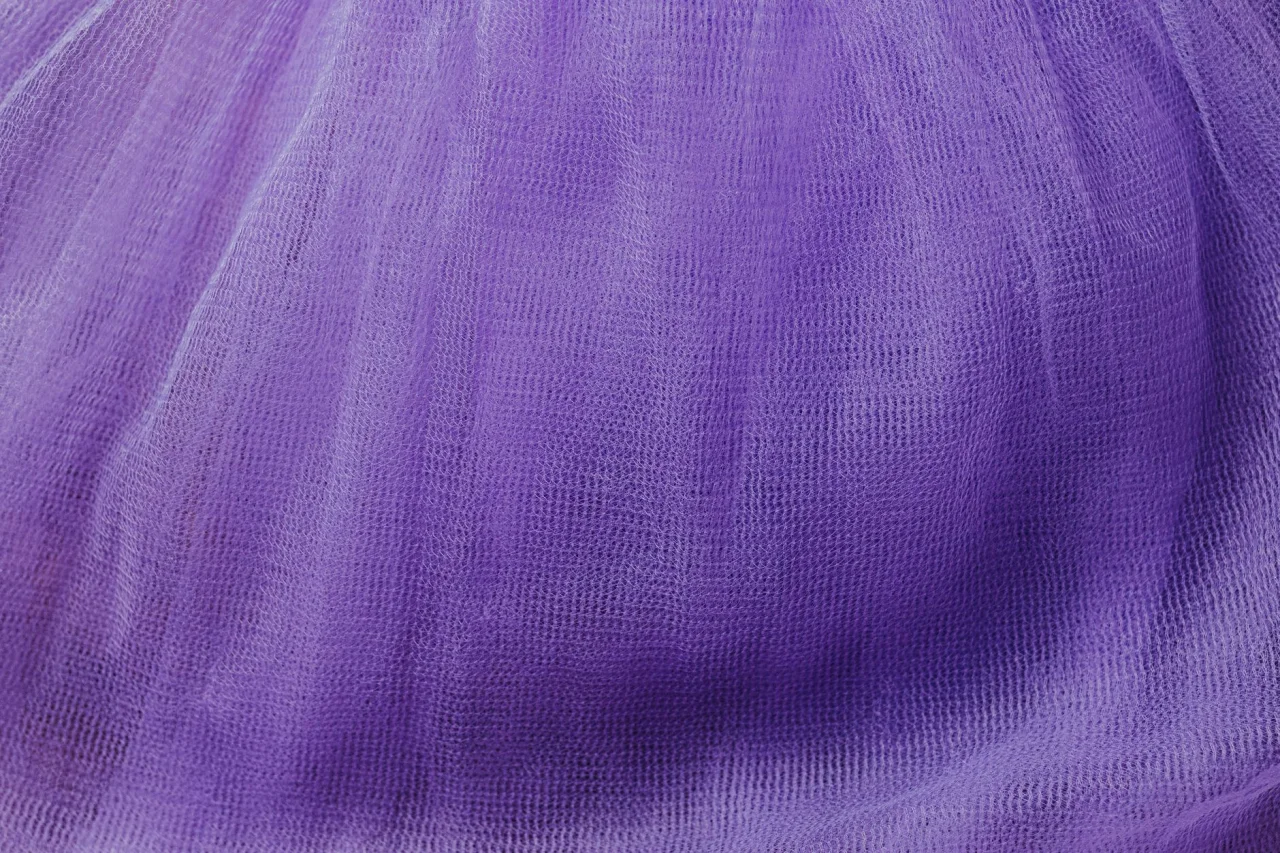
Net is the fabric you reach for when you want movement, volume, and a little drama. It floats, it flares, and it turns embroidery into something that seems to hover on skin. This guide is about what net does best: the silhouettes it flatters, the frills and overlays it was made for, and the embellishments that make the most of its open, weightless mesh.
The short version
- Net excels at volume and float: flared lehengas, frilled shararas, full gowns, and sheer overlays.
- It is always built over a lining, so the slip colour is a styling decision, not an afterthought.
- Embroidery, sequins, and cutwork appear to float on the mesh, giving net its signature party look.
- Keep structure elsewhere: pair floaty net with a fitted, solid base so the outfit reads balanced.
Why net sews and styles the way it does
Net is an open mesh, mostly holes, so it is sheer, airy, and weightless. That is the opposite of a structured fabric like velvet, and it points net firmly toward looks built on volume and layering rather than clean tailored lines. Finer net drapes and floats; stiffer nylon net holds body, which is why it is used to build standing frills and full flares. If you want the underlying fabric detail first, our explainer on what net fabric is, its properties, uses, and care covers the mesh that drives all of this.
Silhouettes that work best in net
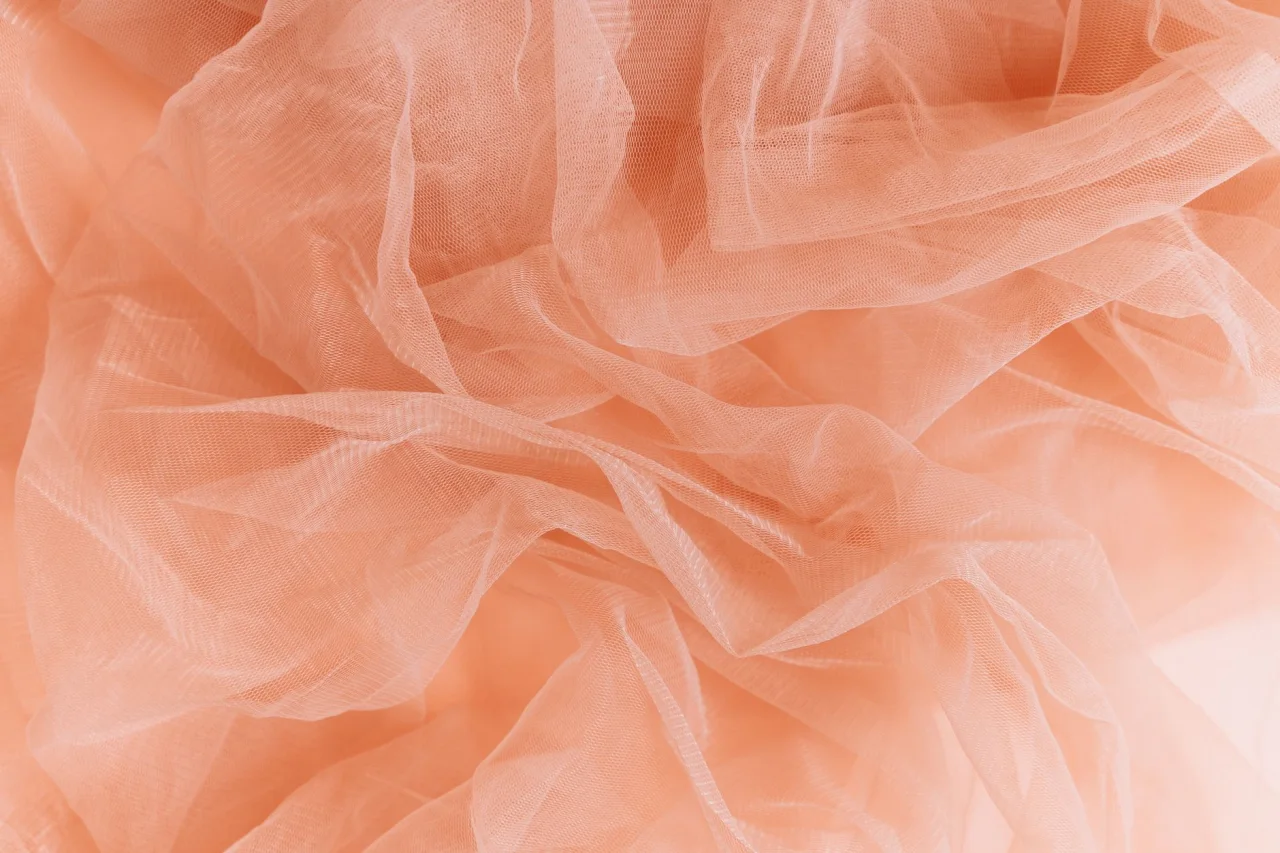
These are the shapes where net consistently delivers.
- Flared and layered lehengas: Net panels give a lehenga full, floating volume and are a natural stage for heavy bridal handwork.
- Frilled shararas and ghararas: Standing net frills add movement and drama to festive lower halves.
- Flowing gowns and maxis: A net gown over a satin or silk slip is a graceful reception silhouette.
- Sheer overlay shirts: A net kameez over a solid inner creates depth and a layered, dressy effect.
- Angrakha and umbrella styles: Net's float suits the swing of an angrakha or a gathered umbrella frock.
- Dupattas and cape overlays: A sheer embroidered net dupatta or cape finishes a festive look with lightness.
- Peplum and frock overlays: A short net overlay above a fitted frock adds a soft, floating second layer without extra bulk.
The common thread across all of these is movement. Net looks its best where the design lets the fabric flare, float, or layer, rather than where it is forced into a stiff, tailored line. When you brief a tailor, describe the drape you want and how full the flare should be, because those two decisions shape almost everything about how a net outfit finally reads.
Styling note: Plan the lining as part of the design. A nude slip makes embroidery appear to float on skin, while a bold contrast lining, say deep red under black net, gives a layered, high-drama finish. The mesh alone tells you nothing until you see it over its base.
Silhouettes net does not love
Net is not a fabric for structure, and pushing it there disappoints.
- Sharp tailored lines: Crisp column shirts, structured peplums, and sculpted jackets need a fabric with body; that is velvet or jacquard territory, not net.
- Minimalist, unlined looks: Net is see-through and always needs a base, so it is not the fabric for a clean, single-layer minimalist outfit.
- Rough, high-contact daywear: The mesh snags easily, so net is poorly suited to busy, casual, everyday wear.
Embellishments that make the most of net
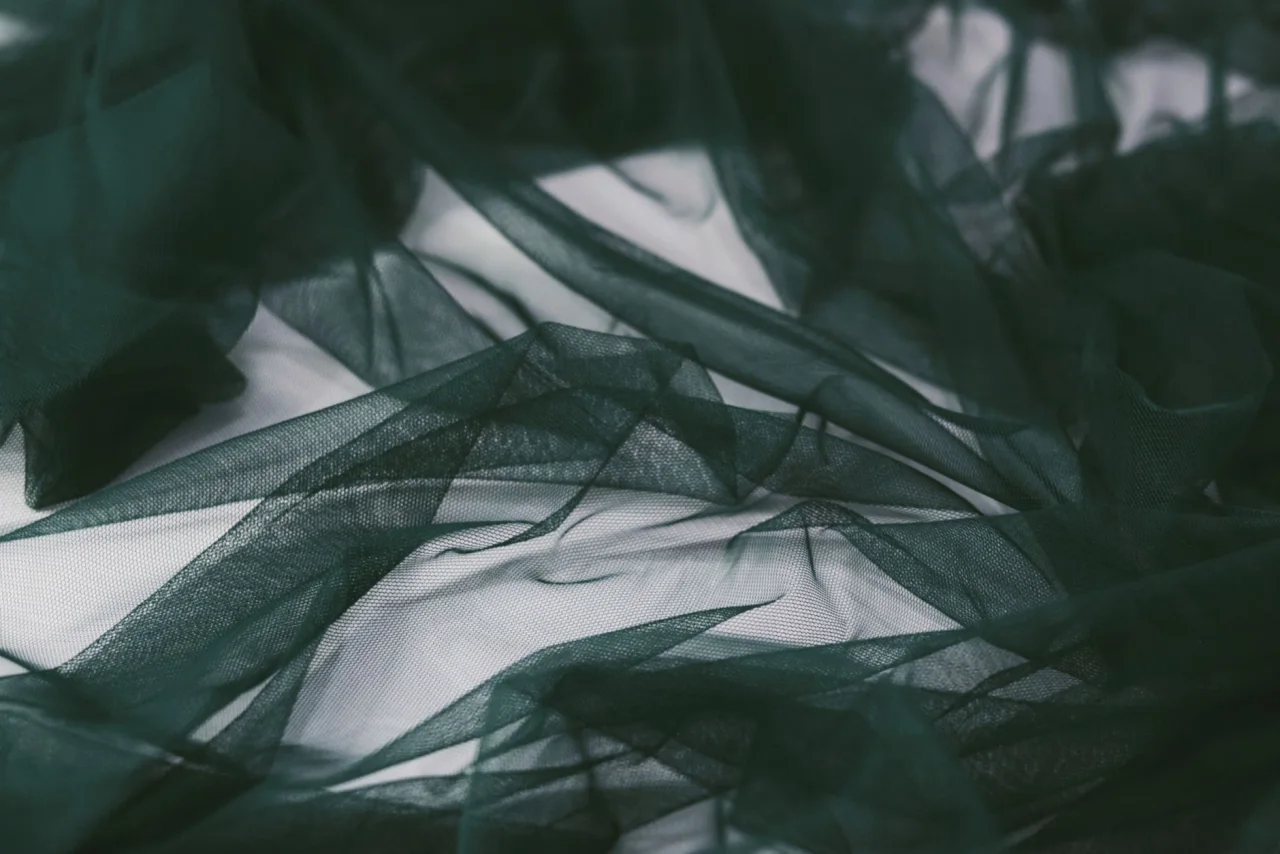
Net's greatest trick is that embellishment floats on the mesh, so decorative work reads against skin or a contrast lining in a way solid cloth cannot match.
- Sequin and sitara work: All-over sequins on net catch the light and are a party-wear signature.
- Dabka and zardozi motifs: Raised metallic motifs scattered on net appear to hover; see our guide to dabka work.
- Cutwork and applique borders: Defined borders anchor the light mesh and frame the flare.
- Thread and resham florals: Coloured thread florals soften net for mehndi and daytime festive looks; learn more about resham embroidery.
Colours and lining combinations
Because net is sheer, its final colour is really the conversation between mesh and lining.
- Tonal: Net and lining in the same shade give a soft, seamless, elegant depth.
- Nude-lined: A skin-tone slip under embellished net makes the handwork look like it floats, a favourite for delicate bridal and party pieces.
- Contrast-lined: Black net over gold, or ivory net over rose, creates a bold, layered, festive statement.
- Classic festive shades: Reds, deep greens, royal blues, and blush pinks all read beautifully in net for weddings and Eid.
Occasions to reach for net
Net is a festive and formal fabric, at its best where lightness and movement are wanted.
- Weddings: Bridal and party lehengas, frilled shararas, and net gowns are wedding-season staples. Browse ideas in our bridal dresses ideas roundup.
- Mehndi and mayun: Frilled, colourful net with thread work suits the playful energy of pre-wedding events.
- Eid and formal dinners: A sheer embroidered net shirt over a solid base is a reliable dressy look.
- Receptions: A flowing net gown over a satin slip photographs beautifully under evening light.
Styling note: Balance float with structure. Because net is all movement, pair it with a fitted, solid base and one clean structural element, a defined waist, a firm choli, or a sculpted border, so the outfit feels intentional rather than shapeless.
Working with frills, flares, and volume
Net's headline talent is volume, and getting frills and flares right is what separates a graceful net outfit from a droopy one.
- Match net stiffness to the effect: Crisp nylon net holds standing frills and dramatic flares, while softer net falls in gentle, romantic layers. Choose the stiffness for the look you want before you buy.
- Layer for fullness: A full lehenga or gown flare usually comes from several net layers over a lining, not one heavy piece. Layering keeps the volume light rather than bulky.
- Finish frill edges cleanly: Rolled, piped, or bound edges stop net frills from looking raw and help them hold their intended shape.
- Anchor the volume at the waist: A defined, fitted waistband gives all that flare a clean starting point so the silhouette reads intentional.
Pairing net with other fabrics
Net rarely works alone; it is almost always paired with a solid partner, and the pairing is where the styling happens.
- Net over satin or silk: A smooth, slightly lustrous lining lets embellished net float and adds a soft glow beneath the mesh.
- Net with a velvet or raw silk choli: A structured, solid top balances a floaty net skirt, marrying weight and movement.
- Net dupatta over a plain suit: The quickest way to dress up a simple base is a sheer embroidered net dupatta.
- Net sleeves or yokes on solid shirts: Small net insets add a delicate, see-through detail without committing the whole outfit to sheer.
Fit, tailoring, and price expectations
Net rewards careful tailoring and generous lining. Seams should be finished cleanly so they do not show through the mesh, frills need the right net stiffness to stand or fall as intended, and the lining must be cut and fitted as its own layer. On price, net spans a wide range: affordable synthetic net suits sit at the budget end, embellished party net occupies the middle, and heavily hand-worked bridal net climbs steeply. Costs vary by fibre, amount of handwork, lining, and retailer, so confirm current pricing before you commit. If you are choosing between net and the other festive sheer, our net vs organza guide lays out the trade-offs, and you can read documented background on fine net on Wikipedia.
Frequently asked questions
What outfit styles suit net fabric best?
Net excels at volume and float: flared and layered lehengas, frilled shararas and ghararas, flowing gowns and maxis, sheer overlay shirts, and embroidered dupattas or capes. It is less suited to sharp tailored lines like structured peplums and crisp column shirts, which need a fabric with more body.
Do net outfits always need a lining?
Yes. Net is an open, see-through mesh, so garments are built over a solid lining or worn as an overlay above a base outfit. The lining colour is a styling decision: a nude slip makes embroidery appear to float, while a contrast lining creates a bold, layered effect.
What embellishment looks best on net?
Work that appears to float on the mesh looks best, including all-over sequins and sitara, scattered dabka and zardozi motifs, cutwork and applique borders, and coloured thread or resham florals. Against skin or a contrast lining, these designs read in a way solid fabric cannot reproduce.
Is net suitable for everyday wear?
Not really. Net snags and tears easily and always needs a lining, so it is best kept for festive and formal occasions like weddings, Eid, mehndi, and receptions rather than busy, high-contact daily wear.
How do I keep a net outfit from looking shapeless?
Balance its float with structure. Pair floaty net with a fitted, solid base and one clean structural element, such as a defined waist, a firm choli, or a sculpted border, so the volume looks intentional rather than droopy.
More on Fabrics
Have a question or a topic to suggest?
We read every message. Tell us what you would like to see next in the journal.
Get in touch