What Is Net Fabric? A Guide
The sheer open-mesh fabric behind floating lehengas and dupattas: how it works and how to handle it.
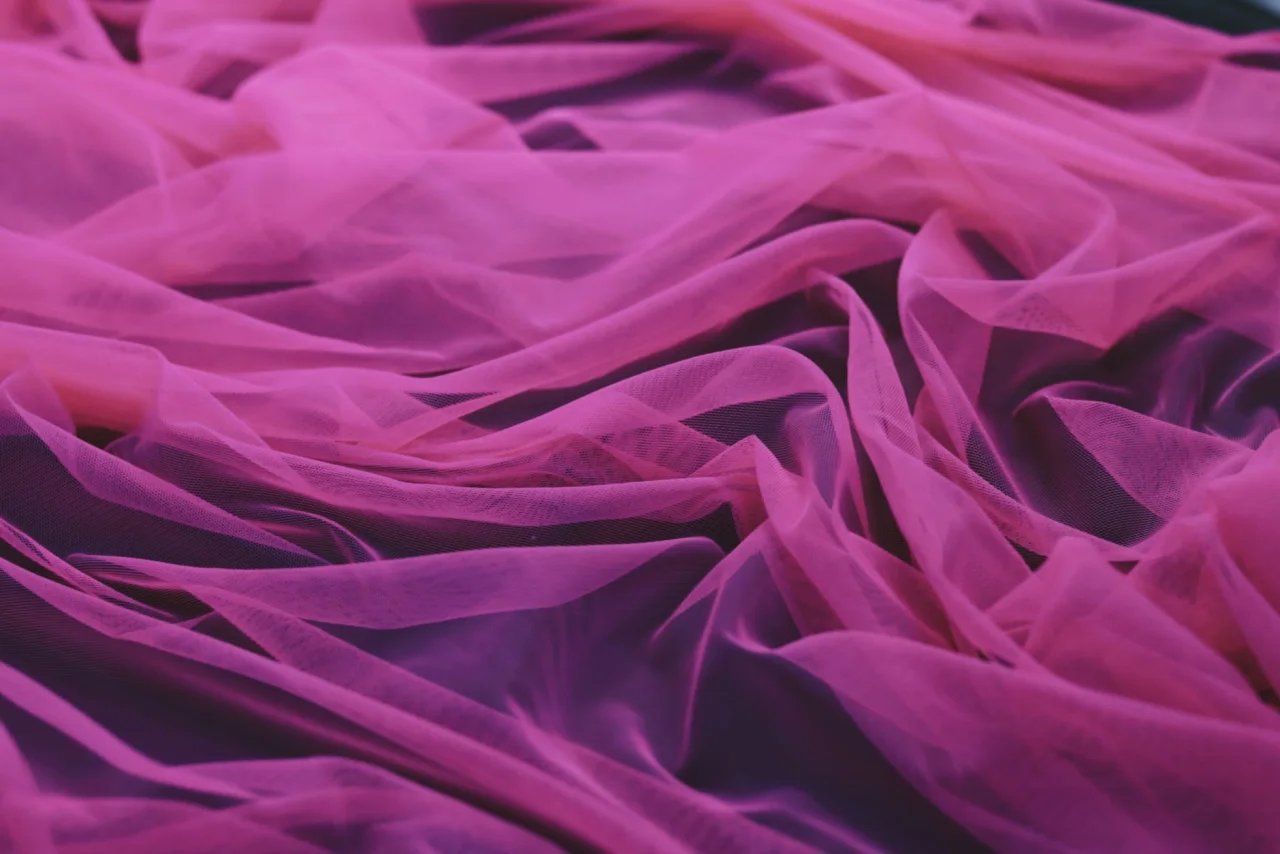
Net is the fabric that makes a desi outfit float. That airy, see-through layer over a bridal lehenga, the flared frill on a party sharara, the delicate dupatta that catches the light: all of it is net doing what no solid cloth can. This guide explains what net fabric is, how its open mesh behaves, where it belongs in Pakistani wear, and how to handle a fabric that is as fragile as it is beautiful.
The short version
- Net is an open-mesh fabric: threads knotted or looped into a web of tiny holes, so it is sheer and lightweight.
- It has almost no warmth and needs lining, which is why net garments are layered over a solid base.
- Most modern net is nylon or polyester; finer hexagonal net is known as tulle.
- It snags and tears easily, so gentle hand washing or dry cleaning and careful storage are essential.
What net fabric actually is
Net is a fabric made of an open mesh: fine threads joined so that regular gaps, or holes, run across the whole surface. Instead of a tight, solid weave like lawn or velvet, net is mostly space, which is exactly what gives it that transparent, weightless quality. The size and shape of the holes vary by type, from coarse fishnet-style meshes to the very fine hexagonal netting used in bridal veils.
The finest, most familiar version is tulle, a form of netting made of small-gauge thread netted in a hexagonal pattern with small openings, and often lightly starched to hold its shape. Tulle is a finer, more delicate textile than standard net, and it is what gives bridal veils and full gowns their soft, cloud-like body. You can read the documented background on Wikipedia's tulle page.
A short history
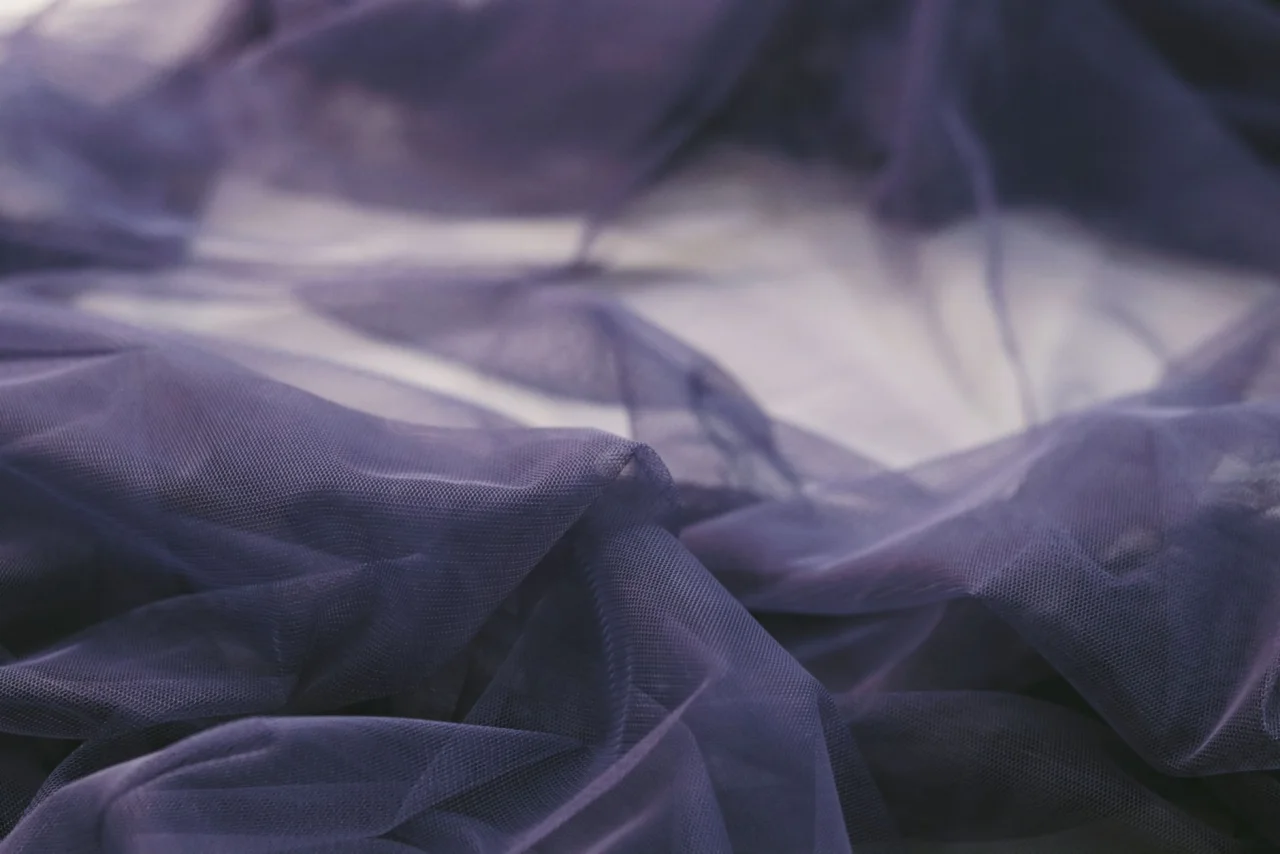
Fine net has long associations with lace-making and formal European dress. The name tulle comes from the town of Tulle in south-central France, known for lace and silk production in the eighteenth century, where early net of this kind is thought to have been made. The fabric appeared in Parisian ballet costumes, the classic tutu, before spreading into bridalwear and formal fashion around the world. In South Asian dress, net became a favourite for the sheer overlays, dupattas, and frilled festive pieces that call for lightness and movement.
The fibres net is made from
Net is defined by its mesh structure, not by one fibre, so what it is made of shapes its price, softness, and stiffness.
- Nylon net: Common, affordable, and springy. It holds a crisp shape, which suits frills and structured flares.
- Polyester net: The most widely used fibre today. Durable, colour-fast, and easy to care for, it is the backbone of most ready-to-wear festive net.
- Silk net: Rare, soft, and luxurious, with a gentler drape than the synthetics. It carries a much higher price.
- Rayon net: Uncommon, softer than nylon, and less springy.
Buying tip: Stretch a corner of the net gently and let go. Good net springs back to shape without distorting the holes. Very cheap net can feel scratchy against the skin, so if it will touch bare arms or the neck, check the softness before you buy.
How net behaves on the body
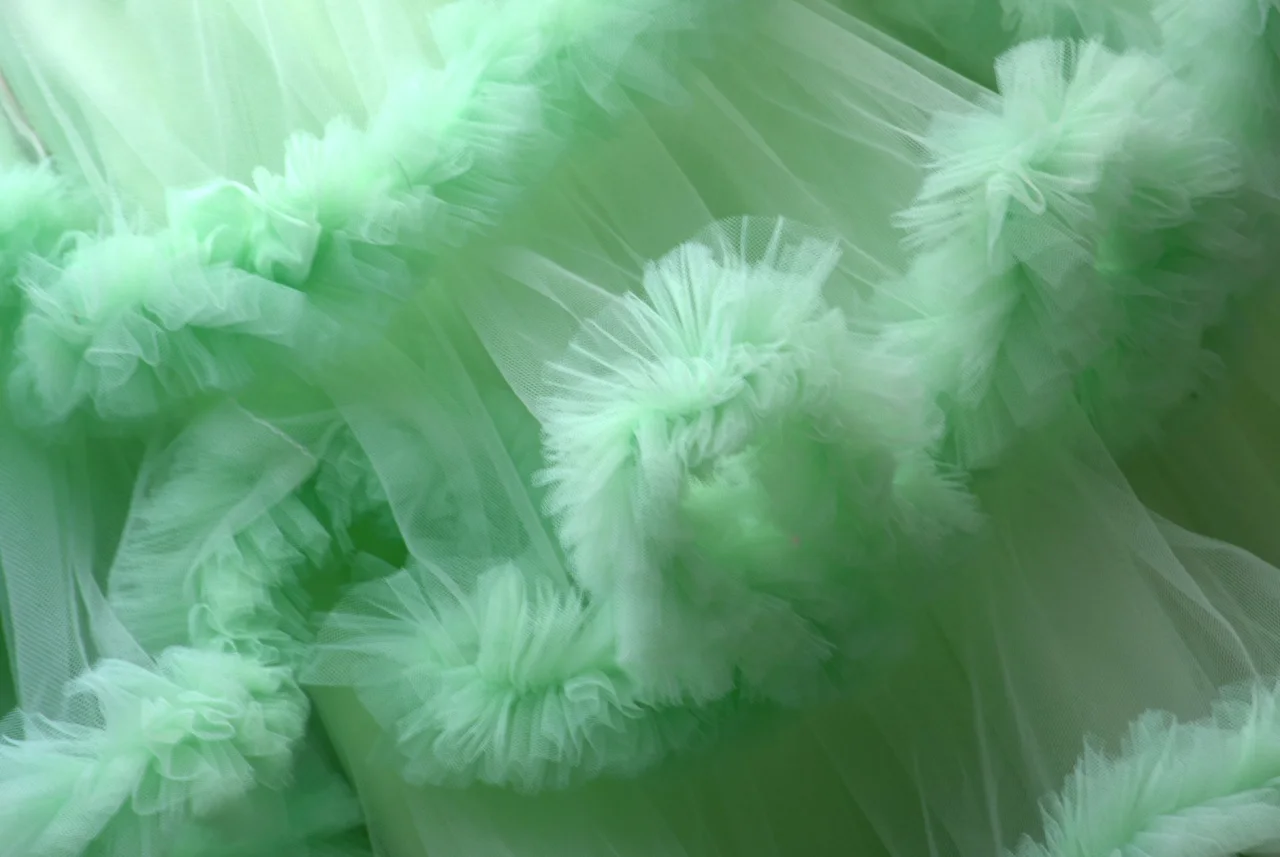
Net is sheer, lightweight, and airy. Because it is mostly open space, it has almost no warmth and it is completely see-through, which is why net garments are almost always built over a solid lining or worn as an overlay above a base outfit. Finer nets like tulle are soft and floaty; stiffer nylon nets hold volume, which is why they are used to build flared frills, standing ruffles, and full gathered skirts.
Net also takes embellishment differently from solid cloth. Embroidery, sequins, and cutwork sit on the mesh so the design appears to float against skin or a contrast lining, an effect that solid fabric cannot reproduce. That floating quality is a big part of net's appeal in party and bridal wear.
Where net shines in Pakistani wear
Net is a festive and formal fabric, prized wherever lightness, layering, and a touch of drama are wanted.
- Bridal and party lehengas: Net panels and overlays give lehengas their full, floating flare and are a natural stage for heavy handwork.
- Shararas and ghararas: Frilled net adds volume and movement to festive lower halves.
- Dupattas and overlays: A sheer embroidered net dupatta is a wardrobe staple for weddings and Eid.
- Maxis and gowns: Flowing net gowns over a satin or silk slip are a reception favourite.
- Sleeves and yokes: Net insets add a delicate, see-through detail to otherwise solid outfits.
For a full walk through of silhouettes, frills, and embellishments, see our companion guide on net fabric outfits and what sews and styles best.
Net versus its rivals
Net is often weighed against organza, the other sheer festive favourite. Net is an open mesh with visible holes and a softer, airier feel, while organza is a sheer woven with a crisp, glassy body. Our net vs organza comparison covers when to choose each, and if you want the organza fundamentals first, read what organza is, its properties, uses, and care. For soft, draping sheers rather than structured ones, chiffon is the closer cousin.
Common types of net
Net is a family of open-mesh fabrics rather than a single cloth, and the variety changes how stiff, soft, or fine it feels.
- Tulle: The finest and softest net, made of small-gauge thread in a tiny hexagonal pattern. It is often lightly starched and is what gives bridal veils and full gowns their cloud-like body.
- Nylon net: Springy and crisp, it holds shape well and is used for standing frills and structured flares.
- Bridal or embroidered net: A base net covered in sequin, dabka, or thread work, sold by the yard for lehengas and party wear.
- Fishnet and wide-mesh net: Coarser meshes with larger holes, used more for detailing and accents than full garments in desi wear.
- Silk net: A rare, soft, luxurious version with a gentler drape and a much higher price.
For most festive Pakistani outfits, a soft-to-medium synthetic net or an embellished bridal net is the practical choice, with tulle reserved for veils and full, romantic flares.
How to care for net
Net snags, pulls, and tears far more easily than a solid weave, so gentle handling is everything.
- Dry clean embellished pieces. Anything with sequins, stonework, or heavy embroidery is safest at a trusted dry cleaner, who can protect both the mesh and the handwork.
- Hand wash plain net gently. Use cool water and a mild detergent, swish rather than scrub, and never wring or twist. Press water out gently between your palms or a towel.
- Iron on the lowest heat, or not at all. Synthetic net melts under a hot iron. Use a cool setting with a pressing cloth, or hang the garment and steam lightly from a distance.
- Keep it away from rough surfaces and jewellery. Rings, bracelets, and velcro catch the mesh instantly. Handle it with clean, snag-free hands.
- Store it loosely. Hang net garments or roll them gently rather than folding under weight, which crushes frills and creases the mesh.
Styling note: Always plan the lining with the net, not after. The colour and finish of the slip underneath change how the net reads, so a nude lining makes embroidery appear to float on skin, while a contrast lining gives a bolder, layered effect.
Frequently asked questions
What is the difference between net and tulle?
Tulle is a fine, delicate type of net, netted in a small hexagonal pattern and often lightly starched to hold its shape. Standard net is a broader category of open-mesh fabric that can be coarser and stiffer. All tulle is net, but not all net is as fine as tulle.
Why do net outfits always need a lining?
Net is an open mesh, so it is completely see-through and provides no coverage or warmth on its own. Garments are built over a solid lining or worn as an overlay above a base outfit, which also lets embroidery on the net appear to float against skin or a contrast colour.
Is net a warm or cool fabric?
Net is airy and provides almost no warmth because it is mostly open space. That makes it comfortable in mild weather, but net outfits are usually layered over lined bases, so overall warmth depends on the lining and any embellishment rather than the mesh itself.
What is net fabric usually made of?
Most modern net is made from nylon or polyester, with polyester being the most common today because it is durable and colour-fast. Silk net exists but is rare and expensive, and rayon net is uncommon. The fibre affects softness, stiffness, and price.
How do I stop net from tearing?
Handle it gently and keep it away from rings, rough surfaces, and velcro, which snag the mesh. Hand wash plain net in cool water without wringing, dry clean embellished pieces, iron only on the lowest heat with a cloth, and store the garment hung or loosely rolled rather than crushed.
More on Fabrics
Have a question or a topic to suggest?
We read every message. Tell us what you would like to see next in the journal.
Get in touch