Organza vs Chiffon: Which Is Better?
Crisp structure versus fluid drape: two sheer fabrics compared, with a clear which-for-what verdict.
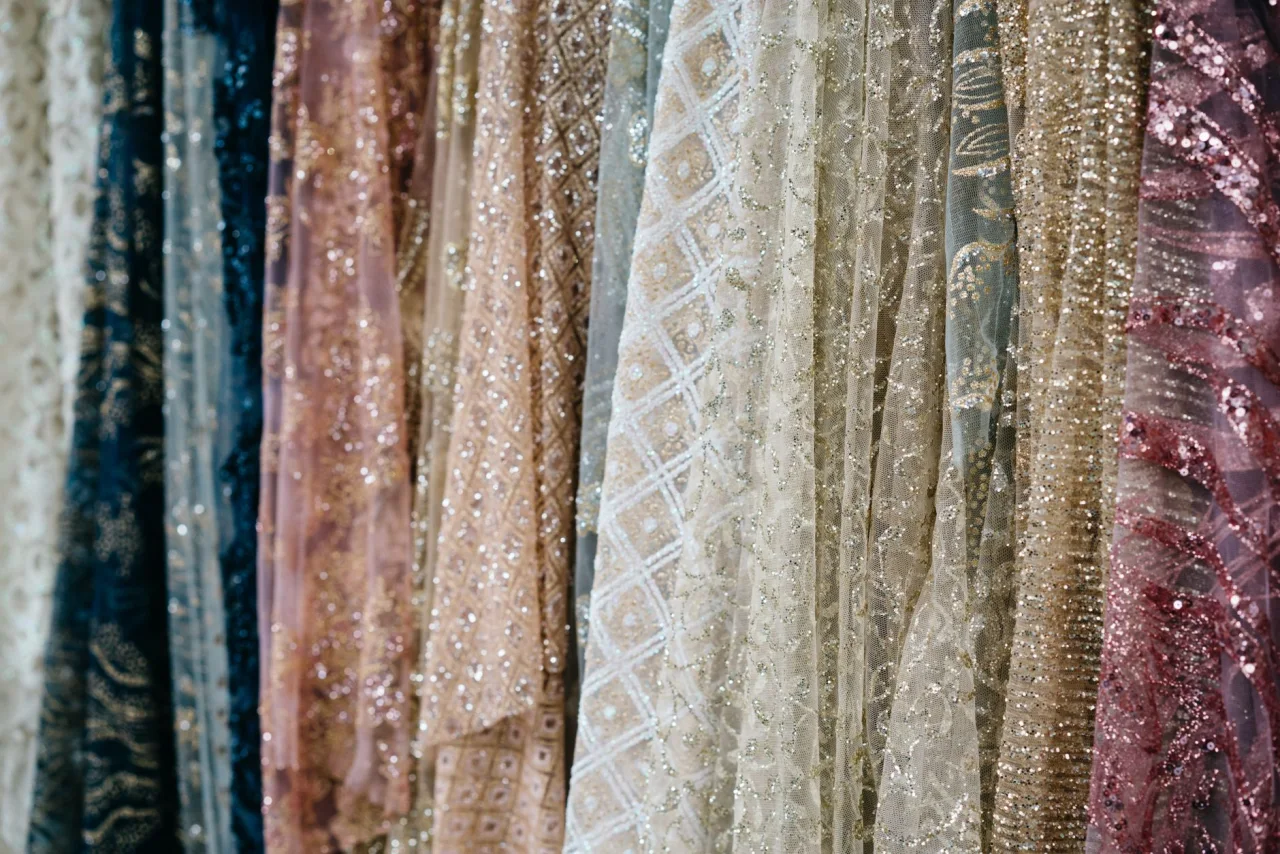
Organza and chiffon are both sheer, delicate and dressy, so it is easy to assume they are interchangeable. They are not. Organza is crisp and stands up on its own, while chiffon is soft and flows like water. Understanding that one difference tells you almost everything about which to pick. This comparison lays the two side by side and ends with a clear which for what verdict.
The short version
- Both are sheer, lightweight and traditionally made from silk, now often polyester or nylon.
- Organza is crisp and stiff, so it holds volume, structure and standout shapes.
- Chiffon is soft and fluid, so it drapes, gathers and flows against the body.
- Choose organza for structured volume (ruffles, capes, dupattas that stand); choose chiffon for soft drape (sarees, gowns, floaty dupattas).
What organza and chiffon actually are
Both fabrics are sheer and delicate, but they are built for opposite purposes.
Organza is a thin, plain weave, sheer fabric traditionally made from silk, and now often from synthetic filament fibres such as polyester or nylon. According to Wikipedia's overview of organza, it is defined by three qualities: a crisp hand, stiffness relative to its weight, and a slippery surface texture. Silk organza is woven in China, in the Bangalore area of India, and in France and Italy. That crispness is the whole point of the fabric.
Chiffon, by contrast, is a lightweight, balanced plain woven sheer fabric, like gossamer. As Wikipedia's entry on chiffon explains, the name comes from the French word chiffe, meaning cloth or rag. It is woven from alternate S twist and Z twist high twist yarns, and that twist puckers the fabric slightly in both directions after weaving, giving it some stretch and a slightly rough feel. Under magnification it resembles a fine net or mesh, which gives it transparency, and it drapes well with a soft, shimmery, sheer appearance. Early chiffon was pure silk and expensive; modern versions include nylon (introduced 1938) and polyester (1958).
For single fabric deep dives, see what organza is and what chiffon is.
Feel and hand: crisp versus fluid
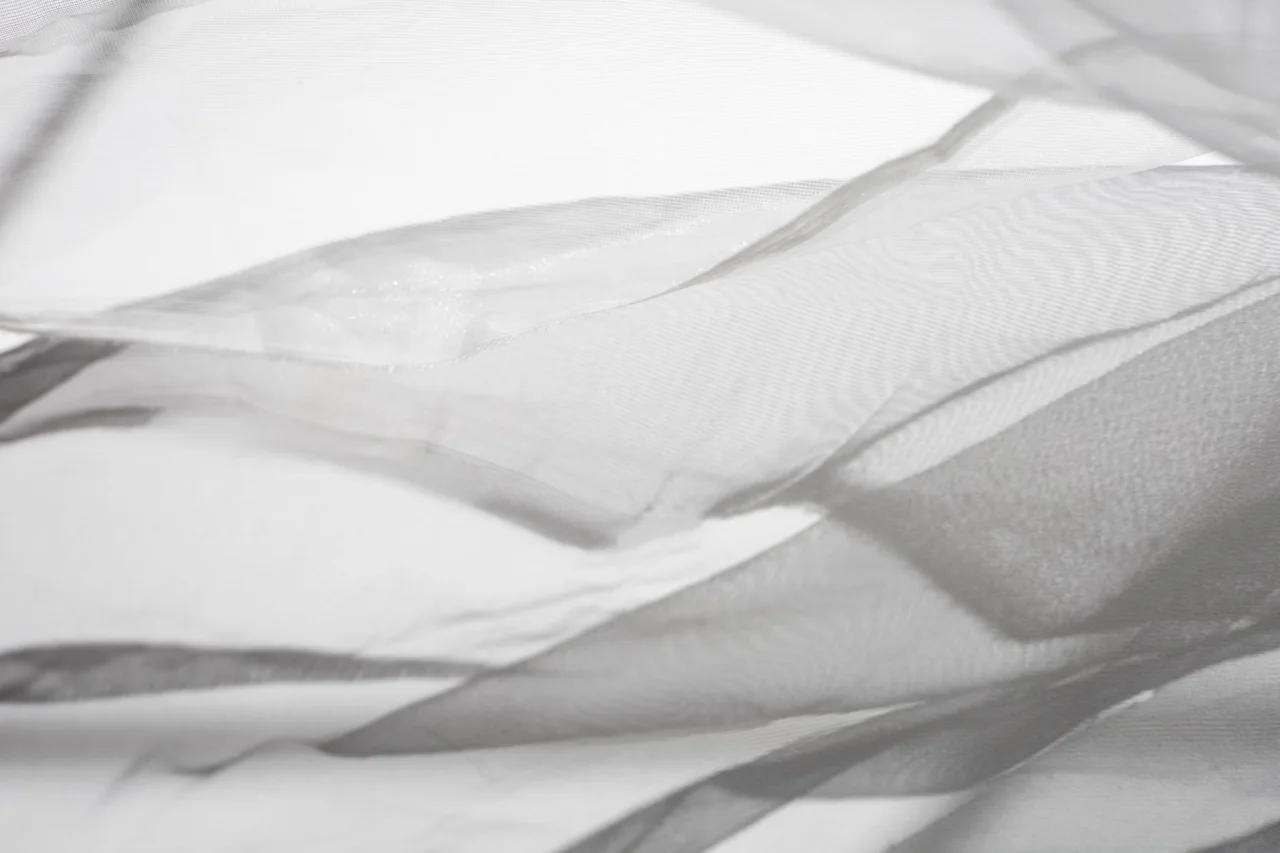
Pick both up and the difference is instant. Organza feels crisp, papery and springy. It resists your hand and wants to hold a shape, and a strip of it will stand out in the air rather than fall. Chiffon feels soft, slightly grainy and completely fluid. It pools in the palm and slips through the fingers, falling into soft folds the moment you let go. This single contrast, structure versus drape, drives every styling decision that follows.
Transparency and shine
Both are sheer, but they read differently:
- Organza is thin and sheer with a crisp, slightly shiny surface. Because it holds its shape, its sheerness looks structured and architectural, so it is often layered for a glassy, sculptural effect.
- Chiffon is sheer with a soft, shimmery, mesh like transparency. Its sheerness looks gauzy and romantic rather than crisp, which is why it is so often used as a floaty overlay.
Both are usually lined or layered for opacity in real garments, but the reason differs: organza to control its stiff volume, chiffon to back its gauzy transparency.
Stitching behaviour: how they tailor
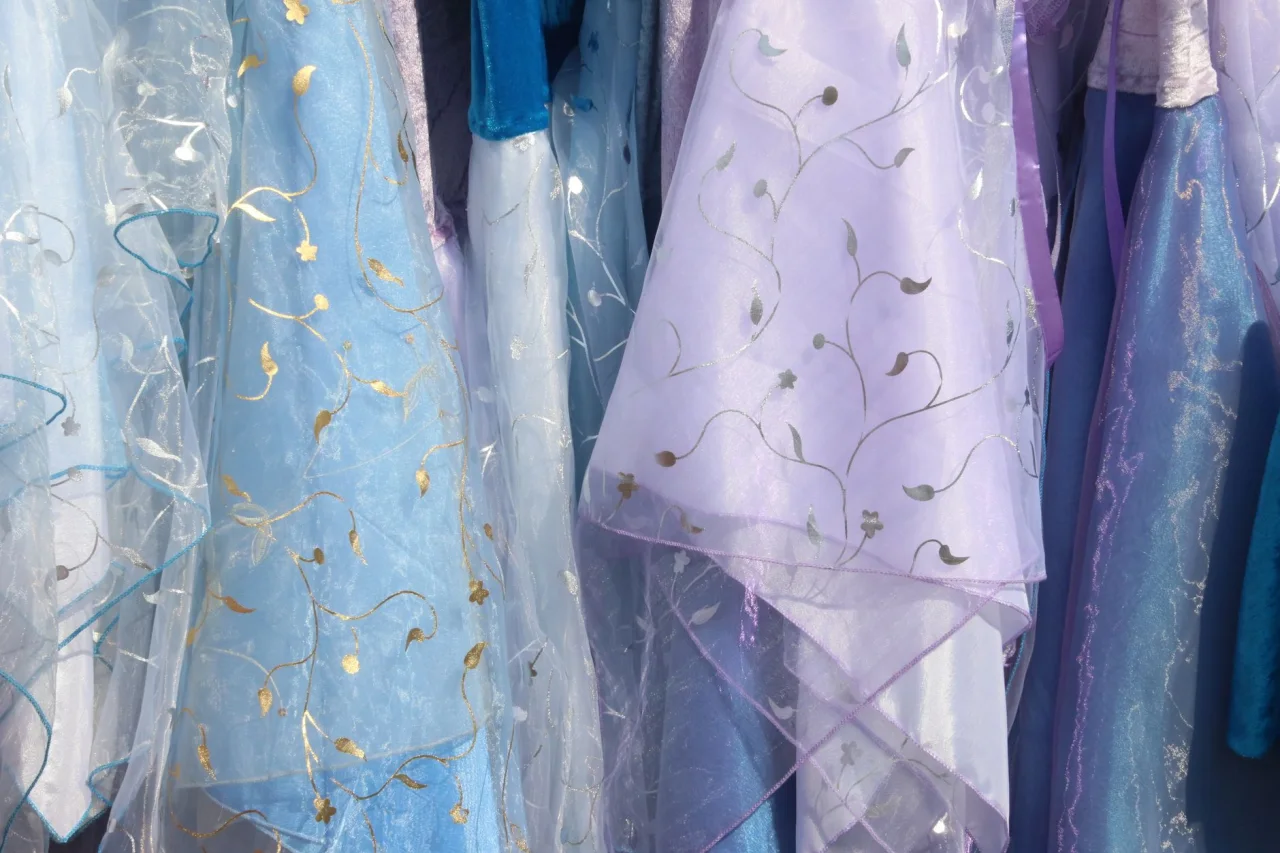
These two are among the trickier fabrics to sew, and in different ways:
- Organza frays readily at cut edges and its crispness can be unforgiving, but that same stiffness makes it brilliant for creating volume: ruffles, flares, structured sleeves, capes and dupattas that hold their shape without any inner support.
- Chiffon is slippery and shifts constantly under the needle, so it needs careful cutting, fine pins and patient handling, but it rewards the effort with beautiful soft drape, flowing gathers and fluid layers.
In short, organza builds shape and chiffon builds movement. You can see each in action in what organza sews and styles best and what chiffon sews and styles best.
Styling note
A simple rule of thumb: if you want the fabric to stand up, choose organza; if you want it to flow down, choose chiffon. A ruffled organza dupatta frames the face and holds its frill; a chiffon dupatta melts over the shoulder and trails. Both are lovely, but they do opposite jobs.
Which suits which outfit
Because their characters are so different, each fabric owns a distinct set of outfits:
- Organza excels at: structured dupattas, ruffled and flared sleeves, capes, layered lehenga skirts, statement gowns and any look that needs standout volume. It is a rising favourite for architectural festive and bridal details.
- Chiffon excels at: flowing sarees, floaty gowns, soft dupattas, layered anarkalis and breezy party wear. It is a classic saree and dupatta fabric in South Asia.
If you are weighing chiffon against its close cousin georgette instead, our comparison of chiffon versus georgette covers that pairing, and for organza against another sheer, see net fabric versus organza.
Price and care
On price, both follow the same logic: pure silk versions of either fabric are premium, while polyester and nylon versions are far more affordable, and the final cost of a garment depends much more on embellishment, brand and construction than on the base cloth. Prices vary by fabric quality, work, brand and region, so confirm current pricing before buying rather than assuming one is dearer.
On care, both are delicate and are usually best hand washed gently or dry cleaned, dried in shade, and ironed on a low heat with a pressing cloth. Organza's crispness can soften with washing, and chiffon's fine weave snags easily, so gentle handling matters for both.
Organza vs chiffon: the verdict
There is no overall winner, only the right tool for the look you want:
- Choose organza if: you want structure, volume and standout shapes, ruffles, capes, structured sleeves and dupattas that hold their form.
- Choose chiffon if: you want soft, fluid drape, flowing sarees, gowns and dupattas that fall and move against the body.
- For architectural, sculptural festive and bridal detail: organza.
- For romantic, floaty, drapey elegance: chiffon.
- For a saree specifically: chiffon drapes and pleats far more easily than stiff organza.
Buyer tip
Do the drape test in the shop. Hold a length of the fabric out horizontally over your hand. Organza will stay up and hold a crisp edge; chiffon will fall straight down in soft folds. That single gesture instantly confirms which fabric you are actually holding, no matter what the tag says.
Frequently asked questions
What is the main difference between organza and chiffon?
Organza is crisp and stiff, so it holds structure and volume, while chiffon is soft and fluid, so it drapes and flows. Both are sheer, lightweight fabrics traditionally made from silk and now often polyester or nylon, but organza stands up on its own whereas chiffon falls in soft folds.
Which is better for a saree, organza or chiffon?
For a soft, easy to drape saree, chiffon is usually better because it flows and pleats readily against the body. Organza sarees exist and look striking and structured, but their stiffness makes them harder to drape and pleat, so they feel more sculptural and less fluid.
Which fabric holds ruffles and volume better?
Organza. Its crisp hand and stiffness relative to weight let it hold ruffles, flares, structured sleeves and standout dupattas without any inner support. Chiffon is too soft and fluid to hold that kind of volume and instead falls into soft gathers.
Are organza and chiffon good for summer?
Both are lightweight and sheer, so they are not heavy to wear, but as synthetic versions (polyester or nylon) they can feel warm and less breathable than natural cottons in intense heat. Silk versions breathe better. They are chosen mainly for occasion and party wear rather than everyday summer comfort.
How do you care for organza and chiffon?
Both are delicate and are best hand washed very gently or dry cleaned, dried in shade and ironed on low heat with a pressing cloth in between. Organza can lose some crispness with washing, and chiffon snags easily on its fine mesh weave, so gentle handling protects both fabrics.
More on Fabrics
Have a question or a topic to suggest?
We read every message. Tell us what you would like to see next in the journal.
Get in touch