Mirror Work Suit: Best Designs 2026
Quality markers, occasion matching, fabrics and honest price ranges for mirror work salwar suits.

A good mirror work suit does something few other outfits manage: it catches light and moves with you, so a plain kurta becomes a talking point at a mehndi, an Eid lunch or a garden shaadi. But the market runs from carefully hand set shisha to glue backed plastic discs that fall off after one wash. This guide breaks down what actually makes a mirror work suit worth buying in 2026, which designs suit which occasion, and the price ranges to expect before you shop.
The short version
- Real quality lives in how the mirrors are anchored: hand stitched shisha with a thread ring lasts, glued discs do not.
- Match the density of mirror work to the event. Scattered mirrors read as daywear, all over yokes and borders read as festive.
- Cotton and lawn bases suit summer and casual days, while georgette, silk and velvet carry heavier work for weddings.
- Price is driven by hand versus machine work and base fabric. Treat online listings as ranges, not fixed figures, and confirm current pricing with the seller.
What counts as a mirror work suit
A mirror work suit is a two or three piece salwar kameez where small reflective discs, historically called shisha or abhla, are embroidered onto the fabric. The technique is old. According to Wikipedia's entry on shisha embroidery, the craft originated in India in the 17th century, with early versions using mica and beetle wings before tiny mirrors became common after Mughal era mirror manufacturing developed. Today the mirrors are usually machine cut glass with a silvered backing, held in place by a ring of stitches.
On a modern suit that heritage shows up in several forms: a densely worked neckline and yoke, mirror scattered sleeves, a bordered hem, or a dupatta edged in shisha. If you want the full background on the craft before you spend, our guide to what mirror work is, its history and how to spot quality is the best place to start.
How to judge quality before you buy
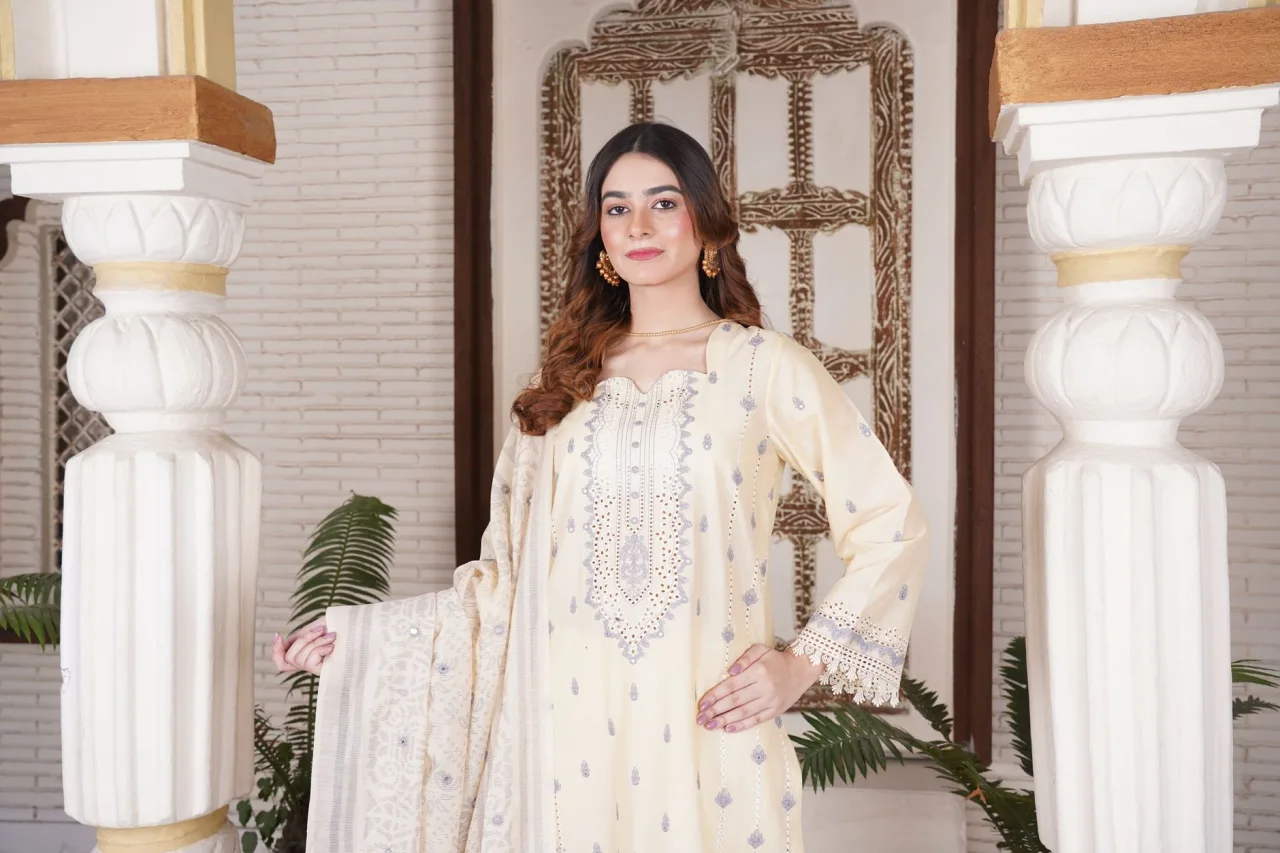
The single most useful test is the anchor. Turn the fabric over where you can and look at the back of a mirror. Hand set shisha shows a neat ring of thread stitches gripping the glass rim, often with chain or buttonhole stitch framing it on the front. Cheap suits skip this: the mirror is simply glued on, sometimes over a machine embroidered outline that only pretends to hold it. Glued mirrors pop off in the wash and leave bald patches.
- Mirror edges: real glass shisha has slightly beveled, reflective edges. Plastic sequins look flat and dull and scratch easily.
- Stitch tension: the surrounding thread should be even and snug, not loose loops you can lift with a fingernail.
- Base fabric weight: heavy mirror work needs a base that can carry it. Very thin fabric puckers around each disc.
- Finishing: check that thread ends are secured, seams are clean and the dupatta work matches the shirt.
Styling note
Mirror work already does the talking, so keep the rest simple. Pair a busy mirrored yoke with plain trousers and minimal jewellery. If you want to understand how machine and hand versions differ in feel and price, our piece on hand versus machine embroidery walks through the tells.
Designs worth buying in 2026
Rather than chase a fake trend leaderboard, buy the design that matches how you actually dress. These are the mirror work suit styles that reliably work across the year.
- Scattered mirror lawn suit: light cotton or lawn with mirrors dotted across the shirt. Reads as smart daywear and survives real summers.
- Mirror yoke straight suit: a densely worked neckline and chest panel on a plain straight kameez. Flattering, versatile, dinner ready.
- Mirror and gota border suit: shisha paired with gota trims on the hem and sleeves for festive weight without full coverage.
- All over mirror festive suit: georgette or silk carrying dense mirror work for mehndi and Eid nights.
- Mirror dupatta focus: a plain shirt with a heavily mirrored dupatta, so you can restyle the same suit multiple ways.
If your taste runs to trims and metallic work alongside mirrors, compare with a gota suit or a zari suit, which sit in the same festive bracket with a different finish.
Matching the suit to the occasion
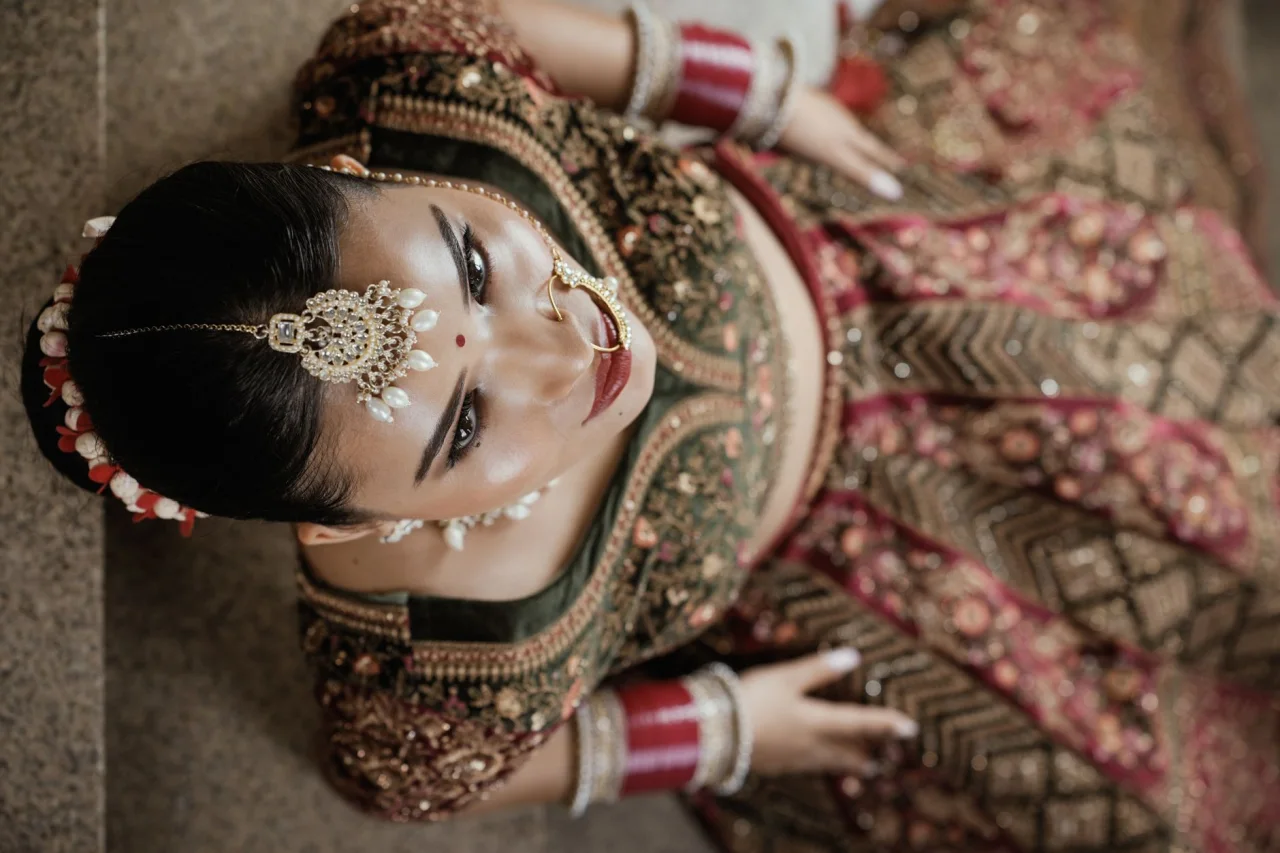
Density and base fabric do most of the work here. A scattered mirror lawn suit is right for daytime, office adjacent gatherings and casual Eid visits. A mirror yoke on georgette moves into dinners and engagements. Full mirror coverage on silk or velvet belongs at a mehndi, a wedding function or a festive night out. For a broader map of what suits which event, see our guide to festive wear ideas.
Colour matters as much as coverage. Mirrors reflect surrounding colour, so they read boldest on deep tones like emerald, wine, rust and black, and softest on pastels. If you are dressing for a specific function, our salwar kameez fit and fabric guide covers cut and proportion in detail.
Fabrics that carry mirror work well
The base changes both the look and the lifespan of a mirror work suit.
- Lawn and cotton: breathable, casual, ideal for summer scattered mirror work.
- Georgette: flows well and hides seams, good for medium to heavy festive work.
- Raw silk: structured and rich, holds dense mirror panels for formal wear.
- Velvet: winter friendly and dramatic, best for heavy occasion suits.
Embroidery, including goldwork and mirror embellishment, has always been carried on threads and bases chosen for the effect, as the general Wikipedia overview of embroidery notes when it lists beads, sequins and metallic threads among decorative materials.
Price ranges to expect
Price is driven by three things: hand versus machine work, base fabric, and stitched versus unstitched. As a rough guide, machine mirror work on lawn sits at the affordable end, hand set shisha on georgette or silk sits higher, and heavy all over hand work on premium fabric commands the most. These vary widely by fabric, work density and retailer, so treat any figure you see as a range and confirm current pricing before you commit. For smart shopping habits, our guide to where to shop affordable Pakistani dresses is useful.
Care so the mirrors survive
Mirror work rewards gentle handling. Hand wash or dry clean depending on the base, turn the suit inside out, and avoid wringing, which pops stitches. Iron on the reverse and never run a hot plate directly over the glass. Store folded flat or padded on a hanger so the mirrors do not press into each other. The same careful approach we recommend in storing heavy occasion wear applies to a mirrored festive suit.
Frequently asked questions
How can I tell if a mirror work suit is hand made or machine made?
Look at the back of a few mirrors. Hand set shisha shows an even ring of thread stitches gripping the glass, while machine or glued versions often have the mirror stuck over a printed or embroidered outline with no thread anchor. Hand work also has small natural irregularities, whereas machine work is perfectly uniform.
Are the mirrors real glass?
Better quality suits use machine cut glass discs with a silvered backing, which have reflective, slightly beveled edges. Cheaper suits substitute flat plastic sequins that look dull and scratch. Glass reflects light more crisply and lasts longer if handled with care.
Which fabric is best for a mirror work suit?
It depends on the occasion. Lawn and cotton suit casual summer wear, georgette and raw silk carry medium to heavy festive work, and velvet suits dramatic winter occasions. Match the base weight to how dense the mirror work is so the fabric does not pucker.
How do I wash a mirror work suit without losing mirrors?
Hand wash gently or dry clean based on the fabric, turn it inside out, and avoid wringing or scrubbing over the mirrors. Iron on the reverse and keep the hot plate off the glass. Store it flat or padded so mirrors do not press against each other.
What occasions suit a mirror work suit?
Scattered light mirror work suits daywear and casual Eid visits, a mirrored yoke works for dinners and engagements, and dense all over work belongs at mehndi functions, weddings and festive nights. Density and base fabric decide how dressy the suit reads.
More on Embroidery
Have a question or a topic to suggest?
We read every message. Tell us what you would like to see next in the journal.
Get in touch