Mirror Work Kurti: 2026 Picks
Shisha mirror embroidery from Gujarat and Kutch, for festivals, fusion daywear and relaxed celebrations.

A mirror work kurti brings the playful glint of shisha embroidery, tiny reflective discs stitched into the cloth, to an everyday, wearable garment. It carries a folk, boho energy rooted in the craft of Gujarat, Kutch and Sindh, yet it slips easily into modern fusion styling with jeans or palazzos. This guide covers the mirror work kurti designs worth buying in 2026, how to judge quality, honest price ranges, and the occasions each style suits.
The short version
- Mirror work, or shisha embroidery, secures small mirror discs to fabric with a frame of stitches, and it is associated with Gujarat, Kutch, Sindh, Rajasthan and Central India.
- A mirror work kurti reads as casual and festive at once, ideal for day events, fusion looks, festivals and relaxed celebrations.
- Quality shows in mirrors held by neat, secure stitch frames that sit flat; loose or glued mirrors are the main failure point.
- Prices vary widely by fabric, density of mirrors and whether the work is hand or machine done, so treat figures as ranges and confirm current pricing.
Why a mirror work kurti in 2026
Mirror work has a distinct personality: earthy, handmade and a little bohemian, quite different from the courtly gleam of gota or the soft tonal shadow of chikankari. That character makes a mirror work kurti one of the most versatile festive pieces in a wardrobe, because it never looks too formal. Since shisha secures small reflective discs with a frame of stitches, the sparkle is textural and catches the light as you move rather than lying flat like a print.
For 2026 the fresh direction is fusion. A cotton mirror work kurti worn with straight jeans, a short mirror kurti over palazzos, or a mirror yoke on a minimalist tunic all keep the craft alive in an everyday, contemporary way. The point is to let the mirrors be the accent, not to drown the garment.
What genuine mirror work looks like
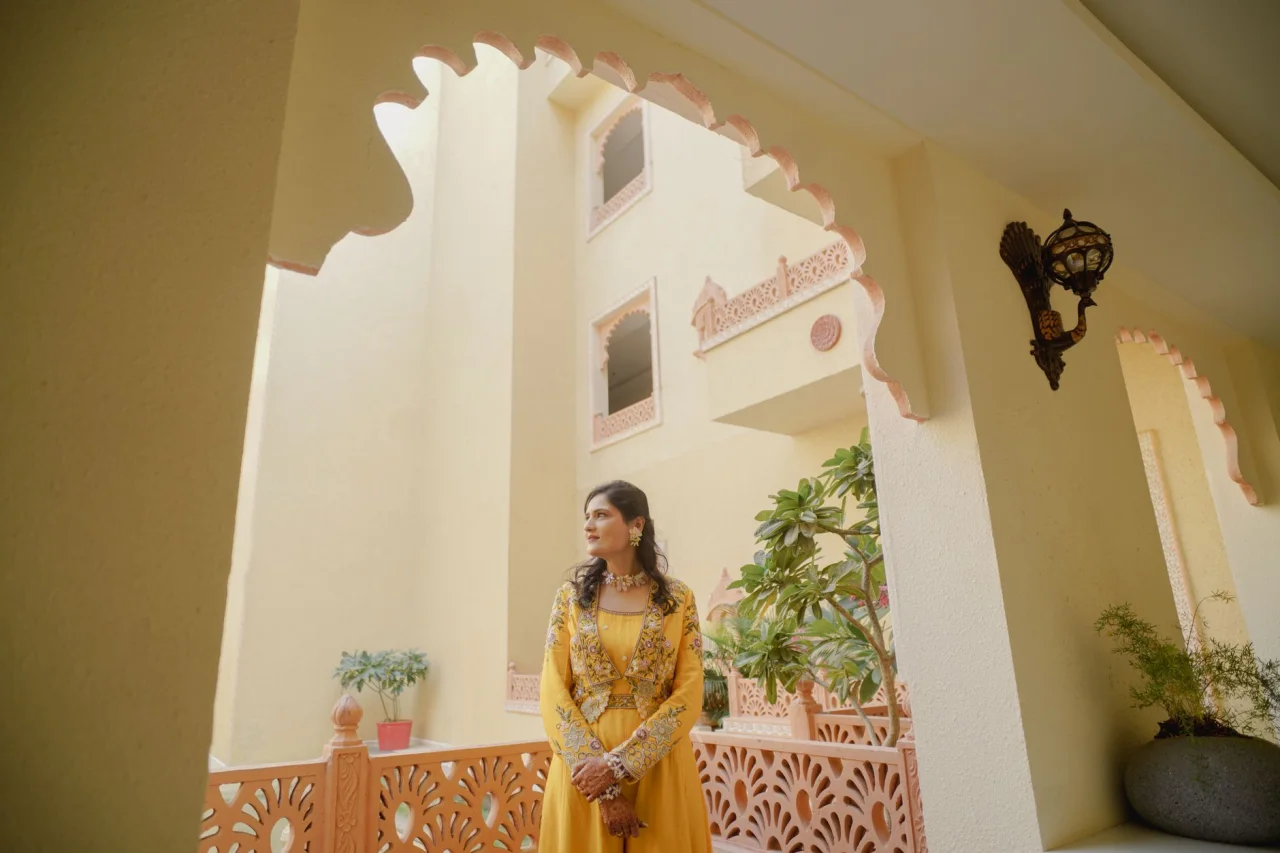
The craft has a long history: shisha embroidery is documented as originating in India in the seventeenth century, when lower income communities imitated jewelled garments using mica and beetle wings before manufactured mirror discs were adopted under the Mughal Empire. Today most mirrors are machine cut glass with a silvered backing, held to the cloth by stitches. When you assess a mirror work kurti, look for:
- Secure stitch frames. Each mirror should be held by a neat ring of embroidery, filling and ladder stitches or a buttonhole style frame, that grips the edge cleanly. Traditionally the mirror is caught entirely by thread with no adhesive.
- Flat, even mirrors. Discs should sit flush with the fabric, not pop up or tilt. Uneven mirrors suggest rushed work.
- No glue. Glued on mirrors fall off in the wash and leave marks. If a mirror lifts to reveal glue rather than stitches, quality is poor.
- Smooth edges. Well finished glass mirrors have smoothed edges so they do not cut the surrounding thread; sharp edges shorten the garment's life.
Mirror work kurti designs worth buying in 2026
These are honest, widely available directions rather than invented collections.
The Kutchi folk kurti
Dense mirror clusters combined with bright thread embroidery in the Kutch and Rajasthani tradition, on a cotton kurti. Bold, colourful and perfect for festivals and daytime celebrations.
Minimal mirror yoke kurti
A neat panel of mirrors on the yoke or neckline of an otherwise plain kurti. This is the most office and fusion friendly design, understated but distinctive.
Mirror and gota combination
Small mirrors paired with a slim gota border marry two crafts for a festive kurti that suits a dholki or Eid gathering. If that pairing appeals, compare it with a pure gota kurti to decide how much shine you want.
Monochrome mirror kurti
Mirrors set in tonal thread on a single colour ground, ivory, black or indigo, gives a contemporary, less folk reading that pairs beautifully with denim.
Styling note
Mirror work already sparkles, so choose earthy or oxidised jewellery rather than polished gold to keep the folk character. A dense Kutchi mirror kurti loves oxidised silver jhumkas and juttis; a minimal mirror yoke kurti looks sharp over straight jeans with simple studs. For more day to night ideas, see our guide to styling a kurti for every occasion.
Fabrics that carry mirror work kurtis best

- Cotton and khadi: the traditional and most breathable ground, ideal for folk and daytime kurtis.
- Rayon and viscose: fluid and affordable, common in casual mirror kurtis.
- Georgette: dressier and flowing, better for evening mirror kurtis, though mirrors need firm stitching on soft cloth.
- Silk and raw silk: lift mirror work into a more formal register for occasions.
To explore cuts and lengths before choosing embroidery, browse our roundup of kurti designs trending in 2026. As Wikipedia explains, the kurti is a shorter, lighter women's version of the kurta, which is why it carries an accent panel of mirrors so easily.
Hand versus machine mirror work
This distinction drives both price and character:
- Hand mirror work catches each mirror in a hand stitched frame, with small natural variations and a soft feel. It costs more and reads as authentic craft.
- Machine mirror work uses uniform stitch rings and often a backing, producing even, repeating placement. It is cheaper and fine for casual wear but lacks the depth of handwork, and cheaper versions may rely on partly glued mirrors that do not last.
Honest price ranges
Mirror work kurti pricing depends on hand versus machine work, mirror density and fabric. As orientation only, always to be confirmed with the seller:
- Machine mirror on rayon or cotton: the budget everyday end.
- Hand or dense mirror with thread work on cotton or khadi: a mid step, the sweet spot for festivals and day events.
- Fine hand mirror work on silk or georgette: the top end, suitable for occasions.
Prices vary widely by fabric, density of mirrors, hand or machine work, brand and retailer, so confirm current pricing before buying.
Occasions each style suits
- Festivals and Navratri: dense Kutchi mirror and thread on cotton.
- Office and fusion daywear: minimal mirror yoke over jeans or trousers.
- Dholki and Eid gathering: mirror and gota combination.
- Evening dinner: fine mirror work on silk or a monochrome ground.
Caring for a mirror work kurti
Mirrors and their stitch frames are the vulnerable part. Turn the kurti inside out and hand wash gently in cool water with mild detergent, or dry clean pieces with dense or delicate mirror work. Never wring or scrub, as that stresses the stitch frames and can crack glass mirrors. Dry in shade, and iron on the reverse or under a cloth so the iron never touches the mirrors directly, since heat can dull or crack them. Store folded rather than crushed, and keep it away from rough surfaces and jewellery that can snag the threads holding the mirrors.
Mirror work beyond the kurti
If you love the craft and want it in a fuller form, mirror work scales up gracefully. A coordinated mirror work suit spreads the sparkle across kameez, dupatta and trouser for a complete festive outfit, while a mirror work lehenga takes the folk glamour into wedding and mehndi territory. Many buyers begin with a versatile kurti and add the heavier pieces for specific occasions.
Frequently asked questions
What is a mirror work kurti?
A mirror work kurti is a kurti decorated with shisha embroidery, in which small reflective mirror discs are secured to the fabric with a frame of stitches. The craft is associated with Gujarat, Kutch, Sindh, Rajasthan and Central India, and it gives a kurti a folk, textural sparkle that suits festivals, day events and fusion styling.
How do I know if mirror work is good quality?
Each mirror should be held by a neat, secure ring of stitches and sit flat and flush with the fabric, with smoothed edges. Avoid pieces where mirrors are glued rather than stitched, since glued mirrors fall off in the wash and leave marks. Hand work shows small natural variations, while cheap machine work can rely on partly glued mirrors that do not last.
Can I wear a mirror work kurti casually?
Yes, that is one of its strengths. A minimal mirror yoke kurti pairs easily with straight jeans or trousers for office or fusion daywear, while a denser mirror and thread kurti suits festivals and daytime celebrations. Choosing earthy or oxidised jewellery over polished gold keeps the relaxed, folk character.
How much does a mirror work kurti cost?
It varies widely. Machine mirror work on rayon or cotton sits at the budget end, hand or dense mirror with thread work on cotton or khadi is a mid step, and fine hand mirror work on silk or georgette reaches occasion pricing. Cost depends on fabric, mirror density, hand or machine work, brand and retailer, so always confirm current pricing.
How do I wash a mirror work kurti without ruining it?
Turn it inside out and hand wash gently in cool water with mild detergent, or dry clean dense or delicate pieces. Do not wring or scrub, since that stresses the stitch frames and can crack the mirrors. Dry in shade and iron on the reverse or under a cloth so the iron never touches the mirrors directly, and store folded rather than crushed.
More on Embroidery
Have a question or a topic to suggest?
We read every message. Tell us what you would like to see next in the journal.
Get in touch