The Complete Mayun Dress Guide
Colours to wear and avoid, how formal to go, ubtan-safe fabrics and a shopping checklist for the yellow ceremony.
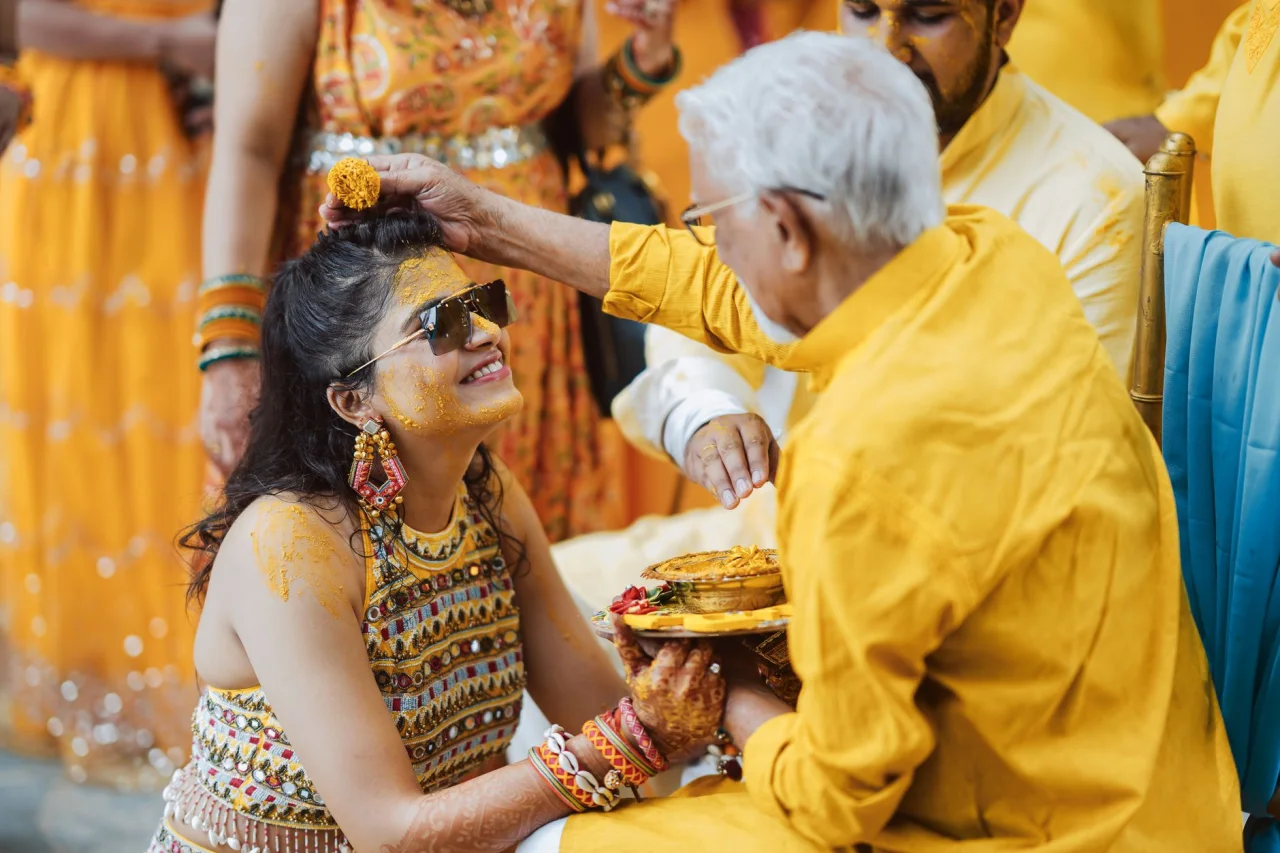
The mayun trips people up because it looks casual but still has rules. Wear the wrong fabric and a splash of turmeric ends the outfit; wear something too grand and you are the only person who cannot sit on the floor. This guide walks through the etiquette of the mayun dress: which colours to lean into, what to avoid, how formal to go, and how to finish the look, with a quick checklist you can shop from.
The short version
- Mayun is casual to semi-formal. Comfort and stain-forgiveness beat grandeur here.
- Yellow is the traditional theme; extend it to marigold, lime, ivory and coral rather than fighting it.
- Skip pure silk and heavy zardozi near the ubtan. Turmeric stains for good.
- Let flowers lead the styling: gjra, floral kalire and light jewellery over heavy gold.
What the mayun is, and why the dress code is relaxed
The mayun (or mayoun) is a pre-wedding ceremony where relatives apply ubtan, a paste of turmeric and gram flour, to the bride or groom for a natural pre-wedding glow. Because turmeric is central, yellow became the traditional colour, and because the ceremony is intimate and hands-on, often with the guest of honour seated on the floor, the dress code is deliberately low-key. It usually falls near the mehndi in the wider Pakistani wedding sequence, and in many families the two are now combined. If you want the full outfit inspiration list, our mayun dress ideas for 2026 pairs with this guide.
Colours to wear, and which to skip
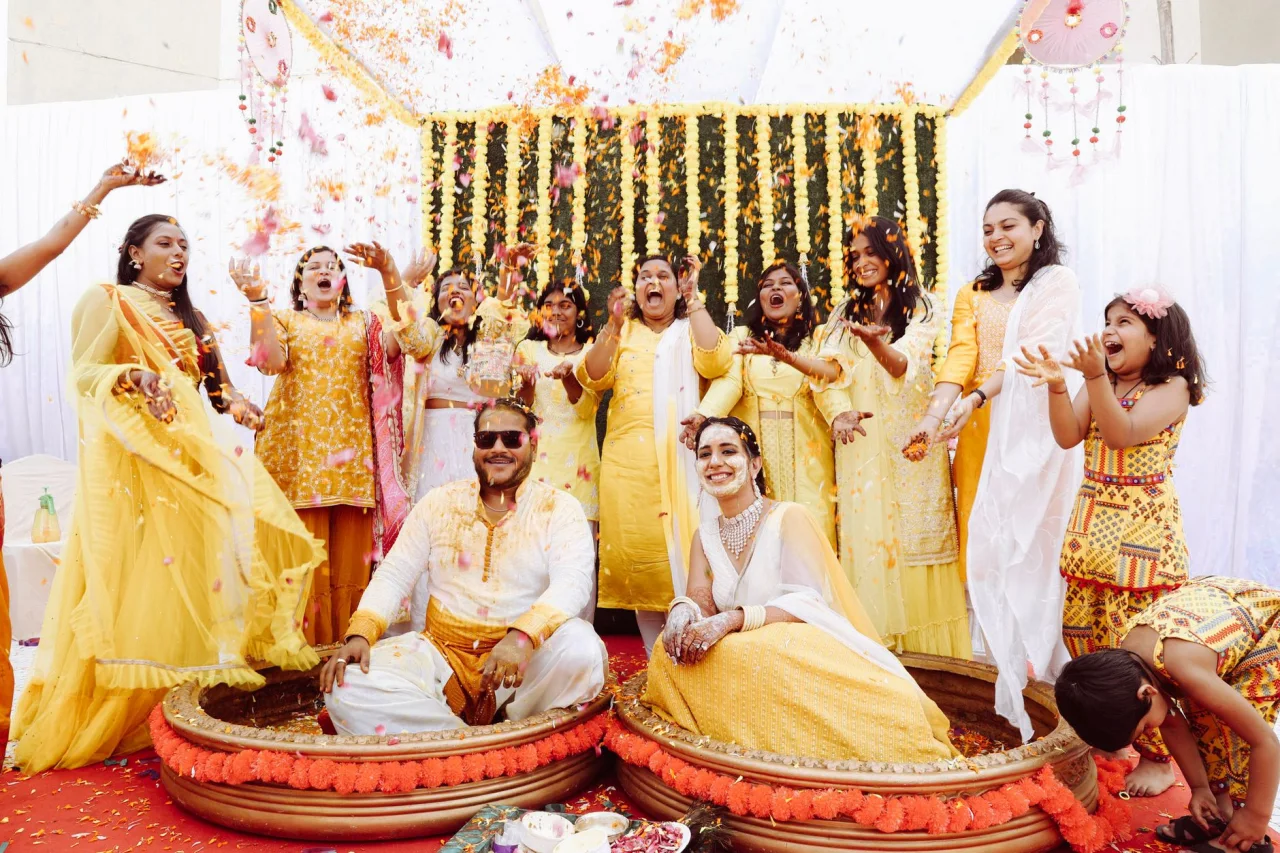
The mayun palette is one of the friendliest in the wedding week, but it helps to know the logic:
- Wear: yellow in all its forms, marigold, mustard, lemon, lime, ivory with yellow accents, and soft coral or peach for a modern twist.
- Wear with care: greens and oranges, which sit beautifully with yellow but can start to look like a mehndi outfit if very bright. Fine if the events are combined.
- Usually skip: bridal red and deep maroon, which are traditionally saved for the nikah, barat or walima, so wearing them at mayun can look out of step.
- Guests: avoid stealing the yellow spotlight with a heavily bridal look; a lighter festive shade is the safer, kinder choice.
How formal should a mayun outfit be?
Aim for casual to semi-formal. A printed lawn or cotton kurta set, a light gharara, an angrakha or a simple kalidar frock all hit the mark. Save the heavily worked formals for the events with a stage and a seated bride on a sofa. As a rule of thumb: if you could not comfortably sit cross-legged in it for two hours, it is too formal for a traditional mayun.
Timing shifts the brief slightly. A daytime garden mayun suits lighter fabrics and softer, sunlit shades like lemon and ivory, while an evening mayun can carry a deeper marigold or mustard and a touch more shimmer without tipping into full formalwear. Season matters too: a summer mayun rewards breathable cotton, lawn and cambric that keep you cool through a long ceremony, while a winter one can take cotton-silk or a light raw silk. Whatever the time of day, keep the base layer comfortable and let any richer element be something you can add or remove, so one outfit carries you from the ubtan through to the photos.
Fabric rule that saves outfits
Turmeric ubtan stains permanently. Choose washable, breathable fabrics like cotton, lawn, cambric and cotton-silk. If you love a rich piece, wear the heavy element as a dupatta or jacket you can take off before the ubtan starts, and keep the base layer replaceable.
Choosing the right silhouette
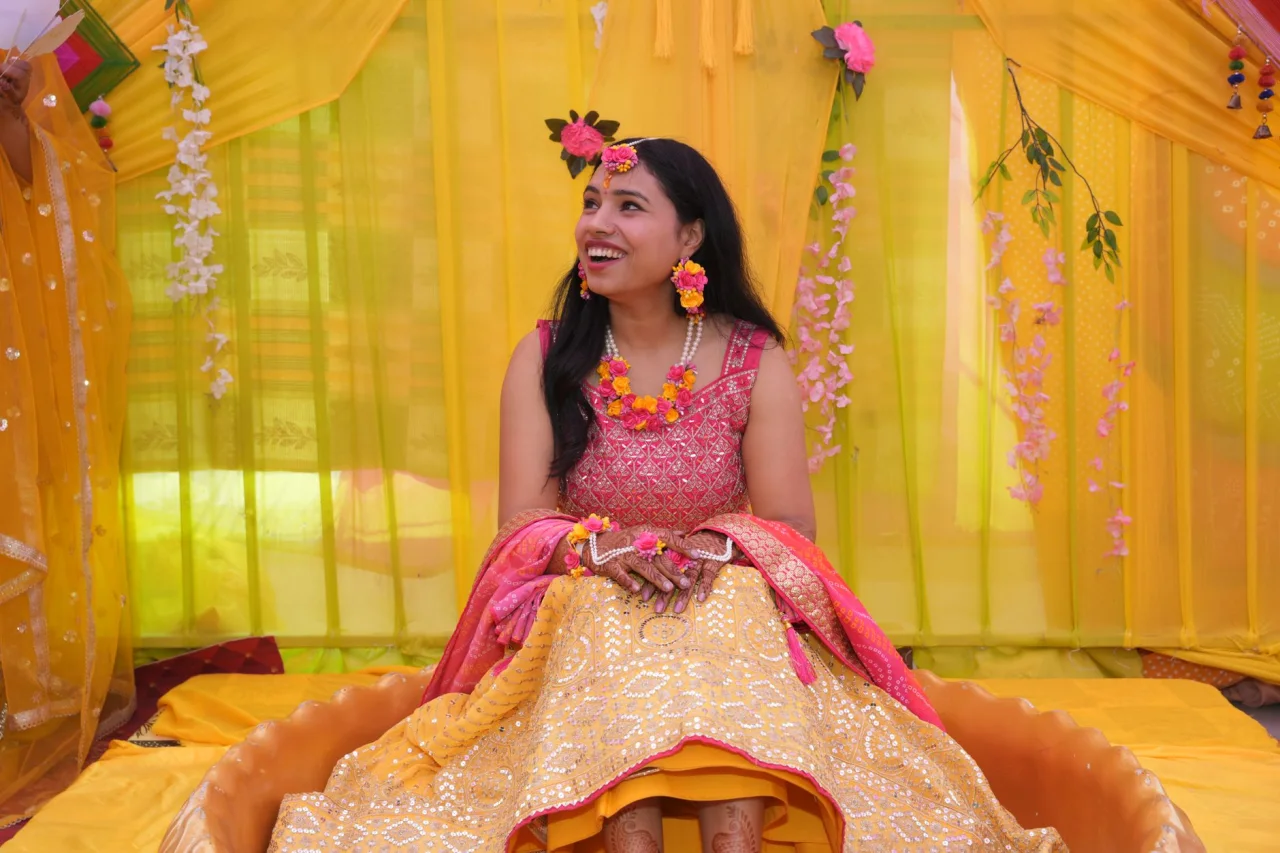
Because you will be sitting, moving and probably getting a little messy, the cut matters as much as the colour:
- Kurta sets and shalwar kameez: the most practical, endlessly forgiving choice.
- Gharara and sharara: festive and floor-friendly; keep the top light. See how to wear one in our gharara styling guide.
- Angrakha and kalidar frocks: comfortable, twirl-friendly and photogenic.
- Maxis: a single flowing piece that needs no matching.
For a rounder tour of what suits different frames, our gharara buying guide covers fit in more depth.
Jewellery, flowers and finishing touches
The mayun is the one wedding event where flowers usually beat metal. Fresh floral jewellery photographs wonderfully against yellow and keeps the mood soft:
- Flowers: gjra on the wrists or hair, floral kalire, a floral maang tikka, and marigold or jasmine strands.
- Light metal: small jhumkas or studs, thin bangles mixed with floral ones.
- Hair and make-up: keep it dewy and fresh; heavy glam can look mismatched with a casual daytime ceremony.
- Save for later: polki, kundan and heavy gold sets belong at the nikah and walima, not here.
A quick mayun dress checklist
- Colour is yellow or a yellow-family shade (marigold, lemon, ivory with accents, coral).
- Fabric is washable and breathable (cotton, lawn, cambric, cotton-silk).
- You can sit comfortably on the floor for a long ceremony.
- Any heavy or delicate piece is removable before the ubtan starts.
- Styling leans on fresh flowers, with light jewellery only.
- As a guest, you are festive but clearly not out-dressing the bride.
Budget and where to shop
Because mayun outfits skew casual, this is the event where you can spend the least across the whole wedding. Prices vary by fabric, handwork and retailer, so confirm current pricing before buying, but as broad brackets:
- High-street festive and ready-to-wear: roughly PKR 4,000 to 15,000.
- Boutique and semi-formal: roughly PKR 15,000 to 45,000.
- Designer or heavily worked: PKR 60,000 and upward, mostly reflecting embroidery hours.
Given the ubtan risk, many families deliberately spend less on the mayun outfit and more on the walima reception, which is a sensible split. Renting or borrowing is also perfectly reasonable for a mayun, since the outfit is worn briefly and casually, and a well-chosen ready-to-wear piece with fresh floral styling often photographs just as beautifully as a pricier one. If you are new to fabric names, our guide to lawn fabric explains why it dominates warm-weather occasion wear.
Dressing when mayun and mehndi are combined
Many families now hold the mayun and mehndi together to save a day, which changes the outfit brief. A combined event usually leans a little more festive than a standalone mayun, because the henna celebration brings music, dancing and a livelier mood. If your event is combined, you can push the colour brighter, add green or orange to the yellow, and choose a slightly more worked piece, since there is no long floor-seated ubtan to protect against in the same way.
The safest strategy for a combined event is a layered look: a comfortable, stain-tolerant base with a heavier dupatta or jacket you can add once the ubtan portion is over. That way you are practical for the turmeric and photo-ready for the dancing. If you are unsure how bright to go, our mehndi dress guide sets out the more colourful end of the spectrum so you can find a middle ground between the two events.
Common mayun dress mistakes to avoid
- Choosing a fabric you cannot wash. Turmeric is unforgiving, so a delicate or dry-clean-only base near the ubtan is a gamble.
- Dressing too formally. If you cannot sit on the floor comfortably, the piece is wrong for a traditional mayun.
- Wearing bridal red as a guest. It reads as a barat or walima colour and can look out of step at a yellow ceremony.
- Forgetting the flowers. Fresh floral jewellery is what makes a simple yellow outfit feel finished.
- Leaving styling to the last minute. Gjra and fresh flowers need to be ordered ahead, especially in wedding season.
Frequently asked questions
Is yellow compulsory for a mayun?
No, but it is strongly traditional because the ceremony revolves around turmeric ubtan. If you prefer, stay in the yellow family with marigold, lemon or ivory with yellow accents, or add a modern coral or peach. Bridal red is best saved for later events.
Can guests wear a lehenga or gharara to a mayun?
Yes, as long as it stays festive rather than fully bridal. A light gharara or a simple lehenga in a mayun-friendly colour is fine; just avoid heavy red or maroon bridal pieces that could overshadow the bride.
What should the groom wear to his mayun?
A relaxed kurta or shalwar kameez, often in yellow, white or ivory, sometimes with a light waistcoat. Like the bride, the groom sits for ubtan, so comfortable, washable fabric is the priority.
How is the mayun dress different from the nikah and walima?
Mayun is the most casual, built around yellow and comfort. The nikah leans elegant and modest, and the walima is the most glamorous reception look. Planning all three at once helps you avoid repeating colours and silhouettes.
What jewellery suits a mayun?
Fresh floral jewellery is the classic choice: gjra, floral kalire, a floral tikka and light earrings. Keep heavy gold, polki and kundan for the formal events later in the week.
More on Wedding & Occasion Fashion
Have a question or a topic to suggest?
We read every message. Tell us what you would like to see next in the journal.
Get in touch