What Is Jacquard?
The fabric where the pattern is woven in, not printed: history, properties, uses and care.
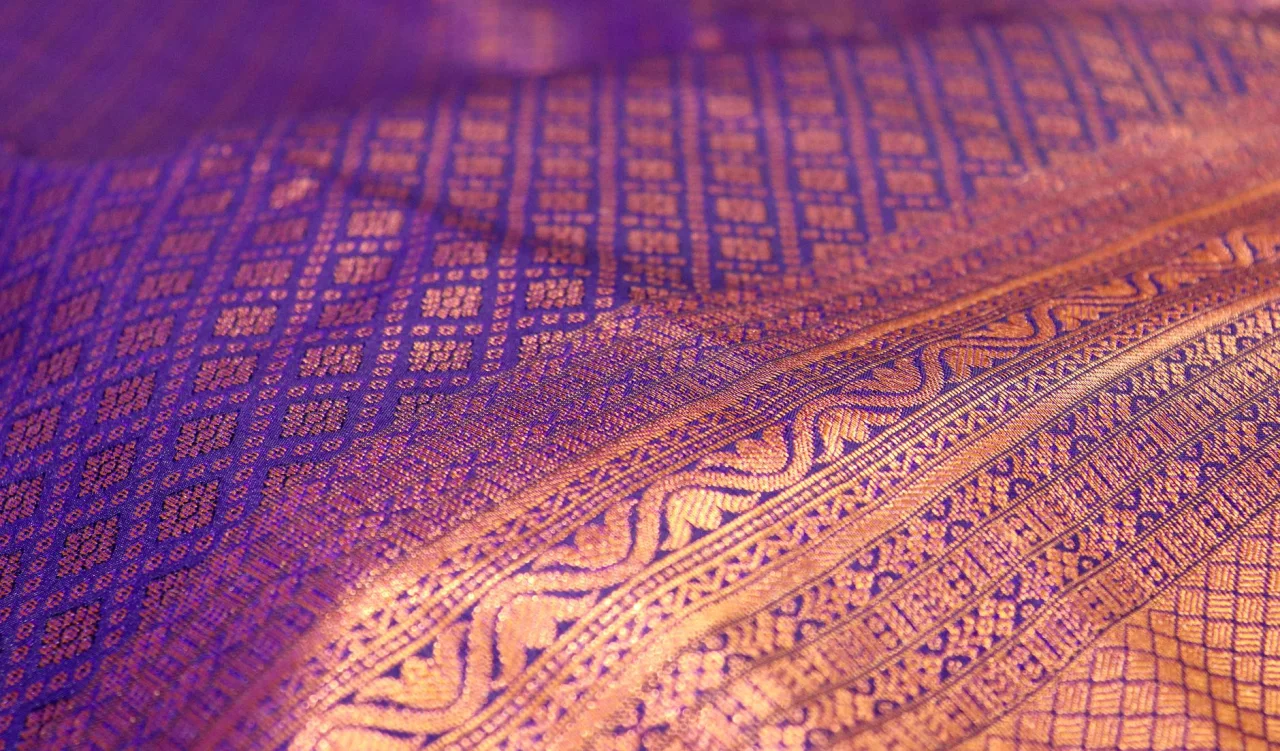
Jacquard is the fabric where the pattern is woven right into the cloth, not printed on top. That single fact explains its rich, raised motifs, its self-toned elegance and its place in festive and formal desi wardrobes. This guide explains what jacquard is, where the name comes from, how it behaves, what it is used for and how to care for it so the design stays crisp for years.
The short version
- Jacquard is not a fibre but a way of weaving. The design is built into the cloth on a special loom, so it appears on both sides.
- It is named after Joseph Marie Jacquard, who patented his loom mechanism in 1804.
- The technique produces rich woven patterns and underpins fabrics like brocade and damask.
- It suits festive and formal desi wear. Store carefully, dry clean or wash gently, and never crush it flat.
What jacquard really is
The most important thing to understand is that jacquard describes a weaving method, not a specific fibre. A jacquard fabric can be made from cotton, silk, polyester, viscose or blends. What makes it jacquard is that the motif is woven directly into the base using a special loom mechanism, rather than printed, embroidered or dyed on afterwards. That is why a true jacquard shows its pattern in the structure of the cloth, often visible in reverse on the back, and why the design has a subtle raised, textured quality you can feel with your fingertips.
This is the key to telling jacquard apart from a printed lookalike. On a print, the pattern sits flat on the surface and the reverse is usually blank. On a jacquard, the motif is part of the weave, so the fabric has depth, dimension and a self-toned richness even before any embroidery is added.
Where the name comes from
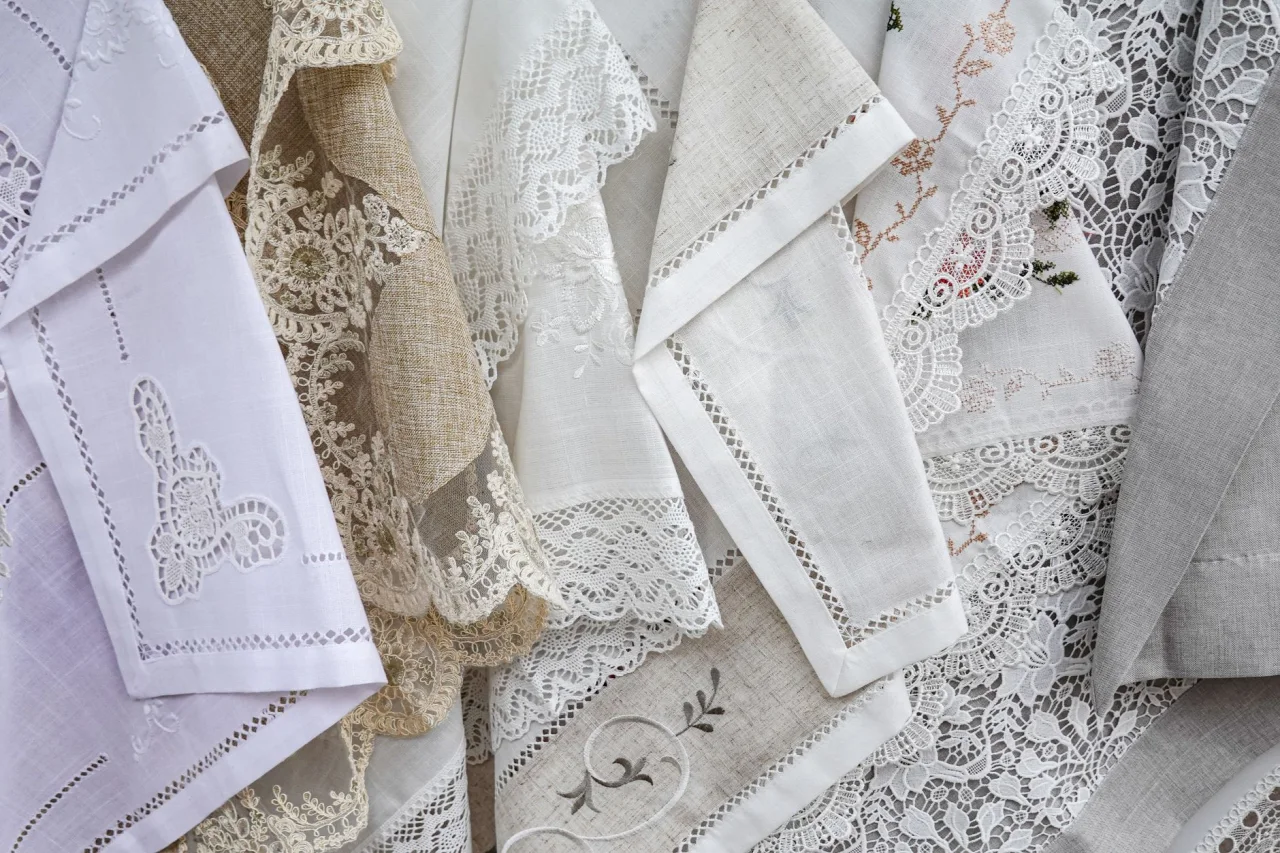
The fabric is named after a real inventor and a genuine leap in textile technology. According to Wikipedia's account of the Jacquard machine, Joseph Marie Jacquard patented his loom control mechanism in 1804, building on earlier work by Bouchon, Falcon and Vaucanson. The machine used a chain of punched cards, each card controlling one row of the design, to raise specific threads automatically. For the first time this allowed the automatic production of complex, repeatable woven patterns that had previously needed slow, skilled hand labour.
That mechanism is the ancestor of a whole family of patterned cloths. As the same source explains, the jacquard technique enables textiles such as brocade, damask and matelasse. It is a genuinely historic invention: the punched-card system even influenced early computing. When you wear jacquard, the raised motif in the weave is the direct descendant of that 1804 loom.
Brocade, damask and the jacquard family
Because jacquard is a technique, it produces several named fabrics that people often treat as separate:
- Brocade: a richly decorative, shuttle-woven fabric, often in coloured silks and sometimes with gold or silver threads. According to Wikipedia's brocade entry, modern brocade is largely woven on a jacquard loom to create complex, tapestry-like designs. In desi fashion, brocade is a wedding and festive favourite.
- Damask: a reversible patterned fabric where the design is created by contrasting matte and glossy areas of the same weave, classically used for elegant, self-toned motifs.
- Matelasse: a jacquard with a quilted, raised surface effect.
For everyday shopping in South Asian markets, the word jacquard usually points to a fabric with a woven all-over motif that is more affordable than heavy silk brocade but shares the same self-patterned richness. Knowing they belong to one family helps you shop with clear expectations.
Buying tip: check the back of the cloth
The quickest way to confirm a genuine jacquard is to turn it over. A true woven jacquard shows the pattern in reverse on the back, because the motif is part of the structure. If the reverse is blank white and the design only sits on the surface, you are looking at a print, not a jacquard, and it should be priced accordingly.
The properties that define jacquard
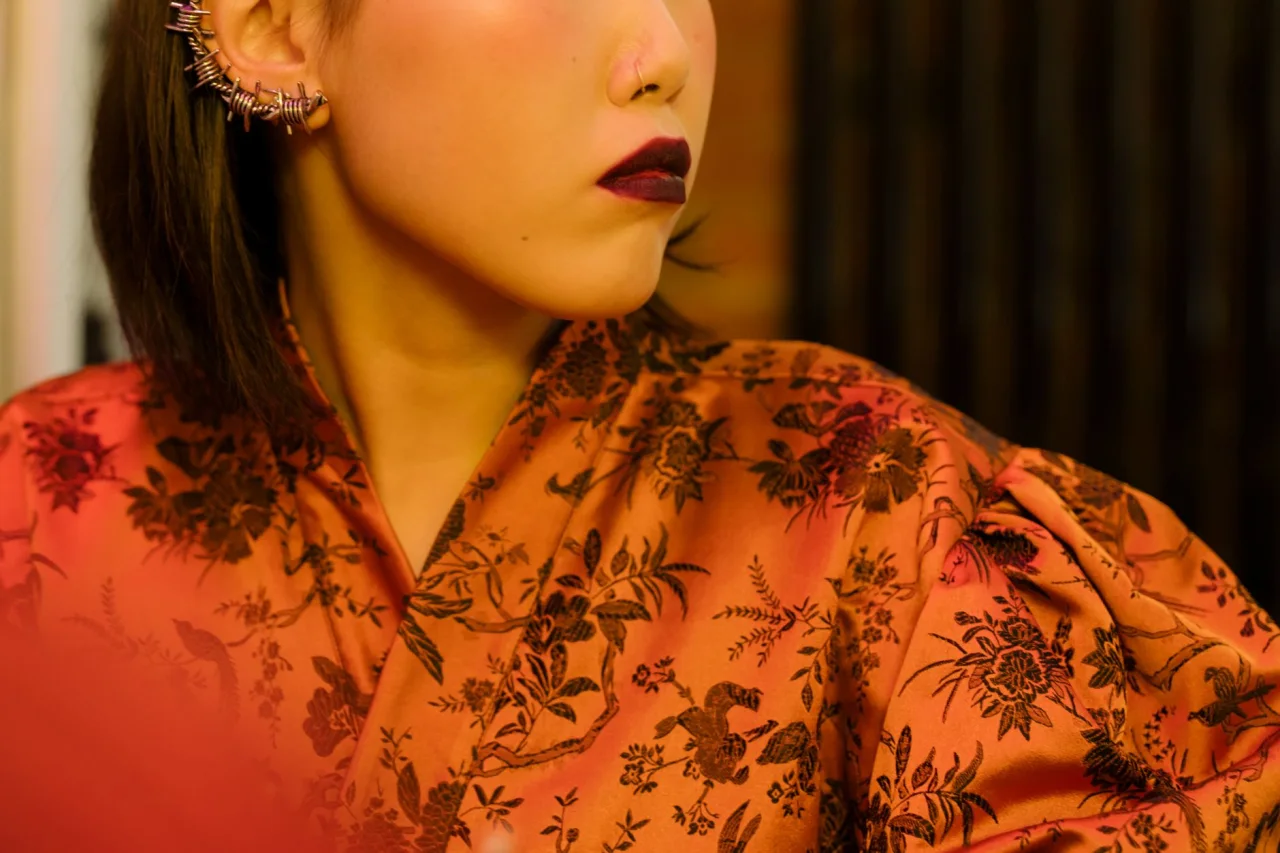
Jacquard's woven-in pattern gives it a distinctive set of qualities:
- Rich, textured surface: the raised motif gives depth and a luxurious, self-toned look without any print or embroidery.
- Good body and structure: most jacquards have enough weight to hold volume, so they suit fuller, more formal silhouettes.
- Durable pattern: because the design is woven in, it cannot peel, crack or wash off the way a print can.
- Reversible interest: many jacquards look attractive on both sides.
- Warmth: heavier jacquards carry a little warmth, which makes them a natural festive fabric for cooler months.
The trade-offs are weight and breathability. Denser jacquards can feel warm and are less suited to peak summer heat, and the raised weave can snag on rough surfaces, so it needs gentler handling than a plain cotton.
What jacquard is used for in desi wear
Jacquard's richness makes it a festive and formal workhorse across South Asian wardrobes:
- Festive and party suits: a jacquard shirt or full suit looks dressed up with minimal added embellishment.
- Wedding and occasion wear: brocade and jacquard lehengas, shararas and formal shirts are wedding-season staples.
- Waistcoats and jackets: jacquard sherwanis, waistcoats and long jackets bring instant richness to menswear.
- Winter formals: its body and slight warmth suit cooler-weather occasion dressing.
- Dupattas and borders: a jacquard or brocade border lifts a plainer base fabric.
Because the fabric already carries a woven design, it needs far less added work than a plain base, which is exactly why it is such a favourite for occasion wear. Our companion guide to jacquard outfits and styling shows how to build festive looks around it.
How to care for jacquard
Jacquard needs gentler handling than everyday cotton because of its raised weave and, often, metallic threads:
- Prefer dry cleaning for delicate or metallic jacquards: silk brocade and gold-thread jacquards are safest dry cleaned.
- Hand wash simpler cotton or polyester jacquards: use cool water and mild detergent, and never wring or scrub the surface.
- Avoid bleach and harsh chemicals: they can dull metallic threads and damage the weave.
- Dry in shade, flat or lightly hung: keep it out of direct sun to protect colour and sheen.
- Iron on low with a cloth barrier: press on the reverse through a thin cotton cloth so the raised motif and any metallic work are protected.
- Store on padded hangers or folded with tissue: avoid hard creasing, which can flatten the raised pattern.
Treated gently, jacquard keeps its crisp, dimensional pattern for many years, which is part of what makes it worth the investment.
Styling note: let the weave lead
Because jacquard already carries a rich pattern, you rarely need heavy extra embellishment. A plain contrast dupatta, a simple embroidered border and good jewellery are usually enough. Over-loading a busy jacquard with dense embroidery can look cluttered, so let the woven motif be the star.
How jacquard compares to other formal fabrics
Jacquard sits between plain fabrics and heavily embellished ones: it delivers pattern and richness through the weave itself. Against velvet, jacquard is lighter and more patterned while velvet is plush, pile-surfaced and deeply luxe, a contrast we explore in velvet versus jacquard. If you are planning cooler-weather formals, our roundup of the best fabrics for winter dresses shows where jacquard, velvet and heavy silks each fit. For lighter, printable alternatives at the other end of the spectrum, the organza guide is a useful contrast.
Frequently asked questions
Is jacquard a fabric or a weaving technique?
Jacquard is a weaving technique, not a fibre. The pattern is woven directly into the cloth using a special loom mechanism, so a jacquard can be made from cotton, silk, polyester, viscose or blends. What unites them is that the motif is built into the weave rather than printed on top.
How can I tell real jacquard from a print?
Turn the fabric over. A genuine woven jacquard shows the pattern in reverse on the back, because the design is part of the structure, and the motif feels slightly raised. A print sits flat on the surface and usually has a blank white reverse. The raised, reversible pattern is the giveaway.
Where does the name jacquard come from?
It is named after Joseph Marie Jacquard, who patented his loom control mechanism in 1804. The machine used a chain of punched cards to raise specific threads automatically, allowing complex woven patterns to be produced repeatably for the first time. Fabrics like brocade and damask are woven using this technique.
Is jacquard suitable for summer?
Not ideally. Many jacquards are mid-to-heavyweight and carry some warmth, which makes them better suited to festive occasions and cooler weather than to peak summer heat. For hot days, lighter fabrics like lawn or linen are more comfortable.
How should I wash a jacquard suit?
Delicate silk or metallic-thread jacquards are safest dry cleaned. Simpler cotton or polyester jacquards can be hand washed in cool water with mild detergent, without wringing or scrubbing. Dry in shade, iron on low through a cloth on the reverse, and store without hard creasing to protect the raised pattern.
More on Fabrics
Have a question or a topic to suggest?
We read every message. Tell us what you would like to see next in the journal.
Get in touch