Shopping Pakistani Dresses Online
Read size charts, spot original versus replica, and pay safely so your next online order actually fits and arrives as promised.

Buying Pakistani dresses online should feel exciting, not like a gamble. Yet between confusing size charts, replica listings dressed up as designer originals, and returns that quietly cost more than the outfit, plenty of shoppers end up disappointed. This guide is the playbook that keeps your money, and your wardrobe, safe.
The short version
- Measure your own body and compare it to each brand's chart in centimetres or inches, never trust a size letter alone.
- Learn the tells of a replica: vague fabric names, stolen studio photos, prices far below a brand's known range, and no verified retailer link.
- Prefer sellers with clear stitching options, real customer photos, and a written return and exchange policy before you pay.
- Use a payment method with buyer protection, screenshot the listing, and keep every message in case a dispute is needed.
Why online desi shopping goes wrong so often
Most regret traces back to three gaps: the fit gap, the authenticity gap, and the expectation gap. A salwar kameez or lawn suit is not a plain t-shirt. It has a defined chest, waist, hip, shoulder, sleeve length, and shirt length, and small errors in any of these turn a beautiful outfit into something you never wear. On top of that, the desi market is flooded with unbranded copies that borrow real brand photography, so the picture you fall in love with may not be the garment that arrives.
The good news: every one of these gaps closes with a few careful habits. The rest of this guide walks through them in the order you actually shop, from measuring yourself to clicking pay.
Step one: know your measurements before you browse

Take a soft measuring tape and record these numbers while wearing light clothing. Write them down once and reuse them for every order.
- Bust or chest: around the fullest part.
- Waist: around the narrowest part of your torso.
- Hips: around the fullest part of your seat.
- Shoulder: from one shoulder seam point to the other across the back.
- Sleeve length: from shoulder point to where you want the cuff.
- Shirt or kameez length: from the shoulder to your preferred hemline.
If a brand's ready-to-wear chart only lists Small, Medium and Large, look for the linked measurement table behind those letters. A trustworthy retailer always gives real numbers. If you are choosing between two sizes, size up for structured formals and pick your true size for relaxed lawn, since tailors can take a garment in far more easily than they can let it out.
Step two: read the size chart like a pro
Charts vary between brands, and a Medium at one label can equal a Large at another. Always match your body numbers to the chart's numbers, not to the size name you usually wear. Watch for two common traps. First, some charts list the garment's flat measurement and others list body measurement, so check whether ease is already included. Second, unstitched fabric has no size at all, only fabric quantity, which is a different decision covered in our guide to ready to wear versus unstitched.
Fit tip
Compare a new listing against a garment you already own and love. Measure that garment flat and use its numbers as your personal reference. It is the single most reliable way to predict fit across brands and countries.
Step three: spot original versus replica
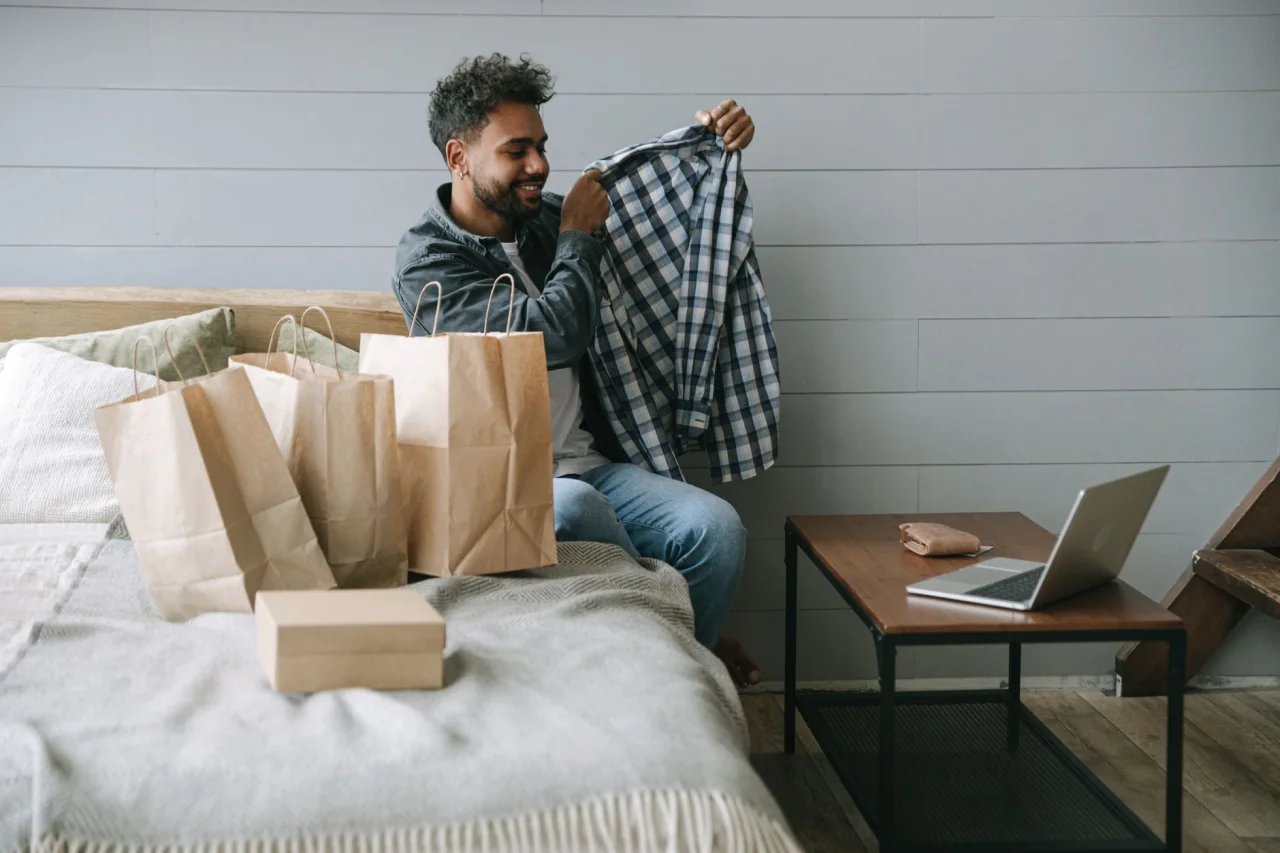
Replicas are not always cheaper by a little. They are often cheaper by a lot, which is the first clue. Established labels sit in fairly predictable price bands, so a three piece from a well known brand priced at a fraction of its usual range is almost never genuine. Beyond price, watch for these signals:
- Borrowed photography: a reverse image search that leads back to the brand's official site or a magazine shoot, sold by an unrelated page.
- Vague fabric language: words like premium fabric or imported material with no weave, weight, or fibre named.
- No verifiable retailer: genuine designer pieces are sold by the brand's own store or a named stockist, not an anonymous social account.
- Off details: mismatched embroidery density, printed motifs where the original uses thread work, or logos that look slightly wrong.
If you specifically want the real thing from a house like Sana Safinaz, Khaadi or Gul Ahmed, buy from that brand's official channel or an authorised partner. Our ranked brand overview and the individual Khaadi brand guide help you learn each label's real price range so a fake stands out immediately.
Step four: understand what pret and unstitched really cost
Ready-to-wear, also called pret or pret-a-porter, means finished garments in standardised sizes, as defined in the wider ready-to-wear tradition. It is convenient but usually costs more than the same design as unstitched fabric that you tailor yourself. If a listing looks unusually cheap for a stitched designer suit, it may actually be unstitched fabric, or a replica. Knowing the difference protects you, and our explainer on what pret wear really means breaks down the tiers so you know what you are paying for.
As a rough, caveated guide, mass-market lawn pret often sits in an accessible everyday band, luxury lawn and embellished pret in a higher band, and formal or bridal couture far above that. Actual figures vary widely by fabric, embroidery, brand and retailer, so always confirm current pricing on the seller's own page rather than trusting any fixed number.
Step five: check the seller before you check out
A trustworthy listing answers your questions before you ask them. Look for real customer review photos rather than only studio images, a clear statement of whether the item is stitched or unstitched, and an explicit stitching or customisation option if offered. Read the return and exchange policy in full, and note the window, who pays return shipping, and whether sale items are final. For international orders, check whether duties and customs are included or charged on delivery, because a surprise customs bill is a common source of regret.
Before you pay, screenshot everything
Capture the product photo, price, size chart, delivery estimate and return policy. If the garment that arrives does not match, those screenshots are your strongest evidence in any refund conversation.
Step six: pay safely and keep a paper trail
Choose a payment method that offers buyer protection, such as a card or a reputable payment platform, rather than an irreversible bank transfer to an unknown account. Keep every message with the seller inside the platform where possible, since off-platform chats are harder to use in a dispute. When the parcel arrives, film yourself opening it so you have unbroken evidence of the condition and contents. These habits take minutes and turn a worst case into a solvable problem.
Buying from abroad without the headaches
Shoppers outside Pakistan face extra variables: longer shipping, currency conversion, and customs. Order earlier than you think you need to, especially around Eid and wedding season when demand and delays both spike. Factor duties into your budget so the landed cost does not shock you. If you are in a specific country, our location guides such as where to buy Pakistani dresses in the USA and the UK edition point you to established stockists that reduce authenticity and shipping risk.
A quick pre-purchase checklist
- My body measurements match the brand's own numeric chart.
- The fabric is named specifically, not described vaguely.
- The seller is the brand or a named, authorised stockist.
- The price sits within the brand's known range.
- I have read the return, exchange and customs terms.
- I am paying with a protected method and have saved screenshots.
Tick all six and online shopping stops being a gamble. Pair this with a clear sense of your own style, using our roundup of Pakistani fashion trends, and you will build a wardrobe you actually reach for.
Frequently asked questions
How do I know my size when buying Pakistani dresses online?
Measure your bust, waist, hips, shoulder, sleeve and shirt length once, then compare those numbers to each brand's own numeric size chart rather than relying on the size letter. Sizes differ between labels, so a Medium at one brand can equal a Large at another. When unsure, size up for structured formals since a tailor can take a garment in more easily than let it out.
How can I tell if a Pakistani dress is original or a replica?
Check the price against the brand's known range, since a genuine designer piece priced far below its usual band is almost never real. Look for specific fabric descriptions, an authorised or official seller, and consistent embroidery and print details. A reverse image search that traces the photo back to the brand's official site or a magazine, sold by an unrelated page, is a strong sign of a replica.
Is it cheaper to buy stitched or unstitched online?
Unstitched fabric is usually cheaper than the same design sold ready stitched, because you pay a tailor separately for the make. Ready-to-wear costs more for the convenience of standardised finished sizing. If a stitched designer suit looks unusually cheap, confirm whether the listing is actually unstitched fabric or a replica before buying.
What payment method is safest for online desi shopping?
Use a method with buyer protection, such as a credit or debit card or a reputable payment platform, instead of an irreversible transfer to an unknown account. Keep your conversation on the selling platform, screenshot the listing and policies, and film the unboxing. These steps give you evidence if you need a refund or dispute.
How early should I order for Eid or a wedding?
Order several weeks ahead, and even earlier if you shop from abroad or need tailoring. Eid and wedding season bring peak demand and shipping delays, and stitching adds days on top. Building in a buffer avoids paying for rushed delivery or settling for a second choice.
More on Buying Guides
Have a question or a topic to suggest?
We read every message. Tell us what you would like to see next in the journal.
Get in touch