How to Choose a Lawn Suit
Choose the right lawn suit with body-type fit advice, fabric quality checks, seasonal picks and realistic price guidance.
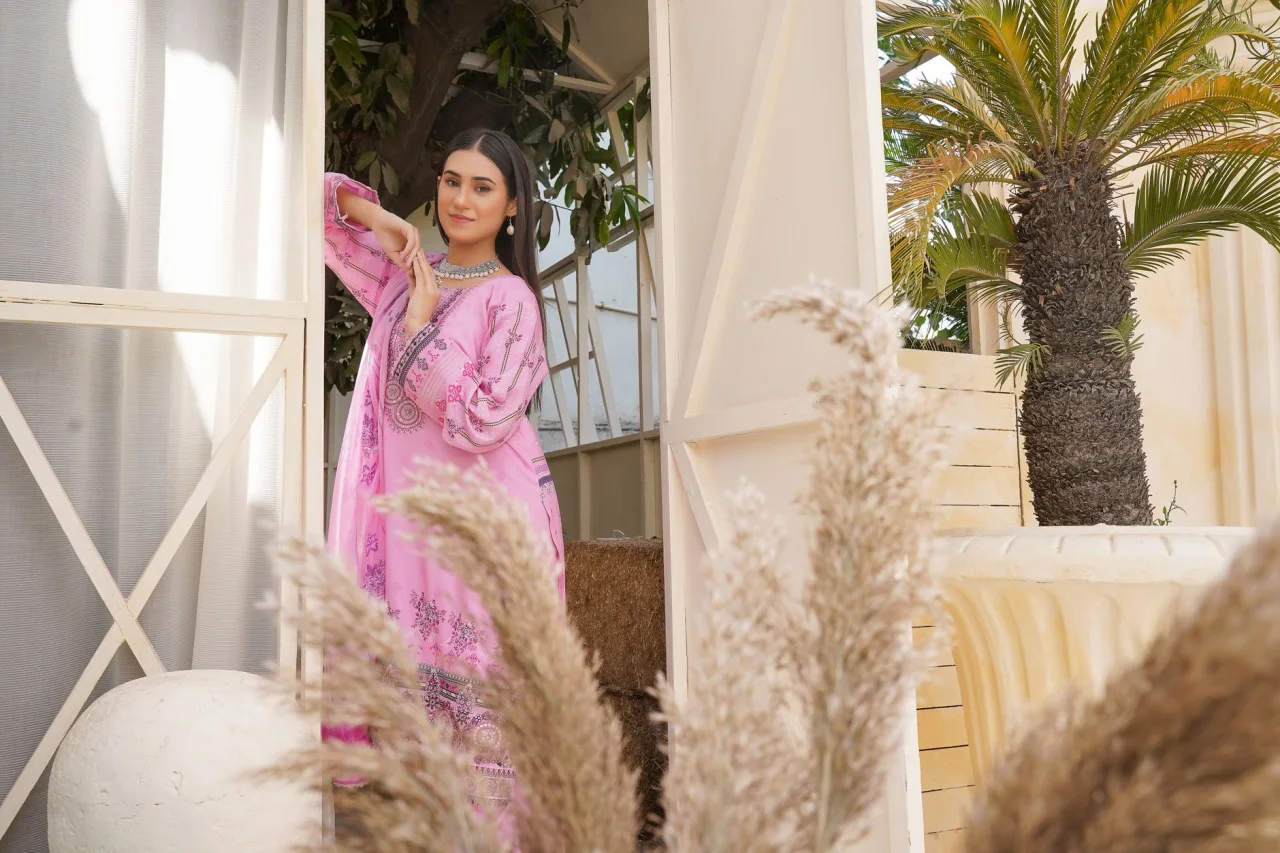
Buying a lawn suit looks simple until you are standing in front of two hundred prints, some stitched and some not, at prices that swing wildly for what looks like the same thing. The truth is that a great lawn suit comes down to three decisions: fit, fabric quality and honest value. This guide walks through each one, with body-type advice, seasonal fabric notes, the stitched versus unstitched question and the red flags that tell you to put a suit back on the shelf.
The short version
- Fit first: choose a silhouette that flatters your frame, and prefer unstitched tailored to your measurements when fit matters most.
- Check fabric quality by feel and by holding it to light: good lawn is fine, even and holds a crisp print.
- Prices vary hugely by fabric, embroidery, stitching and retailer, so judge value against quality, not the label alone.
- Watch for red flags like uneven printing, loose embroidery threads and very sheer cloth sold without lining.
Step one: choose the right silhouette for your body
The most flattering lawn suit is the one cut for your frame, not the busiest print. Because a lawn suit uses the classic shalwar kameez silhouette, you have several shapes to choose from.
- Straight cut: the most universally flattering; skims the body and suits most frames.
- A-line: softly flares from the bust, ideal for balancing fuller hips.
- Peplum or defined waist: adds shape and balances a longer torso.
- Short kameez with wide trouser: a modern, leg-lengthening option for taller frames.
Match the print scale to your size as well: very large motifs can overwhelm a petite frame, while tiny repeats can look flat on a tall one. If you want to see these shapes in current designs, browse our lawn suit design ideas for 2026.
Step two: judge the fabric quality
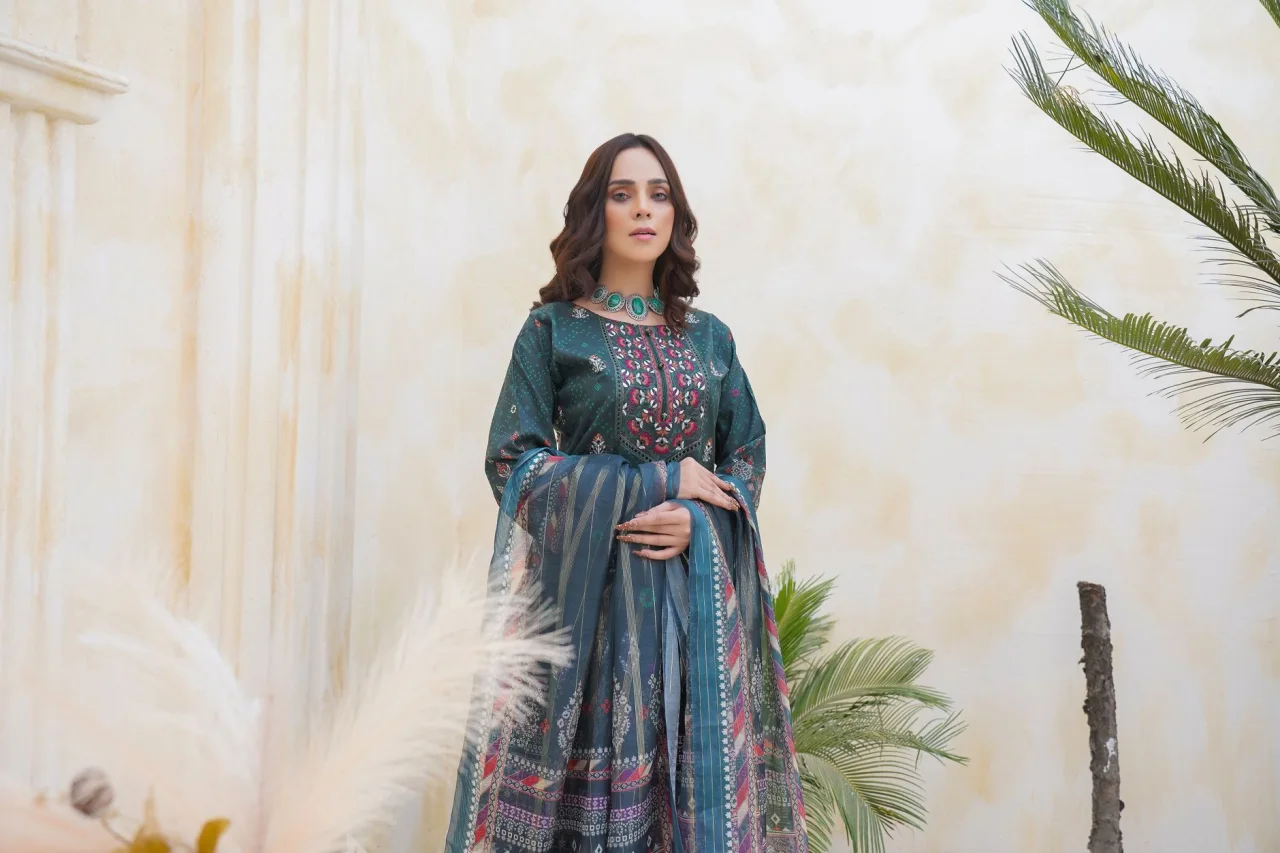
Lawn is a fine, high-thread-count plain-weave cotton, and quality varies a lot within that definition. Good lawn feels smooth and even, with a silky, untextured hand, and it holds a crisp print without looking coarse. Poor lawn feels thin and papery, prints look muddy, and the weave is uneven when you hold it to light.
A few checks before you buy:
- Hold the fabric up to light: an even weave with no thin patches signals better quality.
- Rub it between your fingers: it should feel smooth and cool, not rough or plasticky.
- Look closely at the print edges: sharp, well-registered printing beats blurry, off-register work.
- Check the embroidery from the back: neat, secure stitching lasts; loose threads and puckering do not.
For a deeper look at the cloth, including how to care for it, see our guide to lawn fabric properties, uses and care.
Step three: pick fabric by season
Lawn is a warm-weather specialist. As a soft, breathable natural fibre, cotton lawn keeps you cool in heat and humidity, which is exactly why it dominates South Asian summer wardrobes.
- Peak summer: lighter, airier lawn in pale or bright prints; make sure to line semi-sheer pieces.
- Spring and autumn: a slightly denser lawn or a lawn and cambric weight works well.
- Winter: lawn is usually too light; consider a warmer cloth such as khaddar or a heavier cotton instead.
If you are torn between lawn and a cooler-season cotton, our lawn versus cambric comparison lays out the trade-offs.
Step four: stitched or unstitched
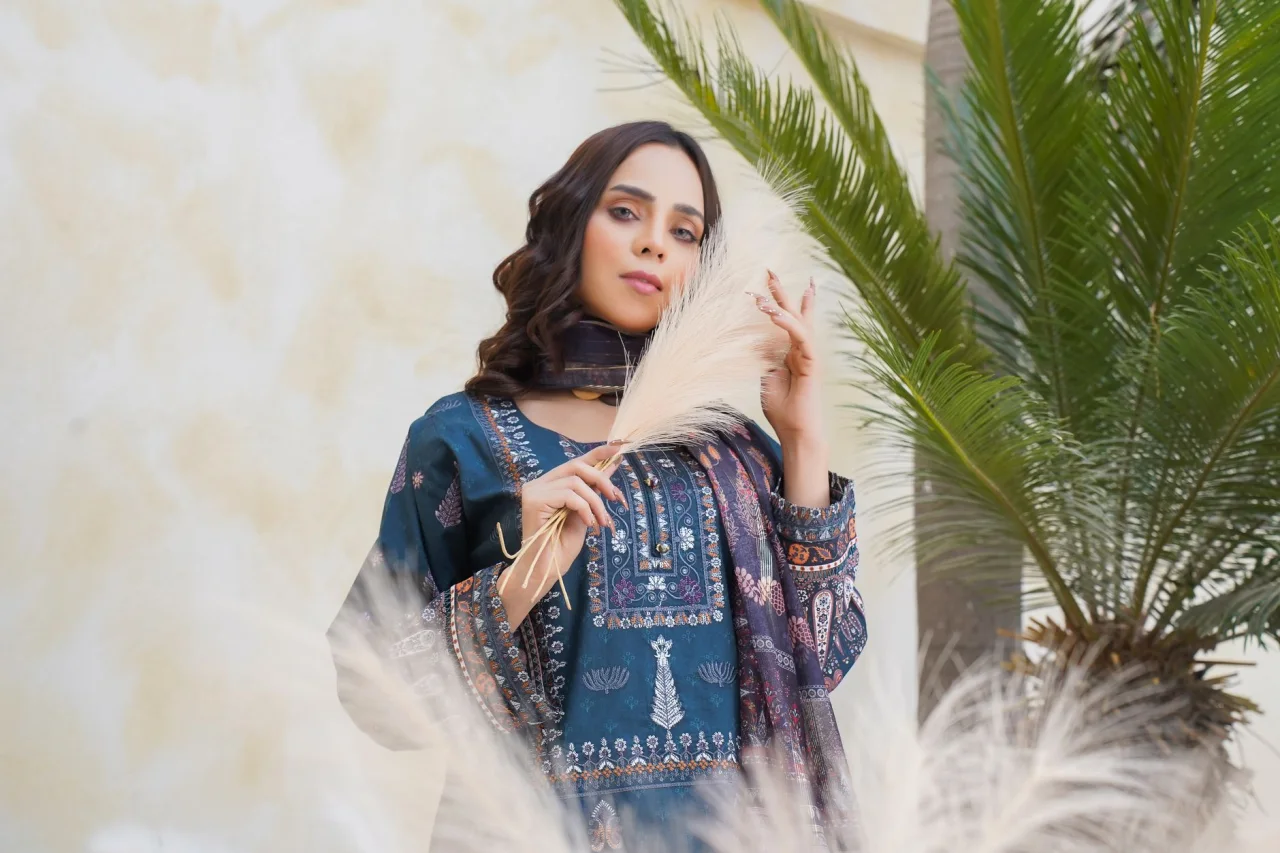
Lawn is very often sold unstitched, meaning you buy printed fabric with matching trouser and dupatta cloth and have it tailored. This is a real advantage for fit.
- Unstitched: best fit and silhouette control, but you need a tailor and lead time.
- Ready to wear: convenient and immediate, but the fit is fixed to standard sizing.
Buying note
If you go unstitched, take a well-fitting kameez to your tailor as a reference and confirm whether the design needs lining. Factor tailoring time and cost into your budget so a bargain fabric does not become an expensive rush job.
Step five: understand realistic pricing
Lawn spans a very wide price range, and the number on the tag reflects fabric quality, print sophistication, the amount and type of embroidery, stitching and the retailer. Because of that, invented exact figures are meaningless; think in brackets and always confirm current pricing before you buy.
- Budget: printed unstitched or ready lawn with machine embroidery and simple dupattas. Fine for daily wear.
- Mid-range: better print and fabric quality, mixed hand and machine work, an embellished dupatta.
- Premium: designer prints, extensive hand embroidery and finer finishing.
Value is quality divided by price, not the lowest number. A well-made mid-range suit that fits and lasts often beats a cheap one you stop wearing after two washes. Add tailoring, lining and dupatta costs to the base price to compare fairly. It also helps to set a total budget before you shop rather than a fabric budget alone, so a tempting cheap length does not quietly become expensive once stitching and lining are added. Designer collections command a premium for their prints and finishing, which can be worth it for a special occasion, but for everyday wear a solid mid-range suit usually delivers the best cost per wear.
Where and how to buy
Where you shop shapes both the price and the experience, and each channel has trade-offs worth weighing before you commit.
- Brand outlets and flagship stores: reliable quality and finishing, clear sizing and easier returns, usually at a higher price.
- Local fabric markets: the widest choice and the best value on unstitched cloth, but quality varies stall to stall, so inspect carefully.
- Online stores: convenient and often discounted, but you cannot feel the fabric, so read the fibre and weight details and check the return policy first.
- Tailors with fabric: some tailors stock cloth and stitch in one place, which simplifies unstitched buying.
Whichever channel you use, compare like with like. A cheap ready suit and a mid-range unstitched length are not the same purchase once you add lining, tailoring and a dupatta. When buying online, favour listings that state the fabric composition and fabric weight rather than photos alone, and keep the return window in mind in case the colour or hand differs from the screen. A little scepticism at this stage saves disappointment later, and it is the main thing separating a suit you wear all season from one that stays in the cupboard.
Red flags to avoid
A few warning signs are worth memorising before you pay:
- Very sheer fabric sold without a lining plan: you will pay again for lining, so factor it in.
- Blurry or off-register prints: a sign of cheap printing that looks worse in person than in photos.
- Loose or puckered embroidery: check the reverse; poor stitching unravels quickly.
- Colour that rubs off or smells strongly of dye: a sign of poor colourfastness that may bleed in the wash.
- Short or skimpy fabric lengths: confirm the suit includes enough cloth for kameez, trouser and dupatta in your size.
Putting it together
The perfect lawn suit is a balance, not a maximum. Start with a silhouette that flatters you, insist on an even, smooth fabric that holds its print, buy unstitched when fit is the priority, and judge price against quality rather than the label. Get those right and even a simple suit will look considered. When you are ready to wear it, our lawn suit styling guide shows how to take it from day to evening, and if you want the full background on the garment, start with our complete guide to the lawn suit.
Frequently asked questions
How do I know if a lawn suit is good quality?
Hold the fabric to light for an even weave with no thin patches, feel for a smooth and cool hand rather than a rough or plasticky one, check the print edges are sharp and well registered, and inspect the embroidery from the back for neat, secure stitching.
Is unstitched or stitched lawn better?
Unstitched lawn tailored to your measurements gives the best fit and lets you choose the silhouette, which matters because fit does as much for the look as the print. Ready-to-wear is faster and more convenient but fixed to standard sizing.
How much should a lawn suit cost?
Prices vary widely by fabric quality, print, embroidery, stitching and retailer, so it is best to think in brackets rather than fixed figures and confirm current pricing. Judge value as quality against price, and remember to add tailoring and lining costs when comparing.
Which lawn suit is best for summer?
A lighter, breathable lawn in a print you like is ideal for peak summer, with semi-sheer pieces properly lined. Cotton lawn is a breathable natural fibre, so it keeps you cool in heat, which is why it is the classic South Asian summer choice.
What are the warning signs of a poor lawn suit?
Watch for very sheer fabric with no lining plan, blurry or off-register prints, loose or puckered embroidery, colour that rubs off or smells strongly of dye, and short fabric lengths that may not be enough for your size.
More on Buying Guides
Have a question or a topic to suggest?
We read every message. Tell us what you would like to see next in the journal.
Get in touch